Quick Answer
Epoxy grout is a tile-joint filler made from epoxy resin, a hardener and filler powder. It sets into dense joints that absorb less water than cement grout. Full epoxy grout comes in two-part or three-part kits, while epoxy emulsion grout also contains cement. It resists water, stains and chemicals, keeps its colour and needs no sealing. It does not waterproof the surface behind the tiles, and joints that move need a flexible sealant instead. To install it, clean the joints, mix small batches, pack them fully and wipe off haze before it sets.
Introduction
Epoxy grout, a resin-based filler for the gaps between tiles, costs more than ordinary cement grout and requires more skill to apply. It therefore helps to know what you're paying for before you choose it for a bathroom or kitchen.
Below, we explain what epoxy grout is made of, the types available, its benefits and limitations, and how to install it. Then we go room by room and look at how different tiles affect the application process.
Key Takeaways
- You mix epoxy grout's resin, hardener, filler and pigment on site, and, unlike cement grout, it doesn't absorb water.
- Epoxy (3-Component, Duo & Glitter) Grout and Cement Polymer Grout as separate product categories. Its cement-polymer grout can also be used in wet areas, including bathrooms, kitchens and swimming pools.
- Its dense joints offer strong resistance to stains, chemicals and mould, and full epoxy grout generally maintains an even appearance without needing a sealer.
- Even water-resistant epoxy grout does not replace a bathroom waterproofing system. Wet areas also need the correct floor slope and flexible sealant at movement joints.
- Like any grout, it should not be used in movement joints at room edges, which need a flexible sealant instead.
- Wear nitrile gloves, mix small batches that you can use before they set, fill every joint completely and wipe off haze early.
- Prioritise its use in showers, kitchens, balconies and pools, and hire a professional applicator for large or first-time projects.
- On glossy and polished tiles, clean residue early and keep harsh acids and abrasive scrubbers away.
What is epoxy grout, and how is it different from cement grout?
It's a tile-joint filler that sets when a resin and a hardener are mixed together. Because it cures without cement, it absorbs less water than cement grout.
What epoxy grout is made of
Epoxy grout typically contains epoxy resin, a hardener, mineral filler and colour pigments. The precise composition depends on the product, so check the packaging before mixing the components on site.
Once they're mixed, the grout starts to set. The available working time is called the pot life, which is specified on the packaging.
How it differs from cement grout
Cement grout is a cement-based powder, plain or with polymers added. It's more porous, so it can absorb water and stains, and it can need a sealer, especially in kitchens and bathrooms.
Epoxy grout sets into a dense joint that resists water and stains. That matters most in wet rooms and kitchens, where the joints get splashed every day.
In a kitchen, that means a turmeric or oil splash near the gas stove is less likely to soak into the joints.
Why it costs more and takes more skill
Epoxy grout costs more upfront, while cement grout costs less than other grouts. Epoxy also needs a skilled hand, because it sets faster.
The mixing, filling and cleaning all have to happen before it starts to set. If you're used to cement grout, expect to work in smaller batches and clean as you go.
The label on the pack tells you which kind of epoxy grout you're buying. Some kits are full epoxy and some mix epoxy with cement, and they don't resist water and stains equally.
Types of grout
There are two main types of tile grout: epoxy grout and cement polymer grout. Both are designed to fill tile joints and provide a durable finish, but they differ in composition, water resistance, stain resistance and applications.
Epoxy Grout
Epoxy grout is a resin-based tile joint filler known for its durability, non-porous structure and resistance to water, stains and chemicals. It is available in three-component, Duo and Glitter variants to suit different functional and design requirements.
Epoxy grout offers high abrasion resistance, UV stability and resistance to shrinkage. It is suitable for interior and exterior wall and floor applications, including bathrooms, kitchens, swimming pools and high-traffic commercial areas.
Its dense, non-porous structure makes it particularly useful in areas exposed to moisture, frequent cleaning and stains. Choose the appropriate epoxy grout variant based on the application area, tile type and desired finish, and follow the manufacturer's installation instructions.
Cement Polymer Grout
Cement polymer grout is a cement-based tile joint filler modified with polymers to improve durability, flexibility and water resistance. It is designed for filling joints between tiles on interior and exterior wall and floor surfaces.
It offers resistance to cracking, shrinkage and everyday wear while providing a smooth and consistent finish. It is suitable for residential and commercial applications, including bathrooms, kitchens and other areas exposed to moisture.
Compared with epoxy grout, cement polymer grout is generally more economical and easier to apply. A compatible grout admixture can help improve its flexibility, strength and water resistance. Select the grout according to the application conditions, joint dimensions and manufacturer's recommendations.
Benefits of epoxy grout, and where it falls short
A full epoxy kit sets into a dense joint, and most of what it does well comes from that. It has two limits: it doesn't waterproof the wall or floor behind it, and like any grout, it can't go into joints that need to move.
Resists water, stains and chemicals
The main advantages of epoxy grout come from its dense joint, which resists water, stains and everyday wear better than cement grout. It also stands up to the strong chemicals in cleaning products.
Mould grows where joints stay damp, and a dense joint doesn't hold damp inside it. So epoxy resists mould better too.
We make our Ezy Fix Epoxy Grout for submerged, high-traffic and chemically exposed areas, and it's made not to shrink as it sets.
Keeps its colour without a sealer
Cement grout can soak up spills and change colour over time. Epoxy keeps its colour more evenly, because it's less porous. That helps most with light grout, where a coffee or turmeric mark is easy to spot.
It also needs no sealer, while cement grout often benefits from one. That's one less job on your list.
Is epoxy grout waterproof?
Not on its own. The joint resists water, but grout can't make the floor or wall behind the tiles waterproof.
In a bathroom, the waterproofing behind the walls and a floor that slopes to the drain matter as much as the tiles. Our waterproofing systems are designed to stop water getting in.
If a joint cracks or goes missing, repair it early, before water can get under the tiles.
Is epoxy grout flexible?
Not enough for joints that need to move. Like any grout, it isn't made for them.
A tiled area needs movement joints at the edges of the room, where the floor meets a wall, and where tile meets a different material. These joints are kept free of grout and filled with a flexible sealant. In a bathroom, check that sealant from time to time.
Hard grout put into those spots can crack when the tiles move.
Epoxy grout and cement grout at a glance
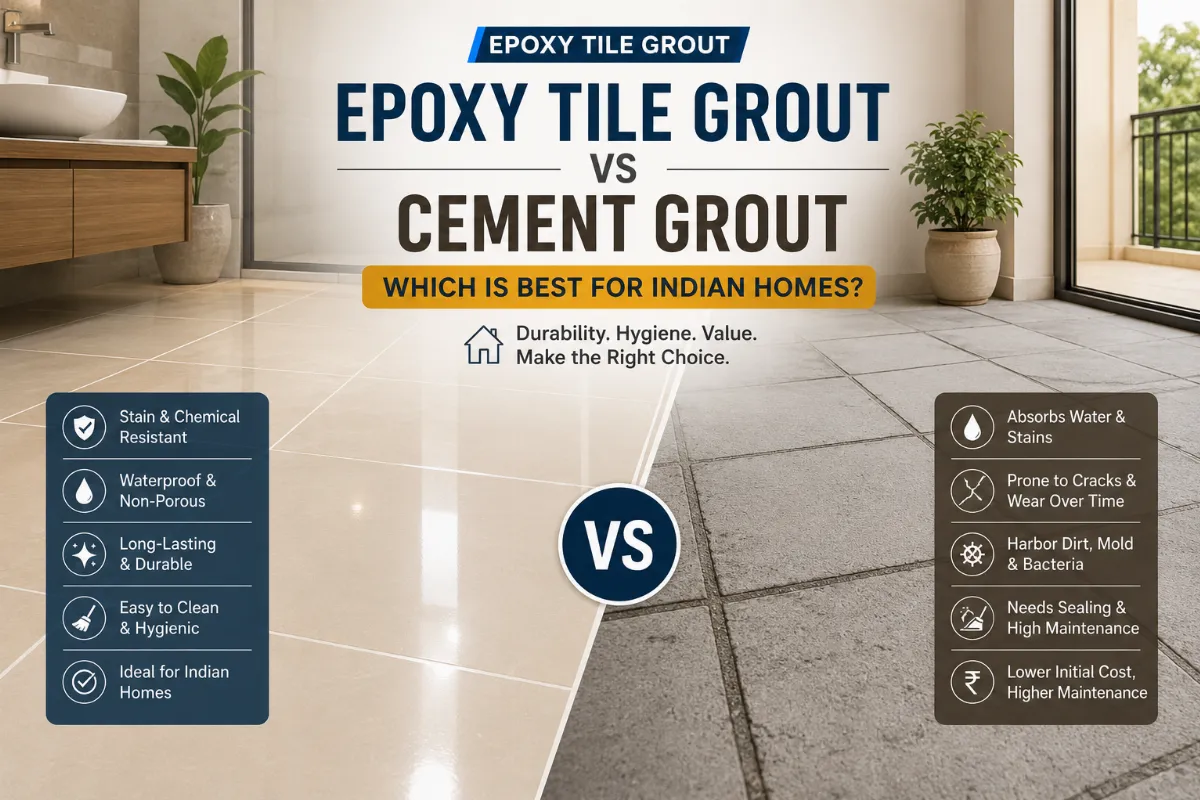
Epoxy wins on water, stains and sealing, while cement-based grout costs less and is quicker to lay.
These benefits hold only when every joint is packed full, because empty spots are weak points. Epoxy also sets faster, so each step of the job has to happen on time.
Epoxy grout installation, step by step
Every epoxy grout application comes down to four jobs: preparing the joints, mixing small batches, packing every joint and cleaning the tiles before the grout sets. The pack gives the mixing ratio, the working time and the waiting times, so keep it beside you.
What you need
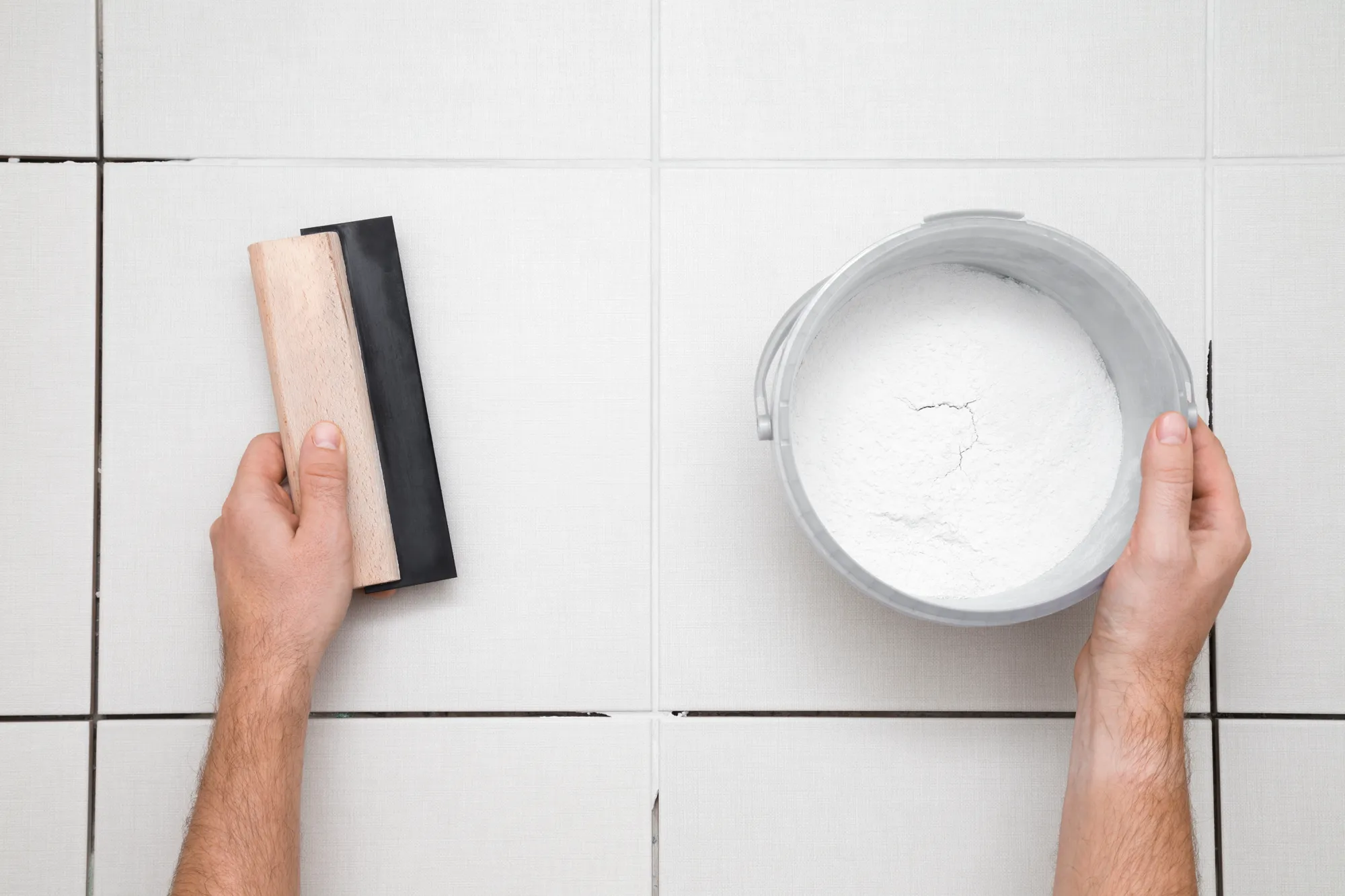
- The epoxy grout kit
- Pliers for the spacers, a scraper and a brush
- Masking tape
- A rubber grout float or squeegee
- A sponge, a bucket of clean water and a soft cloth
- Nitrile gloves, and the safety advice on the label
Filling the joints, one step at a time
- Check that the tiles are firmly fixed and the adhesive has fully dried. The adhesive pack gives the drying time.
- Pull out the spacers, scrape extra adhesive out of the joints and brush out the dust.
- Cover the tile faces with masking tape, so only the joints are open.
- Mix the parts as the pack says, into a smooth paste with no lumps. Mix only as much as you can use within the pot life.
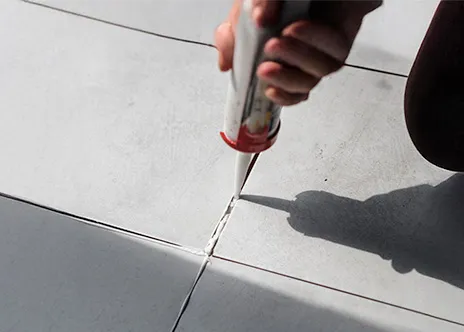
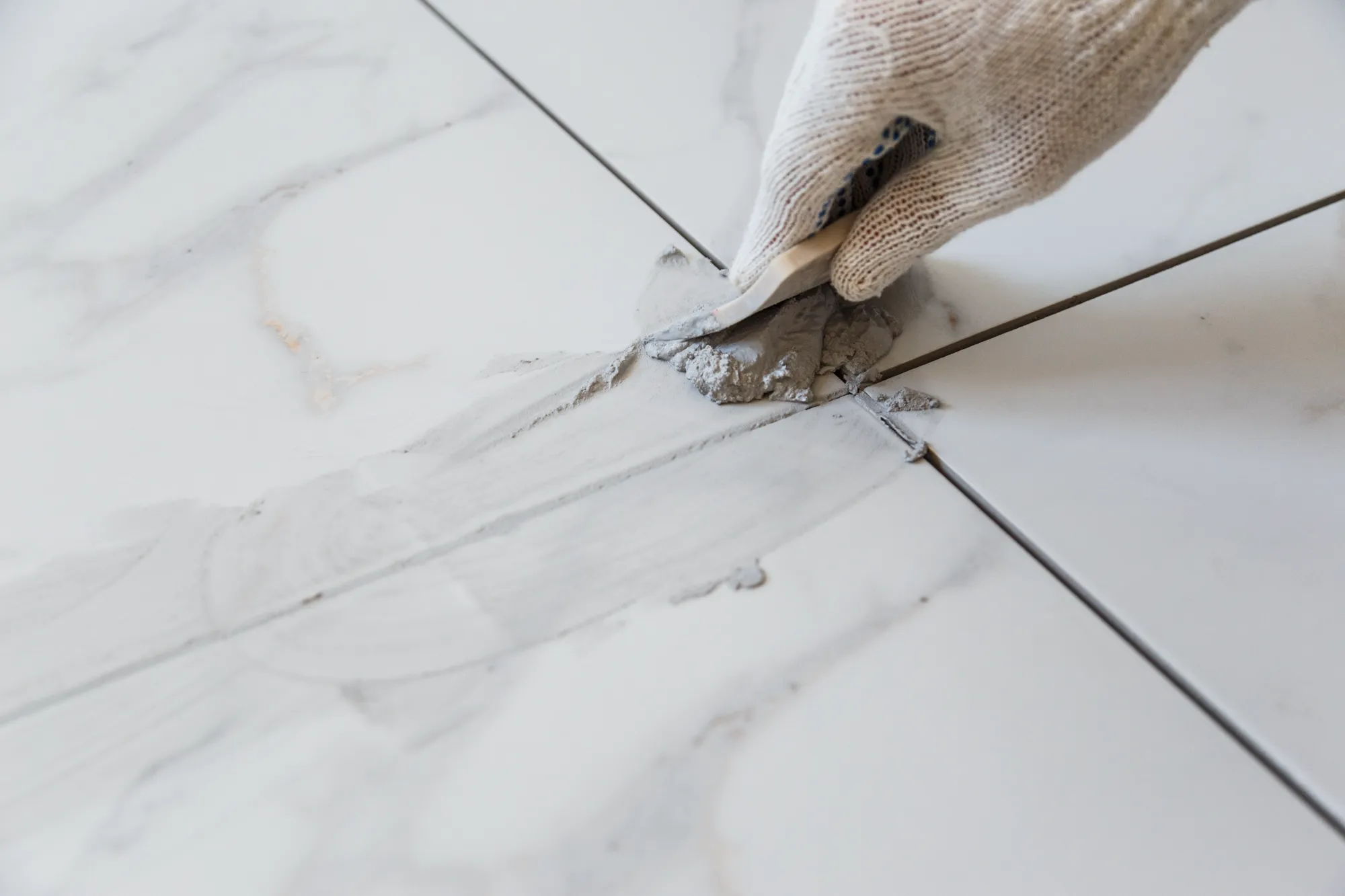
- Work on a small area at a time. Hold the rubber float at an angle and press the grout firmly into each joint until it's full.
- After the wait the pack gives, wipe the area with a damp sponge in gentle circles. Keep rinsing the sponge, and don't flood the tiles.
- Peel off the tape. As the grout starts to firm up, wipe off the thin film left on the tiles, called haze, with a slightly damp cloth.
- Check every joint, and fill any low or empty spots before the grout fully sets.
- Keep water and foot traffic off the area for the curing time on the pack.
Tips on how to apply epoxy grout neatly
- Before you open the kit, work out how many small batches the room needs, so you never mix more than you can use in time.
- Set out the float, sponge, buckets and cloth before you mix, so you don't lose working time looking for them.
- Start from a corner of the room and work towards the door, so you never step on fresh grout.
- Keep two buckets: one for rinsing the sponge and one of clean water, so you aren't wiping haze back onto the tiles.
- Before the grout firms, shine a torch low across the tiles to spot any haze you missed.
Precautions while applying epoxy grout
- Keep the mixed resin and hardener off your skin. Before it cures, epoxy can irritate skin and cause an allergy, so wear nitrile gloves. Wash off any splash with soap and water, and keep a window open so you aren't breathing the fumes.
- Don't mix the whole kit at once unless you can use all of it before it sets. The clock starts as soon as the parts are mixed.
- Never leave haze to dry on the tiles. Set epoxy is hard to get off the tile face.
- Avoid harsh acids and abrasive scrubbers on glazed and polished tiles, even if some haze is left. Acids can wear away the glaze.
- Keep grout out of the movement joints at room edges and corners. They need a flexible sealant.
- Never pour leftover grout down the drain. It hardens and can block it.
What to expect
Done well, you get full, even joints and a clean tile face. Because you work in small sections and clean as you go, plan for a slower job, and stay with it from the first mix to the final wipe.
The short working time is tricky, so an applicator who has done epoxy before gives a cleaner finish. With this much care needed, epoxy grout makes most sense in the rooms where the joints get wet, stained or scrubbed every day.
Where epoxy grout is worth it, room by room
Epoxy grout pays off in wet rooms, kitchens and spaces that take hard use. In dry rooms, it's optional.
Bathrooms and showers
Shower walls and floors, and bathrooms that stay wet, are the first places to use epoxy grout. If the whole floor gets wet every time someone bathes, the joints can stay damp between baths.
Epoxy joints resist that water, so mould has less damp to grow in.
Pair epoxy with waterproofing behind the walls and the flexible sealant where the floor meets the wall.
Kitchens and countertops
Backsplashes, kitchen floors, counters and pantry areas all suit epoxy grout. Oil, tea and turmeric splash around while you cook, and epoxy joints are less likely to absorb these everyday spills.
On a countertop, the joints sit right where you chop, pour and wipe with cleaners, so resistance to stains and chemicals counts there. Still wipe strong colours like turmeric off any grout as soon as they spill.
Balconies, utility areas and pools
Open balconies, laundry areas and semi-outdoor spaces get rain, washing water and detergent, and epoxy grout suits them too. An open balcony can stay wet through the monsoon.
Our epoxy grout is also meant for swimming pools and water features.
Living rooms and bedrooms
Dry rooms can manage without epoxy. Here it's optional, and mainly worth it with large-format tiles, where you want the grout colour to stay even across a big floor. A cement-based grout costs less and suits dry rooms.
Edges, regrouting and when to call an applicator
Edges and floor-to-wall joints still need the flexible sealant covered above, whichever grout you use.
If you're replacing old cement grout with epoxy, dig the old grout out of the joints first. Dampening the joints makes it easier to remove.
Loose or cracked tiles need fixing before any regrouting, because grout goes in only once the tiles are firmly fixed.
For a large area or a first grouting job, call in an applicator. Epoxy sets fast, and grout left on the tiles is hard to clean once it hardens.
Whichever room you're grouting, the face of the tile decides how gently you have to clean off the haze.
How your tiles and grout colour change the job
Epoxy grout goes into joints in both tile and stone, and the tile face changes how you clean up after it. Sun and grout colour change the choice too.
Glossy and polished tiles
On a shiny face, clean off every trace of residue before it hardens. Masking tape keeps most of it off in the first place. Ask your applicator what's safe for your tile before you try any cleaner.
Textured tiles and mosaics
Small mosaics have many more joints across the same floor, so the job takes more grout and more wiping. On textured faces, tape the tiles carefully so the grout stays in the joints.
Large tiles and grout colour
Large-format tiles leave long, straight grout lines across a room. Epoxy keeps its colour more evenly over time, so those lines are less likely to look patchy.
If you want the joints to fade into the floor, pick a grout colour close to the tile. A contrasting colour makes the grid of lines stand out.
Outdoor and sunlit areas
Our Ezy Fix Epoxy Grout suits both interior and exterior joints, and it's UV-stable. That makes it a fit for balconies and terraces in full sun.
Caring for it once it cures
Once it has cured, wipe spills quickly and clean the joints with a soft brush and a mild cleaner.
On vitrified tiles, avoid bleach, vinegar and ammonia-based cleaners for everyday care. Acidic or alkaline cleaners can wear away the glaze and make the tile look dull.
Also Read: Everything You Need To Know About Epoxy Tile Grout
Conclusion
Choosing epoxy grout comes down to where water, stains and cleaning chemicals hit your tile joints hardest. In a shower, a kitchen or an open balcony, it's worth the extra cost, because you won't need to seal the joints, and stains are less likely to set in. In a dry bedroom, cement-based grout costs less.
Whichever you pick, plan the rest of the job around it. That means waterproofing behind wet walls, a flexible sealant at the edges, and a skilled hand to mix and wipe on time.
To see our Ezy Fix grouts and the tiles they go with, use our store locator to find a dealer or experience centre near you.
FAQs
Q. Is epoxy grout better than cement grout?
For wet and stain-prone areas, yes. Epoxy joints are dense, so they resist water, stains and mould better than cement grout, and they don't need sealing. Cement grout costs less and is easier and quicker to lay, so it can still suit dry rooms such as bedrooms and living rooms. You can use both in one home.
Q. Is epoxy grout worth the extra cost?
Yes, in showers, wet bathrooms, kitchens, balconies and pools. Those are the places where its resistance to water and stains saves you from sealing and makes stained joints less likely. In bedrooms and living rooms it's optional, and mainly worth it with large-format tiles where you want an even grout colour. Budget for skilled application as well, because epoxy sets fast.
Q. How much does epoxy grout cost?
It costs more upfront than cement-based grout, which costs less than other grouts. Full epoxy also usually costs more than epoxy emulsion grout.
You buy it by weight, and our Ezy Fix Epoxy Grout comes in 1 kg and 5 kg packs. Wide joints and small mosaics need more grout, and a skilled applicator adds to the bill, so ask your nearest dealer for current rates.
Q. Does epoxy grout need sealing?
No. Because the joint is dense and resists water, it doesn't need a sealer the way cement grout can. Once it has cured, wipe spills quickly and clean the joints with a soft brush and a mild cleaner. In wet areas, check the flexible sealant at the edges from time to time, because that's a separate material from the grout.
Q. How soon can I use the shower after epoxy grouting?
Only after the curing time printed on the pack has passed. Until then, keep water and foot traffic off the grouted area, because the grout is still setting. Curing times differ from product to product, so check the pack before you plan the job and keep the shower out of use for that whole time.
Q. Can epoxy grout be applied over old cement grout?
No. Remove the old grout first, then fill the joints with epoxy. Dampening the joints makes the old cement grout easier to dig out.
Brush out the dust, and get any loose or cracked tiles fixed before you start, because grouting comes only after the tiles are firmly fixed. From there, the epoxy goes in the same way as on new tiles.
Q. How do I remove epoxy grout haze from tiles?
Wipe it off while it's fresh. A damp sponge that you keep rinsing handles the first clean, and a slightly damp cloth lifts the thin film as the grout starts to firm. Once epoxy hardens, it's hard to remove. Avoid harsh acids and abrasive scrubbers on glazed and polished tiles, and ask your applicator before you use any special cleaner.
Q. Can I apply epoxy grout myself?
Yes, but it's harder to work with. Epoxy sets fast, so you have to mix small batches, fill the joints and clean the tiles before it sets. For a small area, mask the tiles first, wear nitrile gloves and follow the pack exactly. If you haven't grouted before, or the area is large, an applicator who has done epoxy before will give you a cleaner finish.
Q. What is the most flexible grout option?
For joints that need to move, use a flexible sealant, kept clear of any grout. Room edges, the line where a floor meets a wall and joints between two materials are movement joints. Between the tiles themselves, cement-polymer grout has polymers added to improve flexibility and bonding. Epoxy grout, like any grout, isn't meant for joints that move.
Q. Does epoxy grout crack?
It can. Like any grout, it can crack if it's packed into joints that need to move, such as room edges or the line where the floor meets a wall. A joint left part-empty is a weak spot too. Keep movement joints free of grout and fill them with a flexible sealant, pack every joint full, and repair any cracked grout early so water can't get under the tiles.
Q. How long does epoxy grout last?
No fixed number of years applies, because it depends on how well the grout was mixed, packed and looked after. Joints packed full are stronger, since empty spots are weak points. Repair any cracked or missing grout early, so water can't get under the tiles.