Even the best tile installation can lose its appeal if the grout lines begin to stain, discolour, or crack over time. Because it's not only the tile — the space between tiles is also part of the overall appearance.
In addition to appearance, the right grout material can withstand bathroom moisture, kitchen spills, regular cleaning, and daily foot traffic while helping tiled surfaces look good for longer. The wrong choice can lead to stubborn stains, increased maintenance, and grout lines that age faster than the tiles themselves.
Now you understand why choosing the right grout is just as important as choosing the right tile. But with options like traditional cement grout and modern epoxy tile grout available today, how do you know which one is best for your home?
The answer depends largely on where the tiles are being installed and the demands of that space.
Before we look at which grout works best in different parts of the home, let's first understand what grout actually does and why the choice between epoxy and cement grout matters more than most of us realise.
What Is Grout Material?
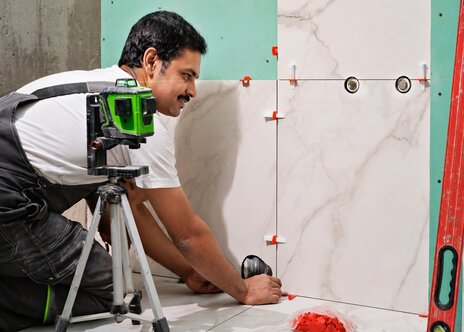
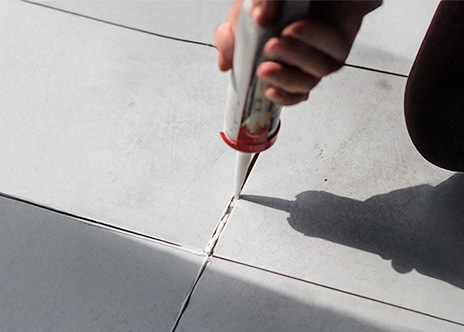
Grout is the material used to fill and seal the joints between tiles. It helps keep tiles securely in place, prevents dirt and moisture from collecting in gaps, protects tile edges from damage, and contributes to the overall appearance of the finished surface.
The challenge is that not all grout materials perform the same way. The two most common options used in residential projects today are cement grout and epoxy tile grout.
Cement Grout: The Traditional Choice
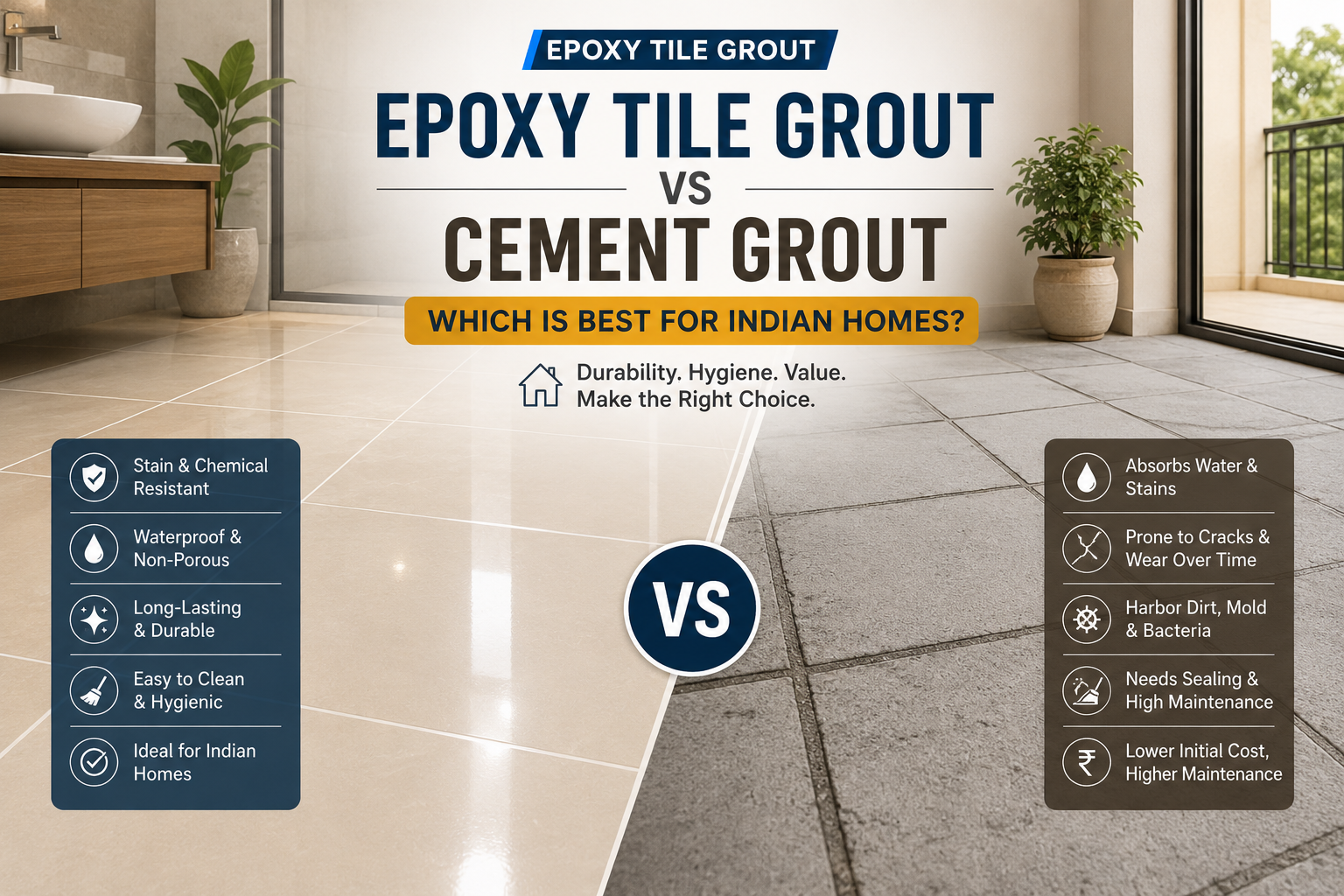
Made from cement, fillers, pigments, and additives, it is easy to work with, widely available, and relatively affordable. However, cement grout is naturally porous. Over time, it can absorb moisture, dirt, and stains if not properly maintained. This doesn't necessarily make it a bad option — it simply means that its suitability depends on where it is being used.
Epoxy Tile Grout: Designed for Demanding Spaces
Epoxy tile grout is made using epoxy resins and hardeners. It gives a dense, non-porous finish that offers superior resistance to water, stains, chemicals, and everyday wear. Because of its non-porous nature, it keeps the surface cleaner and maintains its appearance for longer.
Epoxy Tile Grout vs Cement Grout: At a Glance
By now, it's clear that both grout types can do the job. The real difference lies in how they perform once everyday life starts happening around them. Let's understand it by looking at the simplified table below.
| Feature | Cement Grout | Epoxy Tile Grout |
|---|---|---|
| Water Resistance | Absorbs moisture over time | Highly water resistant |
| Stain Resistance | Can stain if exposed to spills | Resistant to most household stains |
| Maintenance | May require periodic sealing and cleaning | Low maintenance |
| Durability | Good for standard residential use | Excellent for high-use areas |
| Colour Retention | Can fade or discolour over time | Maintains colour consistency longer |
| Resistance to Mould & Mildew | Moderate | Better resistance due to non-porous nature |
| Installation | Easier and quicker to install | Requires skilled application |
| Initial Cost | More economical | Higher upfront investment |
| Best Applications | Bedrooms, living rooms, dry areas | Bathrooms, kitchens, balconies, utility areas |
The table gives a quick overview, but it isn't a selection checklist. Choosing grout isn't about comparing features — it's about understanding the demands and requirements of each area of your home and selecting a grout that supports those needs.
Which Grout Works Best for Different Areas of the Home?
Just as you wouldn't choose the same tile for every room, the same logic applies to grout. Let's look at how professionals typically approach grout selection in different spaces.
Bathrooms
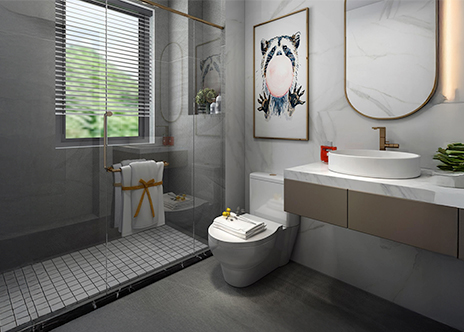
Bathrooms are probably the biggest test for any grout material. Moisture is constant, soap residue builds up over time, hard water leaves deposits behind, and cleaning products are used regularly. All these tough conditions call for a tough grout material, and epoxy grout is the preferred choice here if budget is not an issue.
Its non-porous nature makes it resistant to moisture and staining, suitable for:
- Shower walls
- Shower floors
- Wet bathrooms
- Feature wall tiles
- Premium bathroom designs
If you're investing in high-quality bathroom tiles, don't forget epoxy grout — it preserves the overall look of the space for a longer duration.
Kitchens
Cooking oils, masalas, turmeric, sauces, tea, coffee, and regular cleaning all put pressure on tiled surfaces. Selecting easy-to-clean tiles is important, but choosing the right grout material is equally important here, because the grout joints are often where stains become visible first.
Epoxy grout performs best in kitchen situations as it is less likely to absorb everyday spills. Recommended for:
- Kitchen backsplashes
- Kitchen flooring
- Utility spaces
- Pantry areas
If you've ever spent time trying to remove stains from grout joints behind a cooktop, you'll understand why many homeowners see value in upgrading to epoxy grout.
Living Rooms and Bedrooms
The floors generally stay dry here, and cleaning is simple and straightforward. That is why cement grout continues to be the preferred choice of Indian homes for these spaces — it doesn't impact the budget as much as other grout materials.
That said, if you're creating a premium home with large-format tiles and want maximum colour consistency across the surface, epoxy grout can still be worth considering.
Balconies and Utility Areas
Rainwater, humidity, dust, temperature changes, and regular cleaning sum up the demands of a balcony surface. Over time, these environmental factors can impact grout performance. As we now know, epoxy grout handles moisture more effectively and is the preferred option for:
- Open balconies
- Utility balconies
- Laundry areas
- Semi-outdoor spaces
In areas exposed to weather, investing in better-performing grout can help reduce future maintenance concerns. But if stains and appearance aren't a concern for the outer area, homeowners can opt for cement grout confidently as it reduces the budget by a significant amount.
A Few Things Worth Considering Before You Choose
Before making a final decision, this short list of questions will help you step back and look at the bigger picture.
Ask yourself:
How important is maintenance for you?
Some homeowners don't mind periodic upkeep. Others prefer surfaces that stay cleaner with less effort. If low maintenance is your priority, then epoxy grout has the advantage.
Are you choosing light-coloured grout?
Lighter grout colours create a clean, seamless appearance, but they also tend to reveal stains more easily. This is where epoxy grout can offer additional peace of mind.
Is this a long-term home?
If yes, then focusing solely on installation cost may not be a wise decision. Durability, appearance retention, and maintenance requirements all become important considerations over time. If not, then cement grout can work best for you.
Common Mistakes Homeowners Make When Choosing Grout
Here are some of the most common mistakes professionals encounter.
Choosing grout based only on price
It's natural to compare material costs. But grout remains visible every day for the life of the tiled surface. A small saving during installation may not always deliver the best long-term value.
Using the same grout throughout the house
As we've already understood, different surfaces require different grout materials. A bedroom floor and a shower enclosure face completely different conditions. Choosing grout based on the specific needs of each area delivers better results.
Ignoring grout colour
Grout colour can completely change how tiles look after installation. A matching grout creates a seamless look — just like choosing the same colour thread while stitching. It looks like a small detail but can make or break the overall result. Selecting the right grout colour helps ensure the finish looks intentional and balanced.
Leaving the decision until the last minute
One of the easiest ways to avoid mess and later disappointment is to discuss grout colour and type while choosing tiles, not after the installation begins.
The earlier these decisions are made, the easier it becomes to achieve a cohesive final result.
So, Which Is Best for Indian Homes?
For dry indoor spaces such as bedrooms, study rooms, and living areas, cement grout continues to be a practical and economical choice. For bathrooms, kitchens, balconies, and other areas exposed to moisture or frequent cleaning, epoxy tile grout often offers better long-term performance.