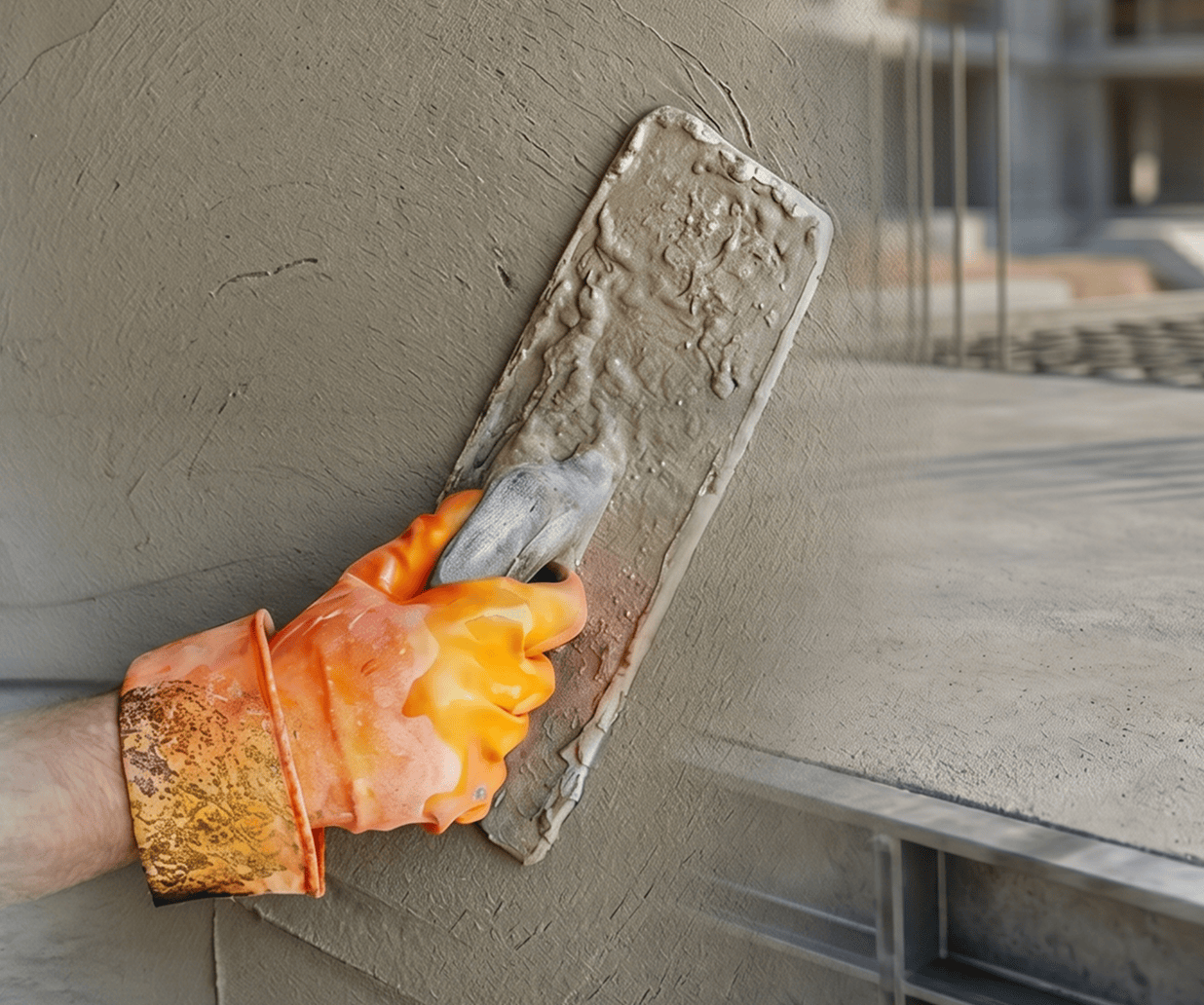
ACRYLIC POLYMER PRIMER
ACRYLIC POLYMER PRIMER
Protective coatings and primers from Somany Ceramics help prepare, protect and improve surfaces for durable construction and tiling applications.
ACRYLIC POLYMER PRIMER
ANTI CARBONATION- S
ANTI CARBONATION-W
COAL TAR EPOXY COATING
COAL TAR EPOXY HD
EZYPRIME AETM is a anti-efflorescence cum dampness resistant primer for building surfaces
EPOXY PRIMER
MOISTURE INSENSITIVE EPOXY PRIMER
PENETRATIVE PRIMER
SILANE PRIMER-S
SILANE PRIMER-W
The warmth of wooden flooring, without the fuss.

Explore our range of high-performance building solutions.

Understanding that exposed surfaces require dependable defence, these coatings are designed to withstand moisture, abrasion, and external stressors. Developed to create a uniform barrier, they help minimise deterioration, surface damage, and wear over time. The balance between application ease and protective strength ensures efficient usage while maintaining lasting results. Suitable for industrial zones, exposed structures, and high-impact areas, Protective Coatings deliver dependable performance where resilience and consistency are essential.
Formulated to provide strong coverage, chemical resistance, and environmental shielding, these systems ensure durability and consistent performance under varied conditions.


Tile adhesive is a factory-formulated dry powder that you mix with water (or additives) to create a paste for fixing tiles. It provides better grip, flexibility and uniform bonding compared to traditional cement mortar.
Cement mortar shrinks as it cures, creating voids and potential weak spots. Tile adhesive is a fine, uniform paste that sets faster and bonds consistently across the tile surface. It reduces the risk of cracking or debonding.
A polymer-modified cement-based tile adhesive is generally recommended for ceramic tiles on walls or floors. These adhesives are formulated for tile installation and give a strong, durable bond for ceramic materials.
Usually 3–6 mm of adhesive (with a notched trowel) is used under most tiles. For uneven surfaces or large-format tiles, up to ~10 mm thickness may be needed (using proper trowel size). Always follow manufacturer guidelines.
Yes. You can use tile adhesive on walls. For vertical applications, use a non-sag (T-rated) or thixotropic adhesive to prevent tiles from slipping before setting. This ensures wall tiles stay in place during installation.
It varies by product, but a normal-set adhesive typically sets in ~24 hours. Fast-set (rapid) adhesives can set in 3–5 hours. Always allow full cure (often 24–48h) before grouting or light use, per the product instructions.
Yes, if the old tiles are sound and clean. For tile-on-tile applications use a high-quality, polymer-modified adhesive designed for this purpose. Make sure old tiles are firmly bonded, free of grease, and properly primed.
Coverage depends on tile size and trowel notch. As a rough guide: small tiles may use ~2–3 kg/m², medium tiles ~4–5 kg/m², and large-format tiles ~6–7 kg/m² of adhesive. Check the adhesive datasheet for exact coverage.
Yes – but use the right type. For outdoors or wet-exposed areas (balconies, facades), choose a weather-resistant, polymer-modified adhesive. For swimming pools or submerged areas, use a specialized waterproof/flexible adhesive.
Vitrified tiles have low porosity and won't bond to cement; Ezy Fix adhesives contain polymers that create a strong chemical bond.
It is a polymer-modified grey adhesive for interior floors, suitable for ceramic and standard-sized vitrified tiles.
It is possible, but SEF 444 (White) is specifically formulated for light marble or glass to prevent the grey adhesive from showing through.
SEF 777 or SEF 888 are specifically designed for external walls, offering the flexibility and water resistance needed for weather exposure.
After the initial mix, the adhesive should sit for 5-6 minutes to let the polymers activate, followed by a quick re-mix before use.
Yes, it is a Type 4 adhesive designed for the structural movements and high wind loads associated with exterior cladding on high-rise structures.
It is not recommended. The paint must be scraped off and the wall "keyed" (roughened) to ensure the adhesive can bond directly to the masonry.
For most Ezy Fix products, the mixed adhesive remains usable in the bucket for 3-4 hours, depending on ambient temperature.
These measure "Deformability" or flexibility; S2 adhesives like SEF 888 can handle more substrate movement without cracking the tile.
Yes, epoxy adhesives provide exceptional bond strength and total waterproofing, making them ideal for submerged and heavy-use areas.
A 20kg bag typically covers ~35-40 sq. ft. for a 4mm bed, but this decreases significantly when "back-buttering" large format tiles.
Yes, SEF 666 and SEF 777 are designed for overlaying new tiles on top of old ones, saving time and demolition debris.
Never add cement to adhesive; it disrupts the balanced polymer chemistry and will likely cause the bond to fail over time.
The window of time (e.g., 30 mins) after applying adhesive to the wall where it is still "wet" enough to bond with the tile.
Yes, SEF 666 Plus is a Type 3 adhesive suitable for both interior and exterior wall installations of large-format tiles.
Excess water leads to "shrinkage" and weaker bond strength, potentially causing tiles to crack or detach as the adhesive dries.
Yes, but you must use an adhesive specifically formulated for drywall (like Weberfix) or a highly polymer-modified cementitious one.
Typically 12 months from the date of manufacture if stored in a dry, sealed condition away from direct moisture.
Some popular types of tile adhesives include cement-based adhesives, epoxy adhesives, and acrylic adhesives. Somany offers the Somany EZY Fix brand, which provides complete tiling solutions including cement based adhesives, grouts (Epoxy & Cement), and tile cleaners.
To prepare a surface for tile installation, you should ensure that it is clean, dry, and leveled. You may need to remove any old tiles, fill in any holes or cracks, and use a primer to create a suitable surface for the adhesive.
Some common types of adhesives used for tile installation include cement-based adhesives, epoxy adhesives, and acrylic adhesives.
The type of adhesive used for outer wall cladding tiles will depend on the type of tile and the surface it will be applied to. For example, cement-based adhesives are commonly used for natural stone tiles, while epoxy adhesives may be more suitable for glass tiles. Somany also offers High strength cement based tiles adhesives SEF 777 & SEF 888 which can with stand heavy large format ceramic and vitrified tiles, including stones and concretes.
A high-performance epoxy adhesive should be used for large format Glazed Vitrified Tiles, as it provides a strong bond and is resistant to water and chemicals. It is recommended to used EZY Fix Tile adhesives SEF 666, SEF 777 & SEF 888 in large format tiles depending upon application
Cement adhesisves are not advised for Coverstone. We recommend Ezyfix 888 for walls with height over 6 foot lower areas and for floors Ezyfix 777 is recommended
Grout joints tend to capture dirt and darken over time. Clean them regularly with appropriate grout cleaners or mild detergent. Sealing grout after installation helps prevent staining. Routine maintenance keeps grout looking clean.
You must wait at least 48 hours to allow the adhesive to fully set and the moisture to escape before sealing the joints with grout.
A resin-based grout that is 100% waterproof and stain-resistant; it is ideal for showers, kitchens, and swimming pools.
Yes, Somany Ezy Grout includes metallic glitter shades like Gold, Silver, and Copper to enhance the aesthetic of premium tiles.
There are over 40 shades available, allowing for precise matching or bold contrasting with any tile design.
The white, chalky mineral deposit that appears on cement grout joints. Using distilled water or epoxy grout can prevent this.
It must be cleaned "fresh" with a wet sponge and abrasive pad within 30-45 minutes; once cured, it is nearly impossible to remove.
Cement-based Ezy Grout should be sealed to prevent staining; Epoxy Ezy Grout is naturally non-porous and never requires sealing.
Using the admixture instead of water increases the flexibility and bonding of cement grout, making it more resistant to cracking.
A minimum of 3mm is recommended to accommodate the inherent "bending" in large tiles and provide enough room for thermal movement.
Corner joints are prone to structural movement. Use a flexible silicone "caulk" in matching colors instead of rigid grout for these transition joints.
When choosing a grout color, you should consider factors such as the color and texture of your tiles, the overall design of the room, and your personal preferences. You may want to test out different grout colors on a small area of your tiles to see how they look. Somany offers widest range of Grout colors (40 shades including Glitter).
When choosing grout for your tiles, you should consider factors such as the size of the gaps between the tiles, the color of the tiles, and the level of foot traffic in the area. You may also want to choose a grout that is water-resistant or stain-resistant, depending on the location of the tiles.
Cement-based grout is made from a mixture of cement, sand, and water, while epoxy grout is made from epoxy resin and a hardener. Epoxy grout is more durable and water-resistant than cement-based grout.
A cement-based grout is commonly used for ceramic tiles, as it provides a strong and durable bond. Somany EZY Grout comes with 1kg packet of cement based grout with more than 30 shades.
A high-performance epoxy grout is commonly used for vitrified tiles, as it provides a strong and durable bond and is resistant to water and chemicals. Somany EZY Grout (Epoxy) offers high performance and durable range in 40 exciting shades.
For exteriors we recommend Epoxy Ezygrout while in indoors Cementitious Ezygrouts are fine. Cement-based grout is made from a mixture of cement, sand, and water, while epoxy grout is made from epoxy resin and a hardener. Epoxy grout is more durable and water-resistant than cement-based grout.
Our commitment to quality is recognized worldwide. These awards and certifications reflect our unwavering standards and assure you of a truly world-class product.