Quick Answer
A floor-mounted toilet stands on the floor, while a wall-mounted one hangs on a frame hidden in the wall, with its tank hidden there too. When you weigh floor mounted vs wall mounted toilets, start by checking whether your wall can be opened for a frame. Pick wall-mounted for a new or fully redone bathroom, for a clear floor to mop and a seat at your chosen height. Pick floor-mounted when you're swapping an old WC and can't open the wall. Compare five things: space, cleaning, seat height and comfort, fitting and repairs, and cost.
Introduction
Wall-mounted and floor-mounted toilets are the two main ways to fit a western WC. Their bowls and seats can look much the same. But they're built into your home in different ways.
The type you choose affects how your bathroom wall is built. It changes how easily you clean around the WC, how high you sit and how repairs are done later.
Below, we explain what each type is. Then we compare them on the things you'll notice every day. After that, we match each one to different bathrooms and look at what makes the seat comfortable.
Key Takeaways
- Floor-mounted toilets stand on the floor, while wall-mounted ones hang on a frame hidden in the wall with their tank.
- Check your wall first, because wall-hung needs room inside it for the frame and cistern.
- Wall-mounted does better on floor space, mopping underneath and choosing your seat height.
- Floor-mounted is easier to fit and repair, with fewer parts and no wall work.
- Pick wall-mounted for a new or redone bathroom, and floor-mounted for a swap in a finished one.
- If your wall can't take a frame, floor-mounted at the right height for your family is the answer.
- Seat comfort depends on height and bowl shape, and an elongated bowl can give more room to sit.
What wall-mounted and floor-mounted toilets are
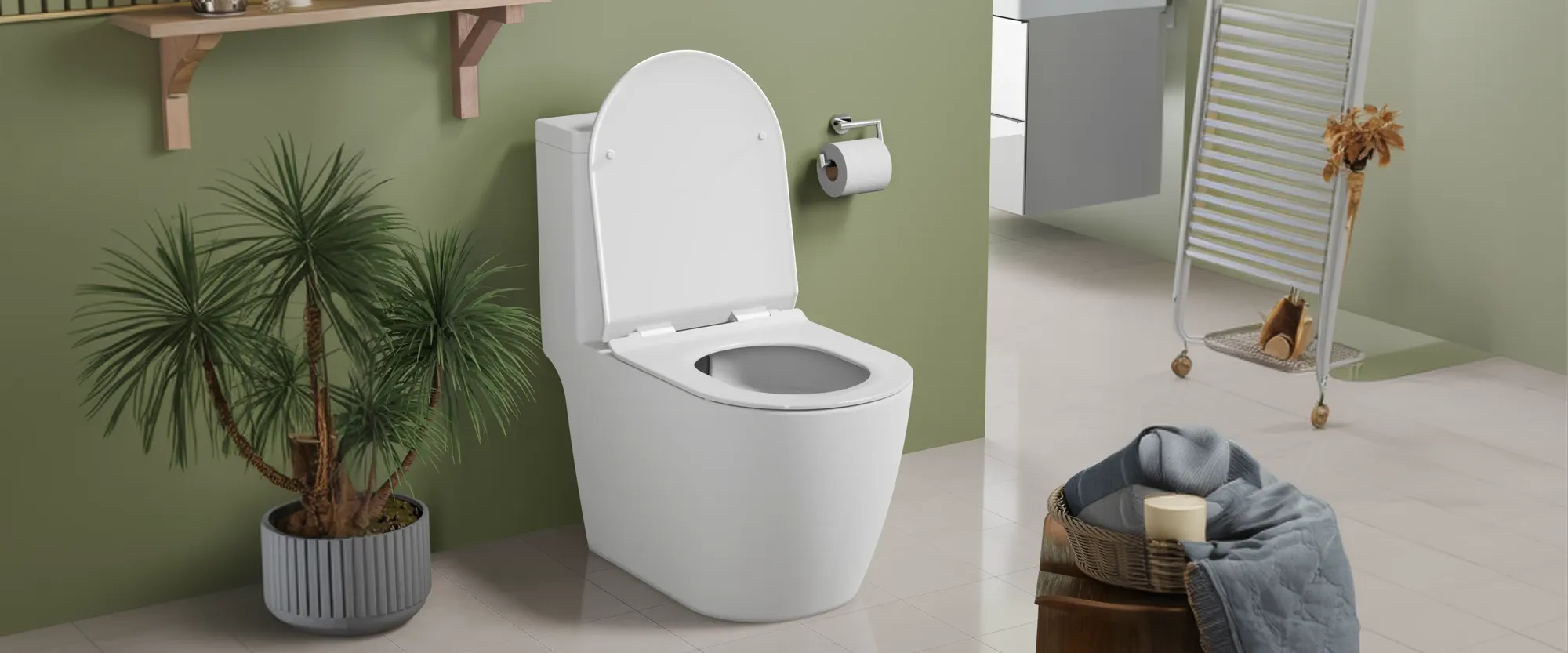
The main difference between floor mounted and wall mounted toilets is what holds the bowl up and where the tank goes. Floor-mounted WCs stand on the floor and are fixed to it.
Some are one piece, with the tank and bowl made as a single unit. Others come in two pieces, with the tank fitted on top of the bowl.
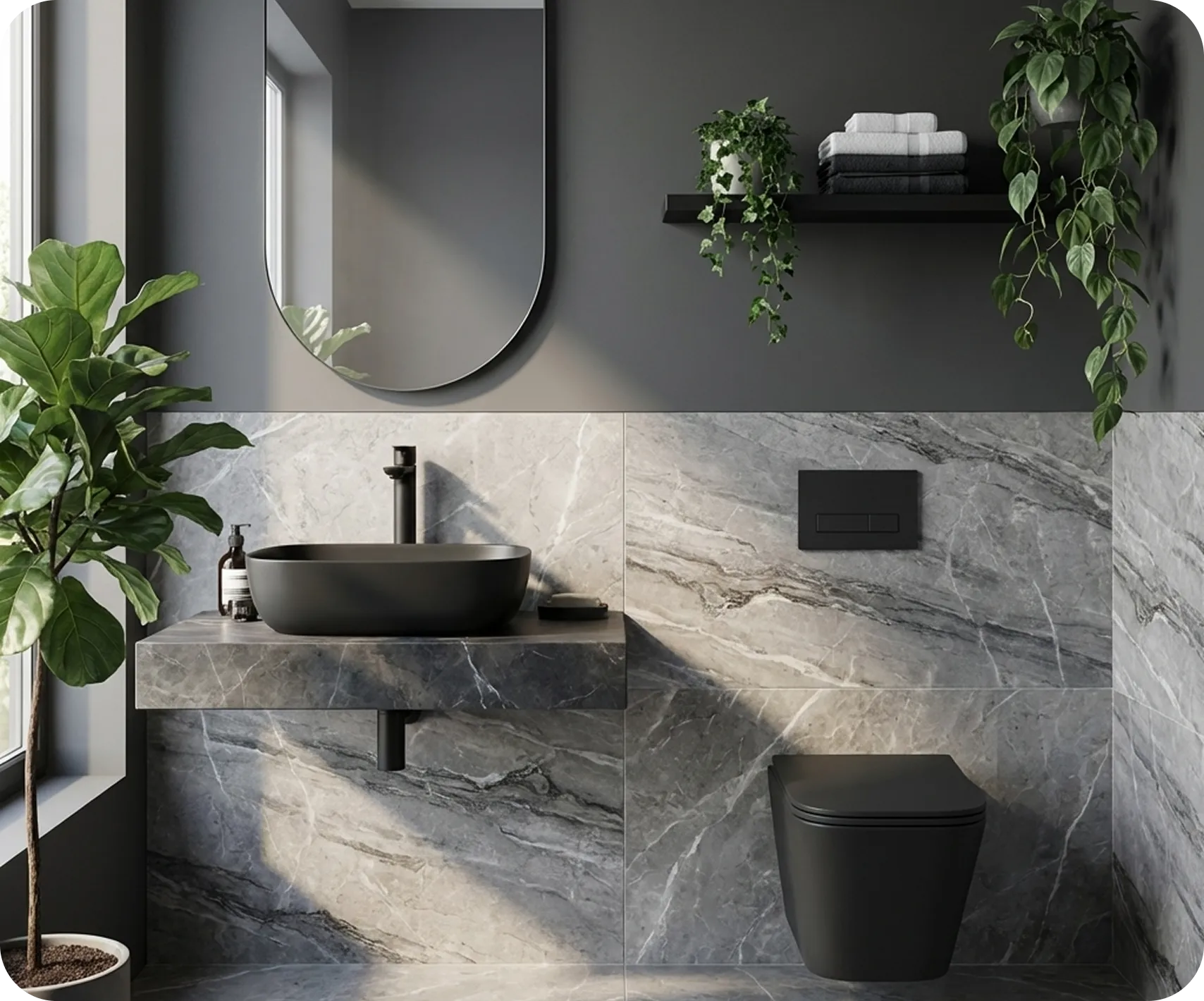
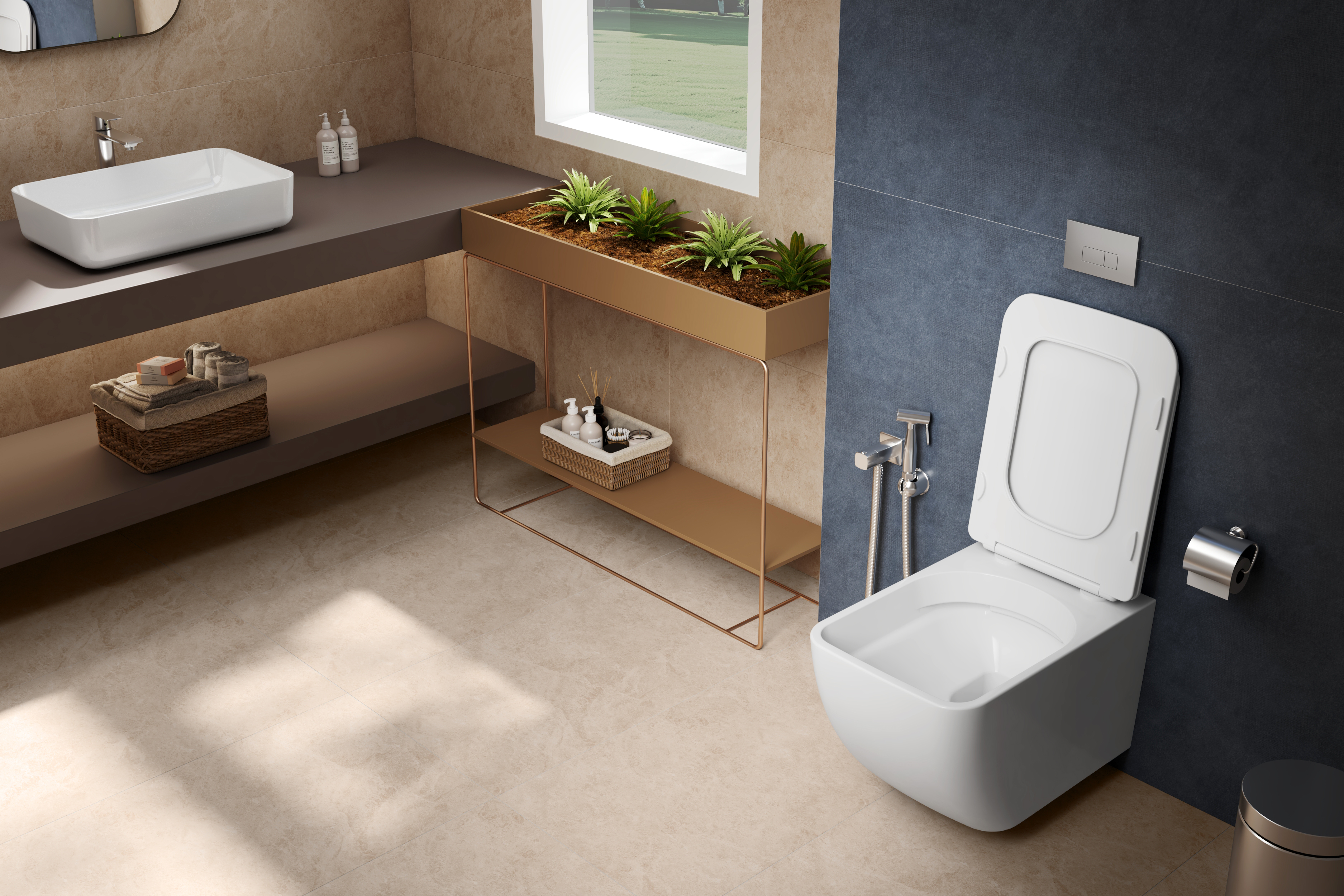
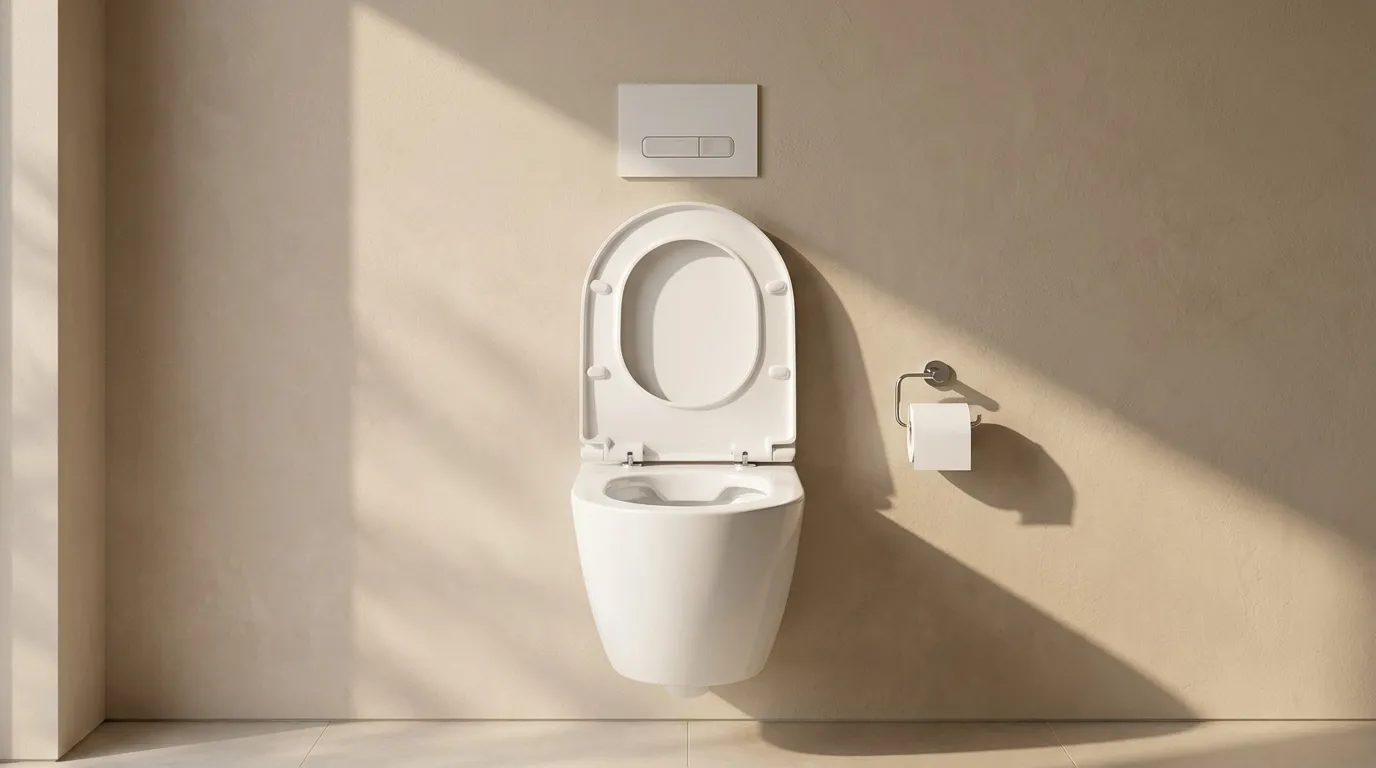
A wall-mounted toilet, also called wall-hung, is fixed to the wall with a gap under the bowl. Its tank is hidden inside the wall. Plumbers call this a concealed cistern.
A frame built into the wall holds this tank and carries the bowl. Once it's fitted, you only see the bowl, the seat and the flush button. In shops, you'll also hear either type called a commode.
How each one is fitted changes the space, the cleaning, the seat height, the repairs and the cost.
Floor-mounted toilets need nothing inside the wall. They sit on the floor and join the drain, so they can go into a bathroom that's already tiled.
The wall-hung type needs room in the wall for its frame and tank. That space has to be made before tiling. The work can need more than one tradesperson.
Once the wall is tiled over, replacing the hidden tank or frame can mean cutting into the wall. So make the choice before building work starts.
That makes your wall the first thing to check. If it can be opened and has room for the frame, you can pick either type. If not, floor-mounted is your choice.
Floor mounted vs wall mounted toilets, factor by factor
With that wall check done, the two types differ on five things you'll notice. They are space, cleaning, seat height and comfort, fitting and repairs, and cost. Wall-mounted comes out ahead on the first three. Floor-mounted wins the last two.
Wall hung toilet vs floor-mounted toilet at a glance
For each factor, the table shows what to check and which type does better.
Factor | What to check | Which one does better | Best for |
Floor space | Room in front of and around the WC | Wall-mounted: the tank sits in the wall and the floor beneath stays open | Small bathrooms |
Cleaning | Corners around the base that a mop can't reach | Wall-mounted: you can mop straight underneath | Homes that mop every day |
Seat height | A height that suits the person who finds sitting and standing hardest | Wall-mounted: hung at the height you choose when it's fitted | Elders and anyone with stiff knees |
Fitting | Whether the wall can be opened and has room for a frame | Floor-mounted: nothing gets built into the wall | Swapping a WC in a tiled bathroom |
Repairs | Whether there's a hatch to reach a hidden tank | Floor-mounted: the tank sits in the room, so its lid lifts off | Homes that want repairs without wall work |
Cost | Frame, hidden tank, wall work and trades, on top of the bowl | Floor-mounted: fewer parts and no wall work to pay for | Tight budgets |
Space in the bathroom
A wall-hung model keeps its tank inside the wall, so it takes up less room in the bathroom. The floor under the bowl stays open. That open floor can make a small bathroom look bigger.
With no tank standing behind it, this type can sit closer to a basin or cabinet. The floor tiles also carry on underneath, so more of your floor is on show.
A toilet that stands on the floor uses its full footprint. Its tank sits behind the seat, on top of the bowl or built into it.
The hidden tank still needs space somewhere. The wall must be deep enough for the frame and the tank it holds. If yours isn't, ask your plumber whether the space can be made before you plan around wall-hung.
Verdict: wall-mounted saves floor space, as long as your wall has room for the frame.
Cleaning around the WC
Nothing stands on the floor beneath a wall-hung toilet. You can run a mop straight underneath and clean the whole floor in one go.
If you wash the bathroom floor with a bucket of water, there's no base for the water to collect around.
Floor-mounted toilets meet the floor at the base. You have to mop around that base and reach into the gap behind it. The join between the base and the floor is one more line to scrub.
If your bathroom floor gets mopped every day, you'll notice this difference every day.
Verdict: wall-mounted is easier to keep clean around and under.
Seat height and comfort
A wall-hung toilet can be hung at any height you need. The plumber fixes the frame at that height. You decide it before the frame goes in.
Each floor-mounted model comes at the height it was made at. For a higher or lower seat, you pick a different model.
Height matters most for anyone who finds it hard to sit down or get up. One US accessibility rule puts the seat top 430 to 485 mm above the floor for accessible toilets, a useful guide for older family members.
The lower the seat, the further you bend to sit down. That can be hard on stiff knees.
Say your parents find your current WC too low. The wall-hung type can be set a little higher for them. Before you shop, measure your current seat from the floor to the top.
Verdict: wall-mounted, because you set the height. Floor-mounted works well too if the model's height suits you.
Fitting and repairs
Floor-mounted is simpler to fit. It sits on the floor and joins the drain, with nothing built into the wall.
The wall-hung type needs its frame and hidden tank built in first. Fitting the frame can be tricky. The job can need more than one tradesperson.
All of this happens before the wall is tiled, because both end up behind the tiles.
Floor-mounted is easier to repair too. When the toilet stands on the floor, its tank sits right there in the room. A plumber can lift its lid and reach the parts.
With wall-hung, the parts behind the wall can be hard to reach. Some setups include an inspection hatch, a small removable panel, to help with this. Even then, the parts can be awkward to work on.
Before you settle on wall-hung, ask your plumber how they'll reach the tank. Check whether the flush button plate or a hatch comes off for repairs, and whether spare parts are easy to get locally.
Verdict: floor-mounted is easier to fit and easier to repair.
Cost of the full fitting
The bowl's price is only one part of the cost. Wall-hung also needs the frame and the hidden tank. Then there's the work of opening or building the wall, and the trades who do it.
With floor-mounted, you pay for the WC and a plumber to fit it. There's no wall work. If the drain point in the floor is already there, there's nothing extra to build.
If you're redoing the bathroom anyway, the wall is being opened already. You won't pay to break into a wall that's already tiled.
Get a fitted price for each type, with every part and trade included. That way you compare them fairly. For wall-hung, plan with your plumber and tiler together so the frame, pipes and tiles line up.
Verdict: floor-mounted suits a tight budget, because it has fewer parts and needs no wall work.
Tips for choosing between a wall-mounted and floor-mounted toilet
- Decide on the type before the plumber lays pipes or the tiler starts. The frame for wall-hung goes in first.
- Sit on display models in a showroom to check the seat height and bowl shape.
- Have your plumber check whether your wall can be opened and has room for the frame and hidden tank.
Mistakes to avoid when choosing a wall-mounted toilet
- Don't tile the wall before the frame and cistern are fixed. Getting to them later means breaking tiles.
- Avoid going wall-hung for a quick swap in a finished bathroom. The wall has to be opened to fit it.
- Don't leave the seat height until the end. The frame sets the height, so decide it before fitting starts.
- Never assume any wall can take a frame. The frame and its fixings carry the bowl and the person using it, so have your plumber check where and how it will be fixed.
- Don't decide on looks alone. How much each factor matters depends on your bathroom: new or finished, small or roomy, and who uses the WC most.
Which toilet suits your bathroom
With wall mounted vs floor mounted toilets, your bathroom and the people using it settle the choice. A new or fully redone bathroom suits wall-mounted. A finished one suits floor-mounted.
A new home or a full renovation
With the walls open or still being built, a wall-hung toilet is simpler to plan in. The frame goes in with the pipes, and the tiles go over it.
This is also the time to settle the seat height. Have the main users sit on a few showroom models. Then give your plumber the height before the frame is fixed.
If you'd rather have simpler repairs, floor-mounted still works well here.
Replacing an old WC in a finished bathroom
If the bathroom is already tiled and you only want a new WC, choose floor-mounted. It sits on the floor and joins your existing drain. The wall stays as it is.
Floor-mounted WCs come with an S-trap or a P-trap outlet. That's the built-in bend that carries waste away to the drain.
Before you buy, have your plumber check which outlet your drain needs and measure its distance from the wall. That way, the new WC lines up with the pipe you have.
Going wall-hung here means opening up the tiled wall for the frame and cistern. Then it has to be tiled again.
A small bathroom - H3
In a small bathroom, going wall-hung can make the room look bigger. The tank moves out of sight, and you can see the floor beneath it.
That only works if the wall has room for the frame. If it doesn't, choose floor-mounted and check that the model leaves you enough room to stand in front of it. Measure the gap between the WC spot and the door or basin before you buy.
A bathroom next to a bedroom
If your bathroom shares a wall with a bedroom, the flush sound can matter at night. A hidden tank keeps the flush from making much noise.
If you're building new, that's easy to plan in along with the frame. In a finished bathroom, though, a quieter flush has to be weighed against opening a tiled wall.
A bathroom used by elders or anyone with knee trouble
For someone who finds it hard to sit and stand, seat height comes first. Wall-hung lets you set the seat where it suits them, using the accessibility range as a guide.
If you're going floor-mounted, take them to a showroom to sit on a few models. Choose the one whose height they find easiest to get on and off. Bring them along, because a height that suits you may not suit them.
When the wall can't take a frame
Some walls can't take a frame and hidden tank. There may not be enough depth. Or opening the wall may mean breaking tiles you want to keep.
Your plumber can tell you after checking the wall. If the answer is no, stop planning for wall-hung. Choose floor-mounted, at a height that suits your family.
For comfort, the type only changes how you set the height: at fitting for wall-hung, by picking the model for floor-mounted. How the seat feels also depends on its shape.
What makes a comfortable toilet seat on either type
Comfort comes from the height you sit at and the shape of the bowl and seat. Both types can get these right, so first pick the type your wall allows, then the height and bowl shape.
Seat height that suits everyone at home
If several people use the same WC, plan the height around the one who finds sitting and standing hardest. Measure from the floor to the top of the seat. That's how accessibility guidelines measure it, so you compare models fairly.
A seat can feel fine for a second in a showroom. Sit for a little while when you test it.
Round or elongated bowl
WC bowls come in round and elongated shapes. An elongated bowl is longer from front to back. It can give you more room to sit.
Many people find an elongated shape more comfortable. A round bowl is shorter, so check the space in front of the WC before you choose.
Sit on both shapes in a showroom to feel which one suits you.
A seat cover that fits your bowl
The seat cover sits right on the bowl, and it has to match the bowl's shape and fixing holes. When you buy a WC, ask the dealer for the cover made for that model.
Try the WC with its seat cover fitted at the showroom. That's how it will feel at home.
Our Postura design for seating comfort
Our Postura design is shaped to support your natural posture while you sit. It reduces strain and makes sitting more comfortable and stable. You'll find it on our Postura wall-hung WC.
Also Read: Bathroom Tile Colours and Mood: Colour Psychology Guide for Indian Homes
Conclusion
The first thing to settle is your wall. If it's open or being built, going wall-hung gives you a clear floor to mop and a seat at the height your family needs. If the bathroom is already tiled, floor-mounted goes in without touching the wall, and its tank stays easy to reach.
Add up the full fitted cost of floor mounted vs wall mounted toilets too, since wall-hung brings a frame, a hidden tank and wall work. If you're unsure about your wall, a plumber can check it before you spend anything.
Whichever type you choose, sit on it before you buy, because its height and bowl shape decide how comfortable it feels. Find a dealer near you with our store locator and try our WCs in person.
FAQs
Q. Wall hung commode vs floor mounted commode: which is better?
Wall-hung suits a new or fully redone bathroom, and floor-mounted suits a finished one. Wall-hung frees up floor, is easier to mop under and can be hung at your chosen height. Floor-mounted fits without any wall work, and its tank is easy to reach for repairs.
Q. Can a wall-hung toilet be installed in an existing bathroom?
Yes, but the wall has to be cut open so the frame and hidden tank can be built in. Then it has to be tiled again. If you'd rather keep your tiles, the floor-standing kind is the simpler swap.
Q. Are wall-hung toilets hard to maintain?
Cleaning is easy, because you can mop right underneath, but repairs are harder. An inspection hatch can help, but the hidden parts can still be awkward to reach. Ask your plumber how the tank will be reached before you choose one.
Q. Do wall-hung toilets need a special wall?
Yes, the wall needs room inside for the frame and hidden tank, and the frame must be fixed firmly. Your plumber can check both before you buy. If the wall can't take a frame, floor-mounted is the one to fit, because it needs nothing inside the wall.
Q. What are the disadvantages of a wall-hung toilet?
Fitting can be tricky, and it has to happen before the wall is tiled. The hidden parts can be hard to reach for repairs, and replacing the tank or frame can mean cutting into the wall. You also pay for a frame, a hidden tank and wall work on top of the bowl.
Q. Are wall-hung toilets worth it?
Yes, if you're building or fully redoing the bathroom and the wall has room for the frame. You get an open floor, easier mopping and a seat at your chosen height. For a WC swap in a finished bathroom, floor-mounted is more practical, because it skips the wall work and extra parts.
Q. How high should a wall-hung toilet be?
Set it at a height that suits the people who use it most, especially anyone who finds sitting and standing hard. Measure your current seat from the floor to the top and decide whether the new one should sit higher or lower. Settle the height before fitting starts, because the frame fixes it.
Q. Is a round or elongated toilet seat more comfortable?
An elongated seat can give you more room to sit, and many people find it more comfortable. A round bowl is shorter from front to back, so it leaves a little more space in front of the WC. Sit on both shapes in a showroom, then ask for the seat cover made for the one you pick.