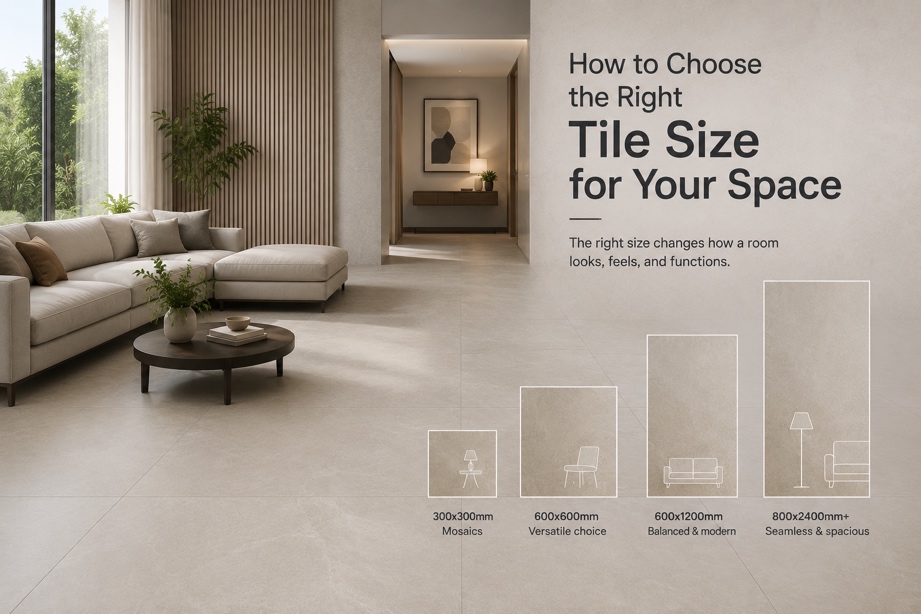
Most people choose a tile for its colour or pattern and treat the size as an afterthought. It's the wrong order. Size is the single biggest decision in how a finished space feels, it changes the sense of scale, the number of grout lines, the amount of maintenance, and whether a room reads as open or cramped. Get the size right and an ordinary tile looks considered. Get it wrong and even a beautiful surface fights the room.
Here's how to think it through.
Big rooms can take big tiles
In a large floor area, large-format tiles do something small ones can't: they create a clean, continuous surface with very few interruptions. Fewer grout lines means a calmer, more seamless look, and a space that feels even bigger than it is. Open-plan living rooms, lobbies, and large kitchens are where large formats earn their place. Somany's Coverstone slabs that come in sizes like 800x2400mm and 800x3000mm can give your space the contemporary look it always deserved.
The practical bonus: fewer joints also means less grout to clean over the years.
Small rooms are more flexible than people think
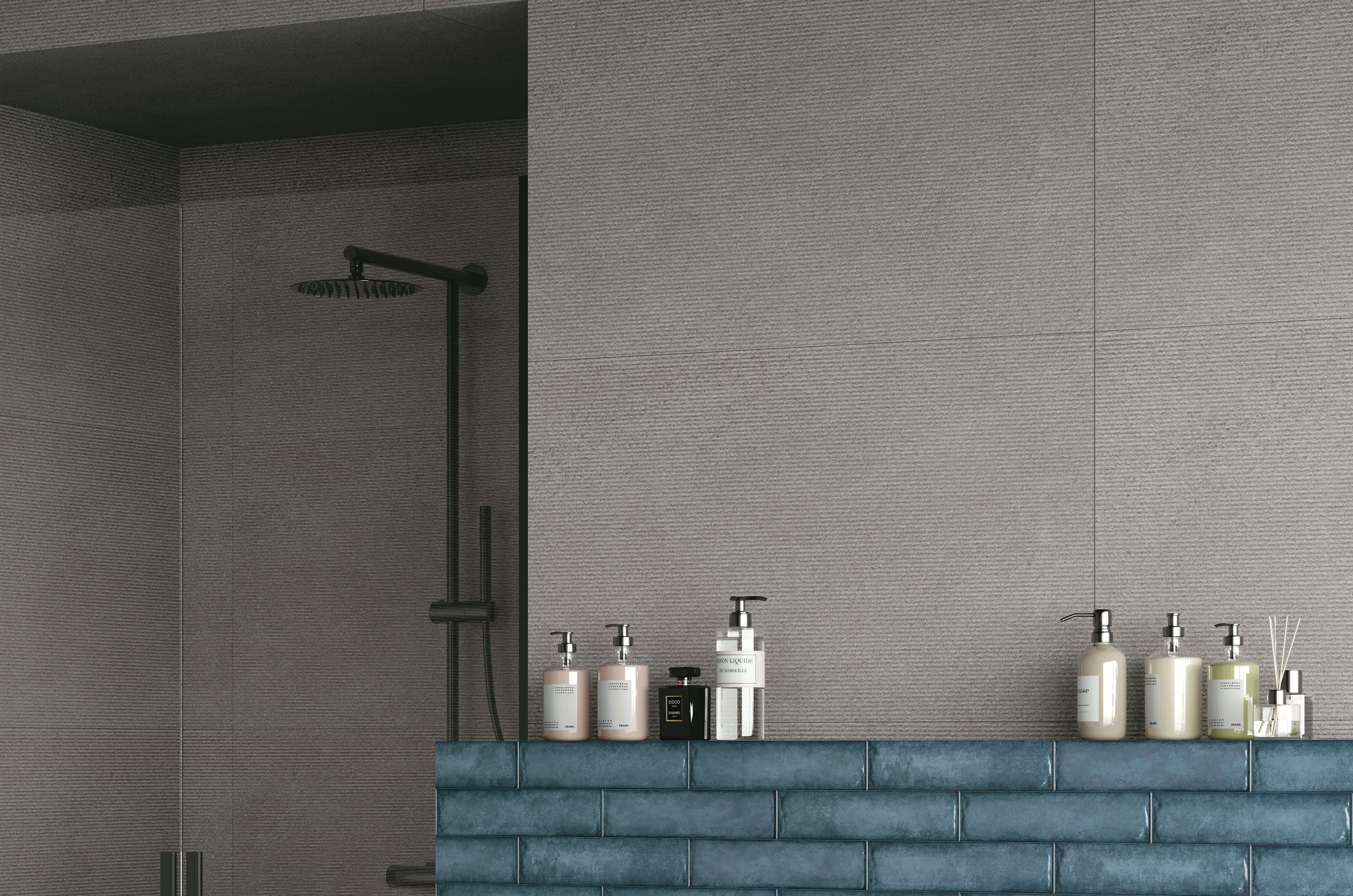
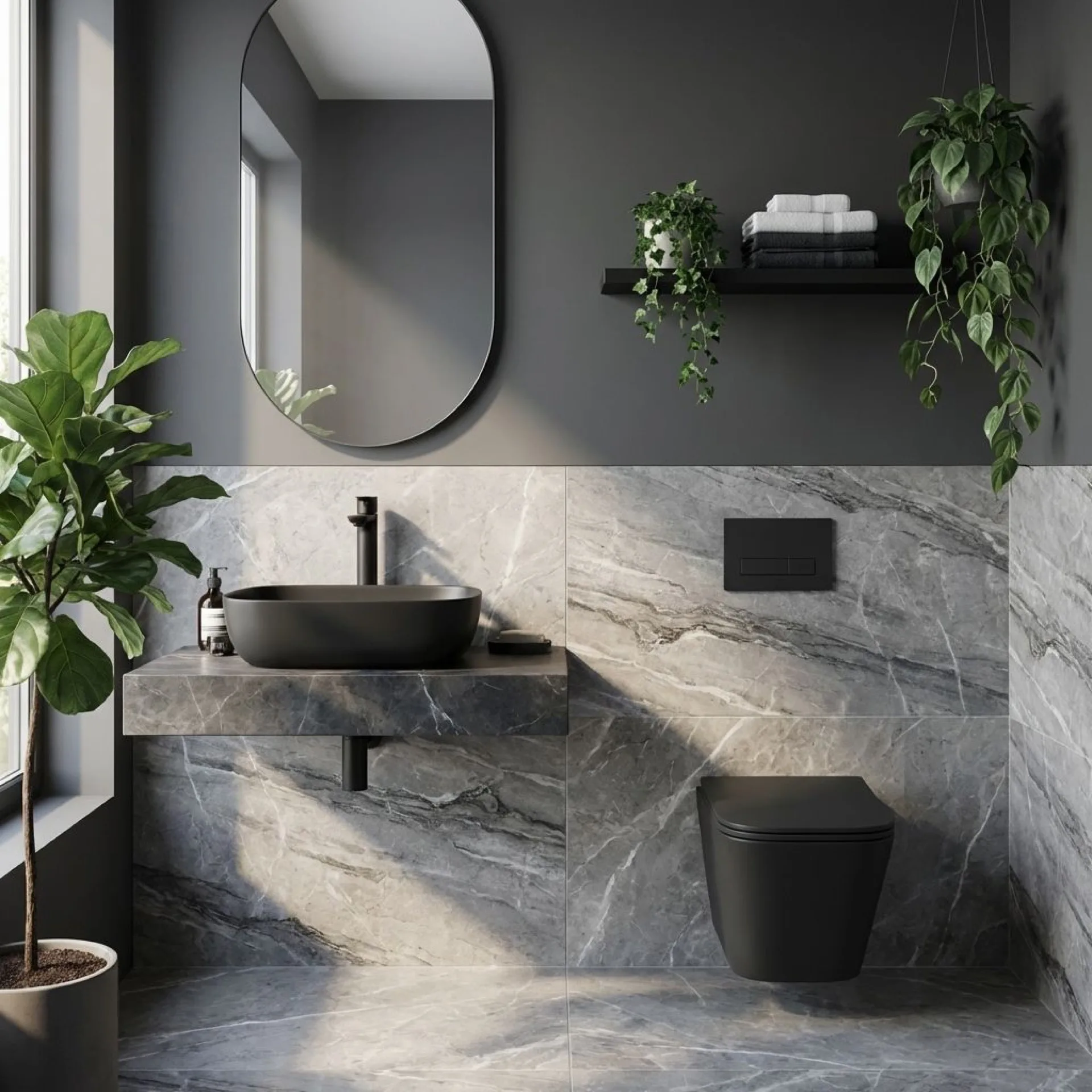
There's an old rule that small rooms need small tiles. It's mostly a myth. In fact, using a larger tile in a compact bathroom with thin, colour-matched grout lines, can make the space feel more expansive, because the eye isn't broken up by a grid of joints. Small mosaics still have their place for shower floors (where the extra grout adds grip) and as feature accents, but don't default to tiny tiles just because the room is tiny.
The real question in a small space isn't "how small should the tile be", it's "how few grout lines can I get away with."
Match the format to the surface
Walls and floors don't always want the same thing. Floors generally suit larger formats and need a finish rated for foot traffic and slip resistance. Walls can carry more decorative or textured options. Outdoor areas have their own requirements entirely, surfaces need to handle weather and grip, so a tile that's perfect for an indoor living room may be unsuitable for a balcony or patio.
The simplest way to navigate this is to browse by space and application rather than by looks alone, so you only see surfaces actually suited to where you're putting them.Explore tiles by space
A quick reference
- Large open floors: large-format tiles, minimal grout, seamless feel
- Compact bathrooms: larger tiles with matched grout to avoid a busy grid; mosaics only where grip is needed
- Feature walls: more freedom for texture, pattern, and smaller decorative formats
- Outdoor / wet areas: prioritise slip-rated, weather-suitable surfaces over aesthetics alone
Don't decide on paper - See it
Tile size is genuinely hard to judge in your head. A "600x600mm" means little until you see it spread across your actual room. This is exactly what a Somany Tile visualizer is for: preview the same design in different sizes, in a real setting, and the right format usually becomes obvious within minutes.
Visualize tile sizes in your room
If you upload a photo of your own space, you can see precisely how a format sits against your room's proportions, far more reliable than measuring and imagining.
The takeaway
Choose the room first, the size second, and the design third. When size leads the decision, the finished space almost always feels right, open where it should be open, calm where it should be calm, and practical where it needs to be.Not sure where to start? Take the Find Your Style quiz for tailored recommendations matched to your taste, or browse the complete Somany tile collections to see the size and format options in each range.
Frequently Asked Questions
Does tile size really make that much of a difference to how a room looks?
It's arguably the biggest single decision in how a finished space feels. Size affects the sense of scale, the number of grout lines, the maintenance required, and whether a room reads as open or busy. Colour and pattern matter, but getting the size wrong can make even a beautiful tile work against the room.
What tile size works best for a large open-plan space?
Large-format tiles. In a spacious living room, lobby, or open-plan kitchen, bigger tiles create a continuous, uninterrupted surface that makes the space feel even more expansive. Somany's Coverstone slabs, available in sizes like 800×2400mm and 800×3000mm, are built exactly for this kind of application, with the added benefit of far less grout to maintain over time.
Is it true that small rooms need small tiles?
Mostly a myth. A larger tile with thin, colour-matched grout can actually make a compact bathroom feel more open, because fewer grout lines mean less visual clutter. Small mosaics still earn their place on shower floors (where the extra joints add grip) and as decorative accents, but there's no rule that a small room demands a small tile.
Do I need different tile sizes for walls versus floors?
Not necessarily different sizes, but different priorities. Floors need formats suited to foot traffic and slip resistance. Walls have more flexibility, you can introduce texture, pattern, or decorative formats that wouldn't be practical underfoot. Browsing by space and application, rather than by looks alone, is the simplest way to avoid a mismatch.
What should I prioritise for outdoor or wet areas?
Grip and weather suitability come first. A tile that works perfectly in an indoor living room may be entirely wrong for a balcony or patio. For outdoor and wet areas, always check that a tile is rated for slip resistance and can handle exposure to the elements before considering its aesthetics.
How do I know if a tile size will actually work in my room?
See it rather than imagine it. Dimensions on paper, "600×600mm" are hard to visualize at scale. Somany's Tile visualizer lets you preview different sizes in a real setting, and if you upload a photo of your own space, you can see exactly how a format sits against your room's proportions before making any commitment.