Order too few tiles and your mason stops mid-job waiting for a top-up that might not even match. Order blind and you overpay for boxes you'll never use. Getting the count right the first time avoids both.
Here's how to work out exactly how many tiles you need, room by room, in the unit Indian dealers actually quote in: square feet.
Work in square feet, not the tile's mm label
A tile box is usually labelled in millimetres, 600x600 mm, 300x600 mm, and so on. Nobody buys or bills in millimetres, though. Indian dealers quote coverage and price per square foot, so convert your plan into feet before you calculate anything else.
If your architect's drawing is in metres, 1 sq m works out to roughly 10.76 sq ft. Convert once, at the start, so every number after this lines up with your dealer's quote.
Work out your floor area
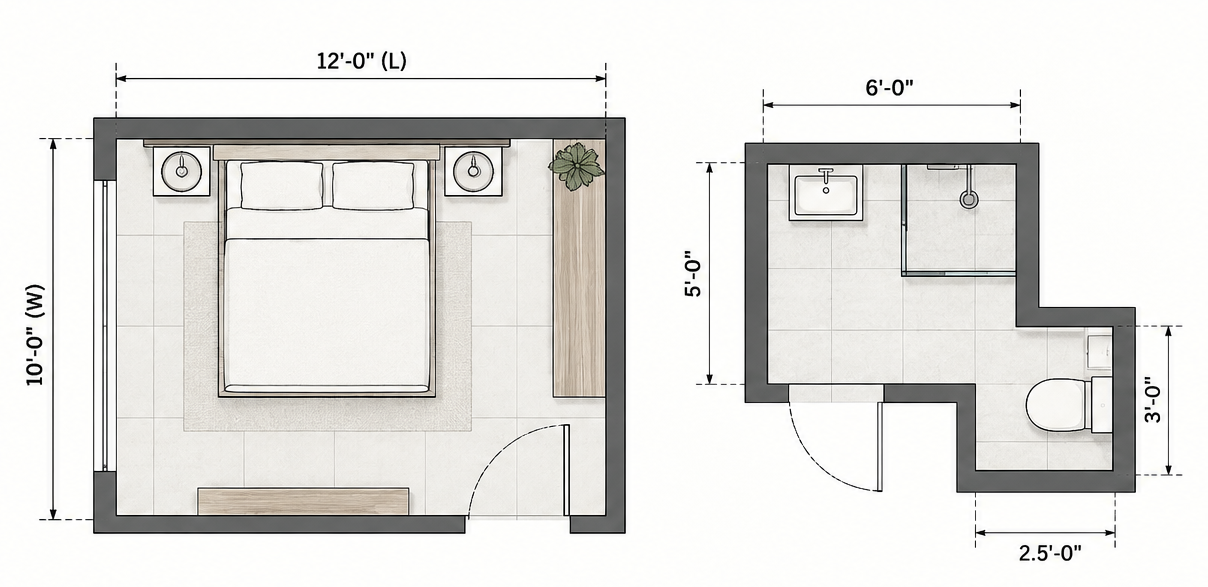
Multiply the room's length by its width. A 10 ft by 12 ft bedroom comes to 120 sq ft.
If the room isn't a clean rectangle, split it into sections and add them up. A bathroom with a WC alcove might work out to two pieces: 6 ft x 5 ft for the main floor, plus 2.5 ft x 3 ft for the alcove, giving 30 sq ft and 7.5 sq ft, a total of 37.5 sq ft.
Tile the floor and wall behind a vanity too. It's standard practice, protects the surface, and makes a future plumbing change easier.
Work out your wall, dado and splashback area
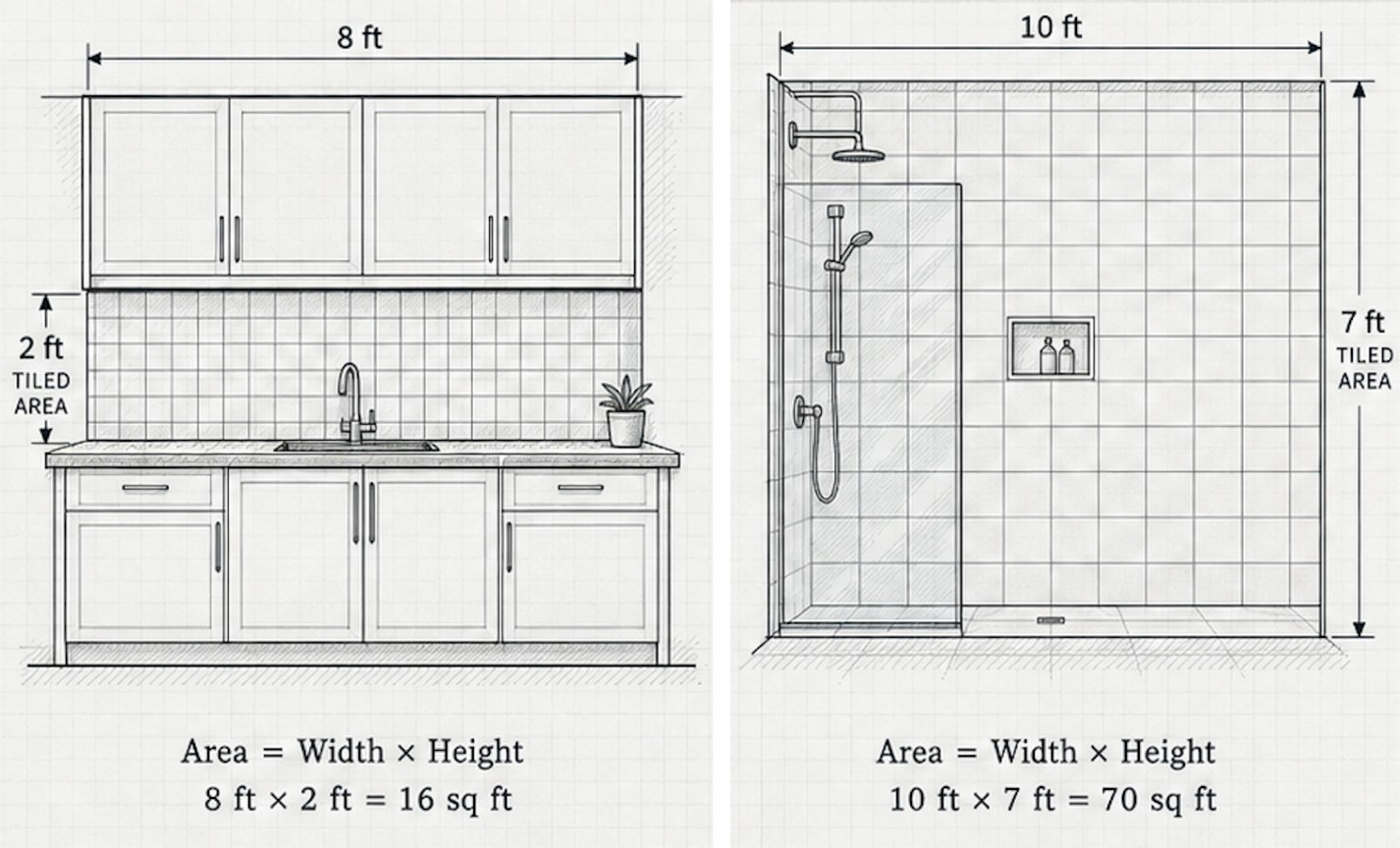
Add up the width of every wall you're tiling, then multiply by the height you're tiling to, your dado line in a kitchen, or full height on a shower wall.
A kitchen splashback running 8 ft wide, tiled 2 ft high above the counter, comes to 16 sq ft. A bathroom wet wall running 10 ft wide, tiled to a 7 ft height, comes to 70 sq ft.
If a section has a sloped ceiling, common under a staircase or in an attic room, take the tallest and shortest point on that wall, average the two, and use that as your height.
Deduct doors and windows, but not always
Small windows and ventilators aren't worth deducting. There's enough cutting around them that the extra tile becomes your buffer anyway.
Large windows and doors are worth deducting properly. Work out their area, subtract it from the wall, then add your wastage back on top of the net figure, not before.
Convert your area into boxes
Tiles are sold by the box in India, and dealers won't split one for you. Find your tile's coverage per box: a standard 2x2 ft (600x600 mm) box typically runs 4 tiles for about 16 sq ft, though this varies by size and range, so check the box coverage listed against the SKU you've actually picked.
Divide your total area by the coverage per box, then round up. A partial box always becomes a full one on the order.
Add the right wastage
A straight, grid layout needs 8 to 10% extra, for cuts at the edges, breakage in transit, and the odd mistake on site.
A diagonal, herringbone, or large-format book-matched layout, the kind used with slabs like Coverstone, needs 15%, since every cut runs at an angle and produces more waste.
Keep one or two boxes back once the job is done. Tile shade can vary slightly between production batches, so a spare from the same lot means a repair after a leak or a chipped edge actually matches, instead of sending you hunting for a batch that's already sold out.
Let the Tile Calculator close the gap
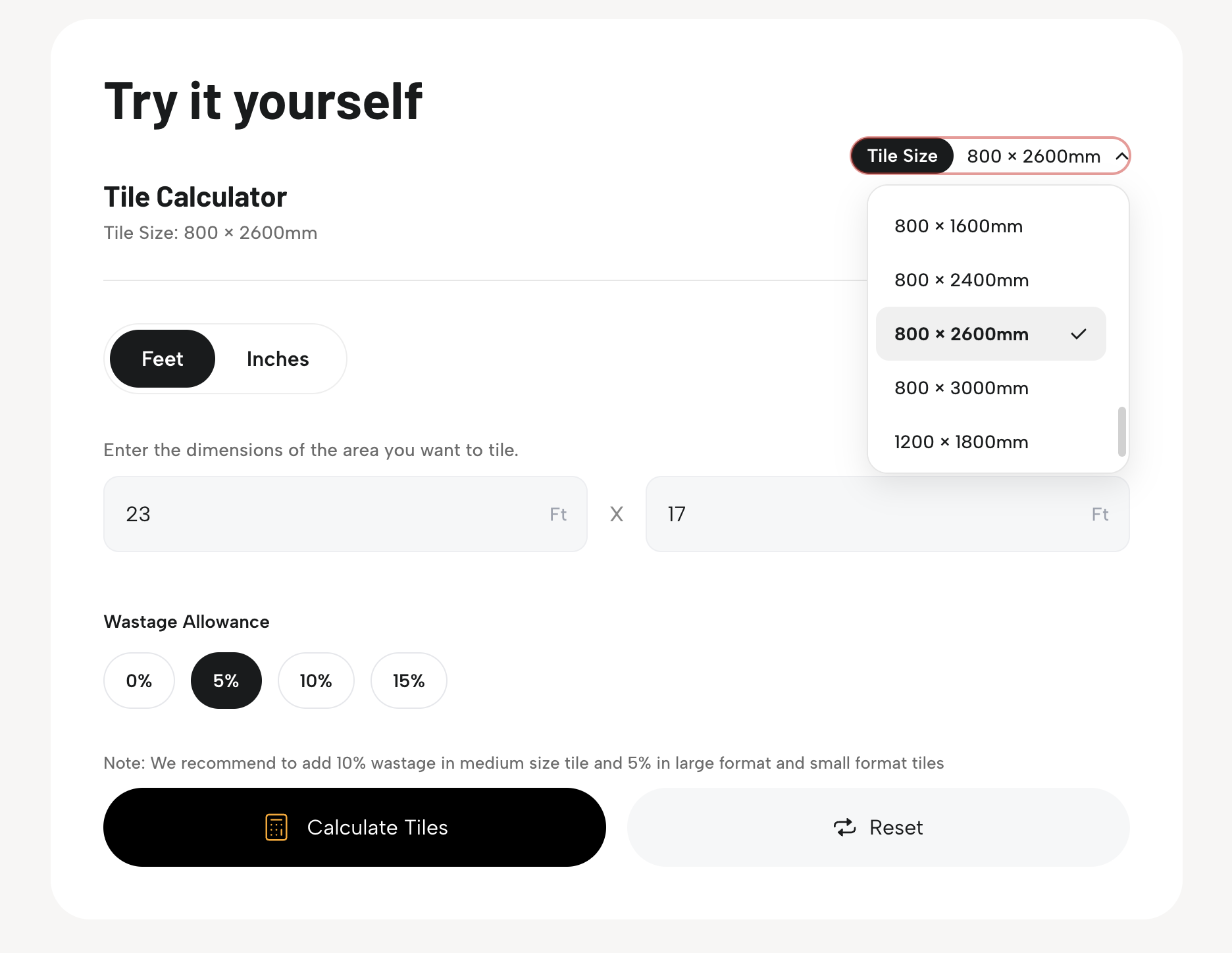
Once you've got your area, tile size and layout, stop doing this by hand. Somany's Tile Calculator takes all three, factors in wastage, and returns the exact number of tiles and boxes you need.
Run the number past your dealer before you place the full order. They can confirm the box coverage for your exact SKU and check that your entire quantity is available from a single production batch, so the shade matches wall to wall.