Quick Answer
For a bathroom remodel, you need five groups of fixtures and fittings: toilet and cistern, basin and tap, shower set, health faucet, and small fittings. The shower set includes a diverter or mixer. Small fittings cover angle valves and bath accessories. To check your list, walk through the room in the order you use it and tick off each spot. Leaving the choice until the tiles are laid can mean breaking new tiles, because a concealed cistern is built into the wall. Choose all your fixtures for bathroom use before work starts.
Introduction
Bathroom fixtures and fittings are the pieces that bring water into the room and carry it away: the toilet and basin, and the taps, showers and valves that serve them. In a remodel, you choose them all together.
Getting the list right matters because some pieces are hidden in the wall. Changing them later can mean opening up new tiles.
Below, we explain what counts as a fixture and a fitting, then go through each one on your list. After that, we cover different bathrooms and families and how fitting, care and tiles change your choices.
Key Takeaways
- A bathroom remodel needs five groups: toilet and cistern, basin and tap, shower set, health faucet, and small fittings.
- Walk through the bahtroom in the order you use it, measuring each spot, to check every spot has its piece.
- Concealed cisterns, in-wall diverter bodies and the pipe point for each shower outlet must be settled before tiling.
- Look for the ISI mark on taps, and pick a dual flush for a smaller flush on liquid waste.
- Wall-hung toilets with concealed cisterns free up floor space, and tankless toilets need good water pressure.
- Leave concealed parts and drain changes to a plumber, and finish them before tiling.
- Wipe taps and showers with a damp soft cloth, and don't use acids or scrubbers on nearby tiles.
- Use anti-skid floor tiles near the shower and easy-wipe gloss or satin tiles on the walls.
What counts as bathroom fixtures and fittings
Bathroom pieces come in two groups, and each piece from one group needs a matching piece from the other. Sanitaryware is the ceramic part: toilets, cisterns, basins and urinals. Bath fittings are the taps, showers, health faucets and accessories.
Fixtures and fittings: the simple split
When we say fixtures, we mean the pieces fixed in place that hold and drain water, like the toilet and basin. Fittings are the taps, showers, valves and accessories that serve them.
The two groups have to suit each other, so your plumber needs both on the list before laying any pipe.
Why the list matters before work starts
Some fixtures for bathroom use are built into the wall, like a concealed cistern. Some fittings are too, like a diverter or mixer whose body you choose to set in the wall. Once tiles go up over them, changing your mind means opening the wall again.
Every fixture also needs water and drain points in the right place. The health faucet needs a water point beside the toilet, and the basin needs one at the right height. The shower needs its pipes laid before the wall is closed.
Your plumber can only lay these pipes once the list is final. So a list that changes halfway through the job costs you time, and sometimes tiles.
A quick way to check the list is to walk through the bathroom in the order you'd use it. Start at the toilet and health faucet, move to the basin, then the shower, and finish where you'd hang a towel.
Each stop should have one main piece and the fittings that serve it. Measure each spot as you go, and note which way the door swings, so you know what will fit before you visit a showroom.
Your bathroom fixtures list, piece by piece
The list has five groups, and each group pairs a main piece with the fittings that feed it water. The toilet and its cistern come first, because the cistern may need to be built into the wall before anything else.
The toilet and its cistern
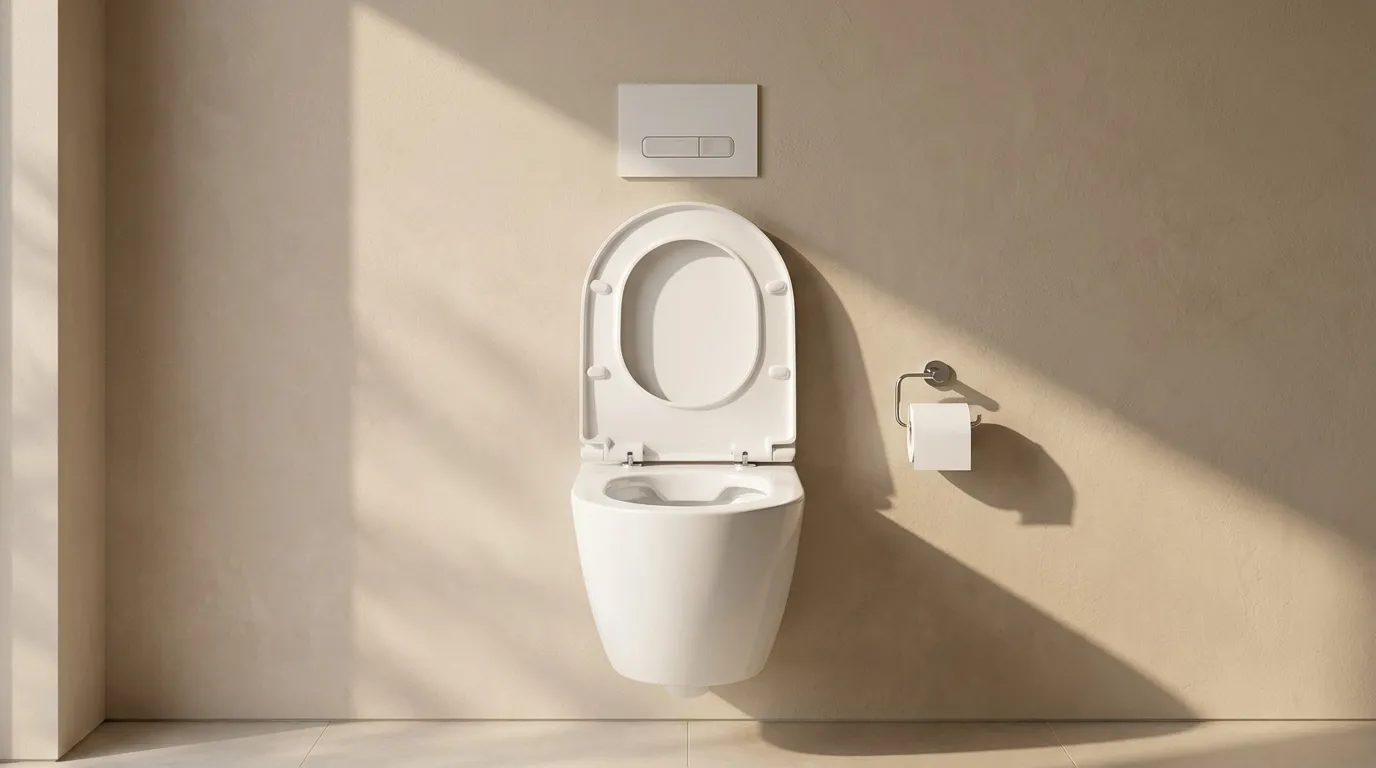
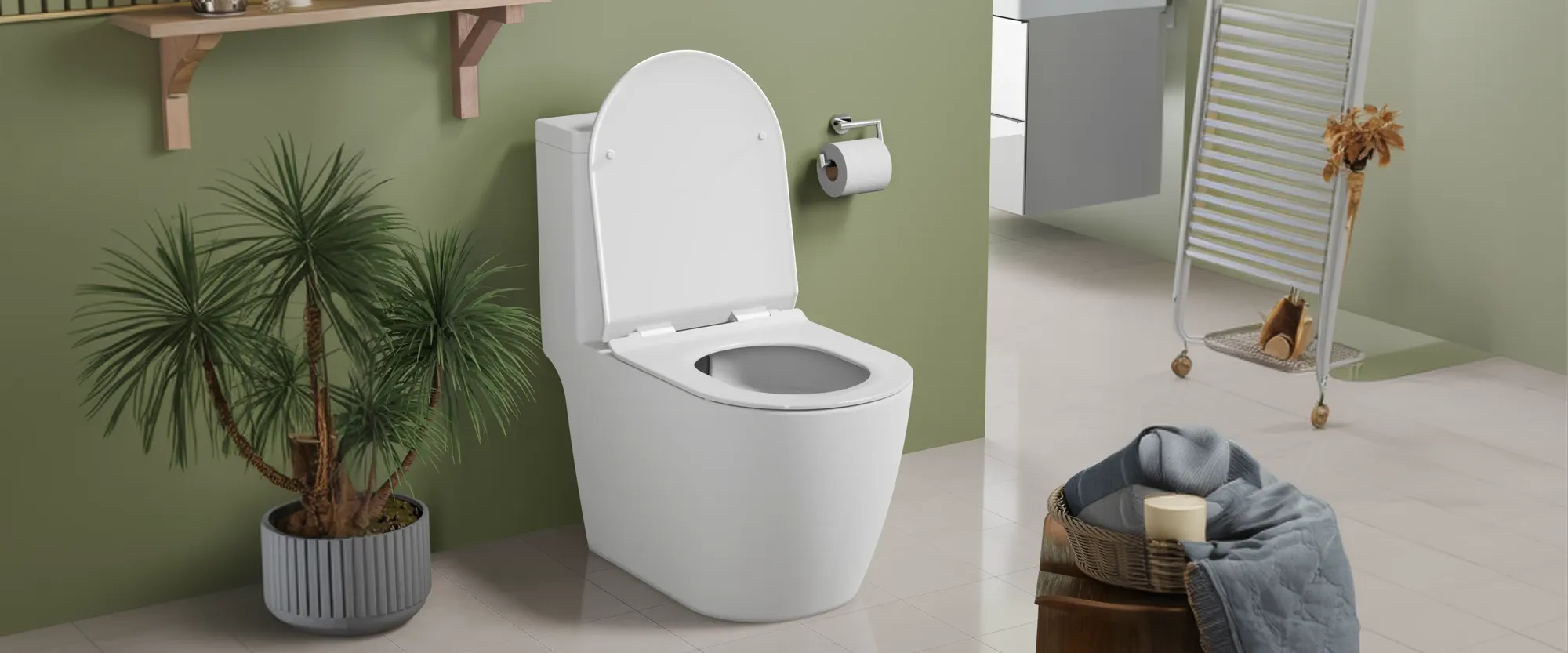
Toilets come as wall-hung toilets, one-piece toilets, tankless toilets that flush from direct water pressure, and Indian-style squatting pans. A wall-hung toilet is fixed to the wall, so it's easier to clean and less prone to staining. A one-piece toilet stands on the floor.
Bowl shape affects comfort. Toilets come in round and elongated shapes, and an elongated bowl often gives you more sitting space.
Next comes the cistern, the tank that holds the flush water. You can choose a concealed, PVC or external cistern.
A concealed cistern is hidden behind the wall, so it takes up no space in the room. You don't have to clean around it, and the flush is quieter because the tank sits inside the wall.
Whichever cistern you pick, ask for a dual flush. It has a big button for a full flush for solid waste, and a small one for a smaller flush for liquid waste.
Before you buy, ask your plumber to check where your drain comes out and how far it sits from the wall. The toilet's outlet has to line up with it, so this one measurement can rule some models in or out.
The washbasin and its tap
The basin decides which tap you can use, so pick it first. Basins come as art basins, counter-top basins, wall-hung basins, and full or half pedestal basins. A wall-hung basin is fixed to the wall, so its water and drain points have to be set at the right height before tiling.
A counter-top (over-the-counter) basin sits on top of a vanity counter, so the counter has to be planned and built before the basin goes on. A vanity cabinet under the basin also gives you storage.
Taps come in two mounts. A basin-mount tap stands on the basin or counter, and a wall-mount tap comes out of the wall. A wall-mount tap needs its pipe set into the wall before tiling, so decide early.
For the tap itself, choose between a pillar cock and a basin mixer. A pillar cock is a single tap made for everyday use at the basin. A basin mixer brings hot and cold water together, which helps if your basin has a hot water line.
Look for the ISI mark on the tap's box, which shows it's certified to an Indian Standard. Then make sure the spout reaches over the basin and sits high enough above it, so water lands in the bowl and not on the counter.
The shower set: shower, diverter or mixer
A shower set has three parts: the outlets, the control that sets the water, and the pipes in the wall that join them. The outlets can be an overhead shower, a ceiling shower, a hand shower, a shower column or body jets.
Each extra outlet needs its own pipe point, and the diverter has to be able to switch to it. So decide how many outlets you want before the plumber lays the pipes.
A diverter is the control that switches water between outlets, like an overhead shower and a tap lower down. Diverters also come in thermostatic versions, which control the water temperature as well.
The body of a diverter or concealed mixer can sit inside the wall, with only the handle and plate showing. If you choose one like that, it has to be fitted and tested before the tiles go up.
If you're adding or replacing a geyser for the shower, check its BEE star rating. The rating runs from 1 to 5 stars and shows how energy-efficient the geyser is.
Pick a geyser size that matches how much hot water your family uses. Then plan its water and power points along with the shower.
The health faucet
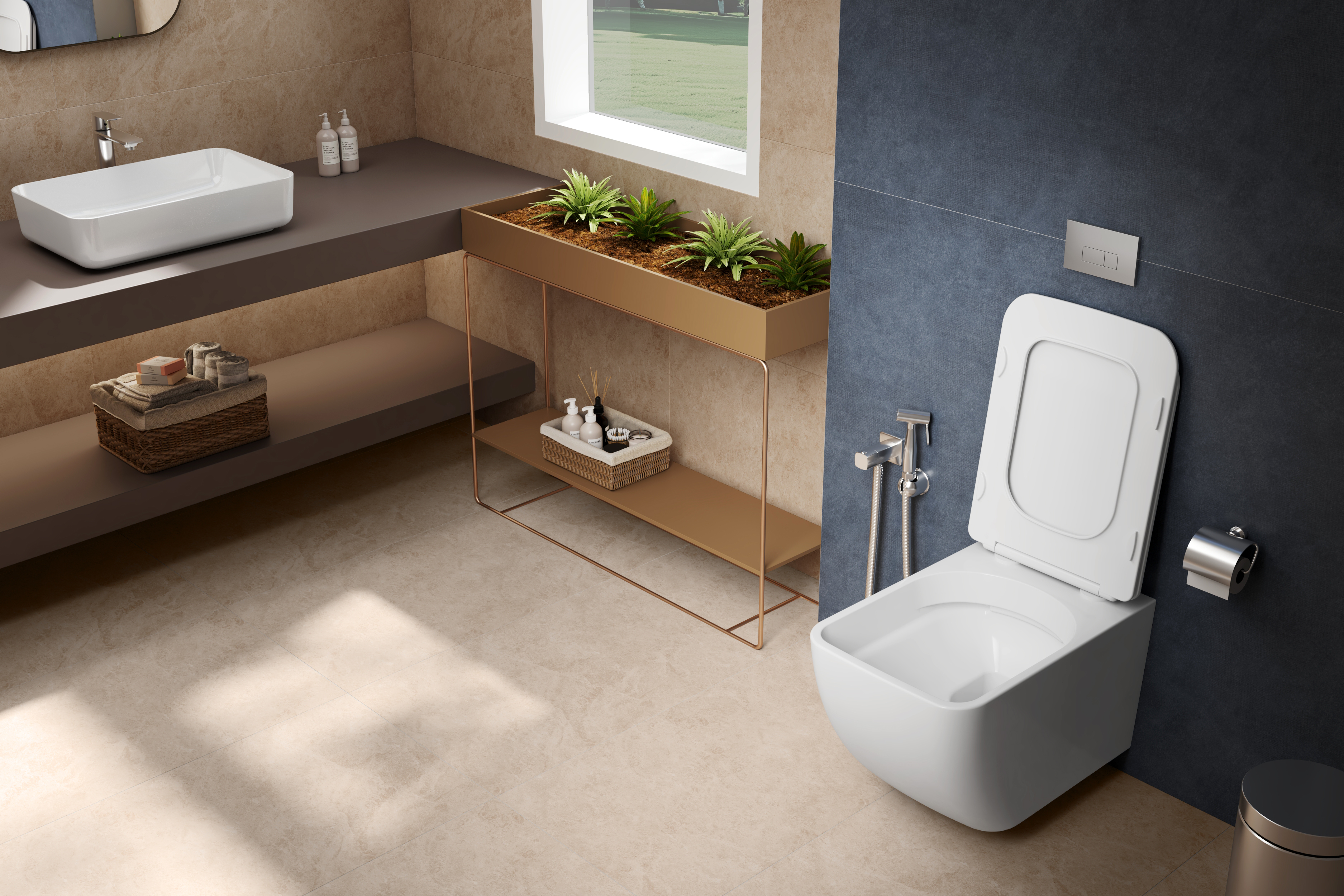
The health faucet is the hand spray fitted beside the toilet. It needs its own water point and a valve on the wall next to the toilet. Mark the spot on your plan before the plumber starts.
Choose the health faucet at the same time as your taps, in the same finish. That way it matches the basin tap and shower when they're fitted side by side.
Small fittings: angle valves and bath accessories
Angle valves are the small valves where the basin, cistern and health faucet join the water line. They're made to control the water flowing to that piece.
Bath accessories are the holders, rails and shelves you'll use every day. Pick them with the taps, so the metal finishes match across the room. Finishes include brushed nickel, brushed gold, rose gold and matte black.
Types of bathroom fixtures compared
This table puts the five groups side by side, with the main choice in each and what to check before you buy.
Fixture | Main types to choose from | What to check before buying | Best for |
Toilet | Wall-hung, one-piece, tankless or Indian-style pan | A dual flush, and a pressure check for a tankless toilet | Wall-hung: easier cleaning and less staining |
Cistern | Concealed, PVC or external | Wall space, and a plumber to fit it before tiling | Concealed: no tank in the room and a quieter flush |
Washbasin and tap | Art, counter-top, wall-hung or pedestal basin; pillar cock or basin mixer | The ISI mark on the tap box, and a vanity counter for a counter-top basin | Basin mixer: basins with a hot water line |
Shower set | Overhead, ceiling or hand shower, shower column, body jets, with a diverter | A pipe point for each outlet, and whether the diverter body goes behind the tiles | Our thermostatic diverter: consistent water temperature and flow |
Health faucet and small fittings | Hand spray, angle valves, bath accessories | A water point beside the toilet and one finish for all metal pieces | Health faucet: washing at the toilet, matched to your tap finish |
Tips for choosing fixtures for a bathroom remodel
- Write one list with every piece, its finish and where it goes. Give your plumber a copy before work starts.
- Check the box for a water-efficiency rating label. Indian Standards rate sanitaryware and sanitary fittings on water use, and makers can choose to carry the label.
- Ask for a dual flush on the toilet, so you can use a smaller flush for liquid waste.
- Buy all the metal fittings together, so the taps, shower, health faucet and accessories come in the same finish.
Mistakes to avoid when buying bathroom fittings
- Don't leave the concealed cistern or diverter until after tiling, because changing them later means opening new tiles.
- Avoid buying the toilet before your plumber has measured the drain, or the outlet may not line up.
- Never pick a tankless toilet without a pressure check, because it relies on the water pressure in your pipes.
- Don't order a counter-top basin until the vanity counter is planned, because the basin needs it in place.
- Stop and update the plumber's copy of the list if you switch a tap from basin-mount to wall-mount, because the pipe then moves into the wall.
- Don't copy someone else's fixture list without checking your own bathroom. The right type in each group changes with your room's size, the people who use it and the water supply.
Choosing bathroom remodel fixtures for your space and family
A small bathroom, older family members and the water at home each change which type suits you within the five groups. You still need every group on the list.
Bathroom fixture ideas for a small bathroom
Floor space is the first thing to save. A wall-hung toilet with a concealed cistern leaves the floor under the bowl clear and keeps the tank out of the room.
Our tankless toilets go one step further, because they flush without a traditional tank. So there's no cistern to find room for, in the bathroom or in the wall.
At the basin, a wall-mount tap keeps the basin top free. That leaves room for soap and a toothbrush holder on a small counter.
Fixtures for elders and children
Older family members need a toilet that's easy to sit on and get up from. An elongated bowl can give them more sitting space.
Our thermostatic diverter regulates the water temperature and flow, so the shower stays steady for everyone who uses it.
Place the health faucet where it can be reached easily from the seat. Ask your plumber to set its valve at a height everyone in the family can manage.
Low water pressure or iron in the water
If your plumber finds the water pressure is low, pick a toilet with a cistern in place of a tankless one.
If your old fittings show rust-coloured stains, iron in the water can be the cause. A water test before the remodel tells you whether the water has iron in it. If it does, you can treat the water before the new fittings go in.
Refreshing fittings without retiling
Not every remodel needs new tiles. A basin-mount tap, a health faucet, a shower head, angle valves and accessories can be swapped without retiling, as long as the pipe ends stay where they are.
Anything built into the wall, like a concealed diverter, can't be swapped without opening the tiles. Ask your plumber what can be changed from the outside before you buy a matching set.
When to call a plumber
If you see damp patches on a wall behind a fixture, or water around a toilet's base, stop using it and call a plumber. A cracked toilet or basin needs replacing, and the new one has to match your drain and water points.
Some jobs are for a plumber from start to finish. These include fitting a concealed cistern or diverter, moving a water or drain point, and testing the pipes before the walls are closed.
Fitting concealed parts and moving pipes both come before the tiles go up. So the order of work decides what you can still change later.
How fitting order, finish and tiles change your choice
Pieces fitted before tiling are hard to change, and pieces fitted after are easy to swap. Once the order is clear, the finish on each piece and the tiles around it decide how easy the room is to clean and how safe the floor is.
What goes in before the tiles
Each step in a bathroom remodel covers the one before it, so it has to happen in this order:
- Your plumber lays the water and drain points and fits the concealed parts, such as the cistern and any diverter or mixer body.
- The plumber tests the pipes for leaks before anything is covered.
- Waterproofing goes on behind the wet walls, and the floor is sloped towards the drain.
- The tiles go up, with holes cut at each pipe point.
- The pieces you see go on last: the toilet, basin, taps, shower outlets, health faucet and accessories.
The look of your taps and accessories can wait until step 5. Anything that sits in the wall has to be settled by step 1.
Finishes and how they wear
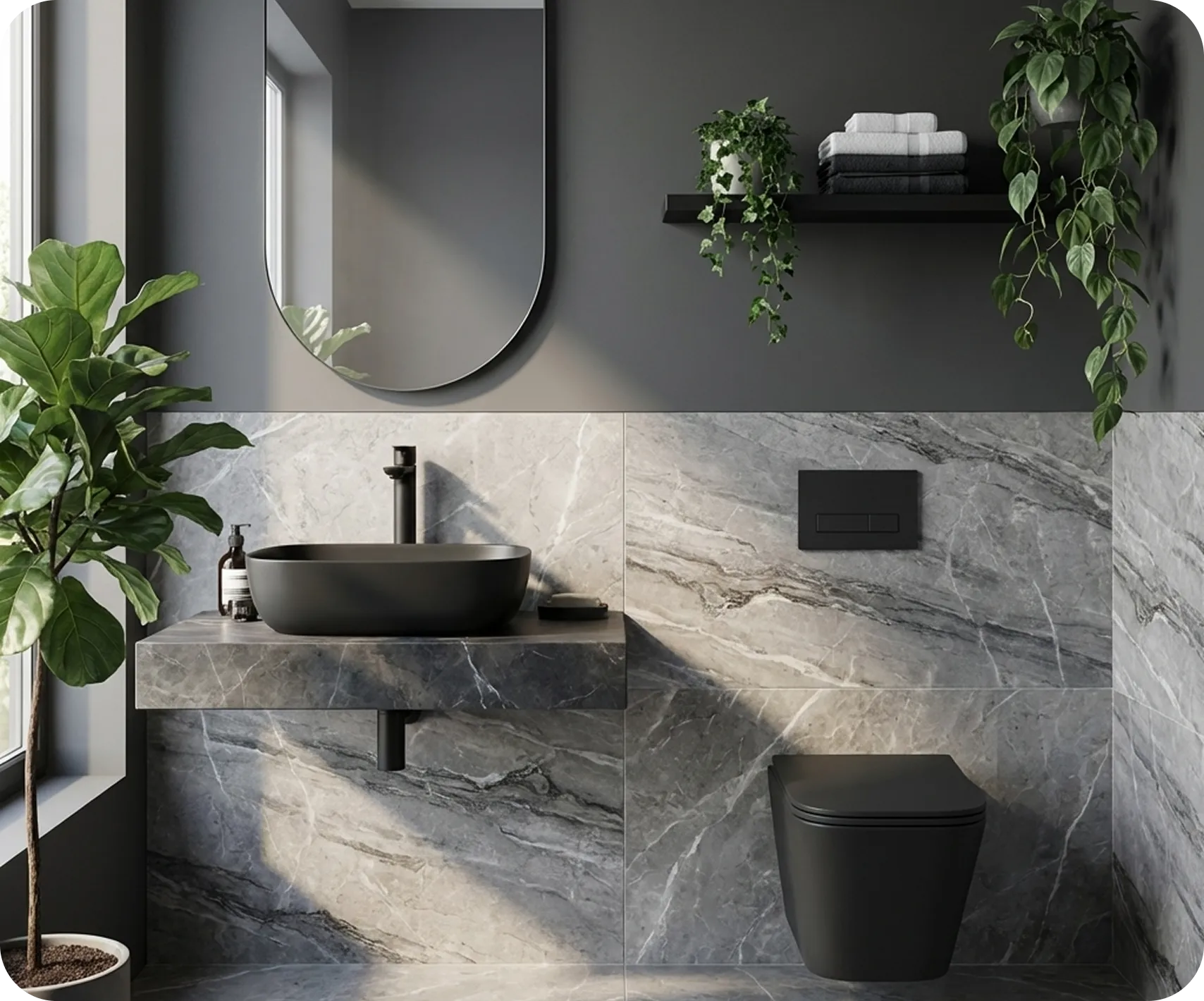
The metal finish is the part of a fitting you'll touch and wipe every day. Our PVD coating, a finish applied to the tap's surface, is made to give faucets more resistance to scratches, tarnishing and corrosion. On the ceramic side, our Matte Series sanitaryware has a non-gloss finish made to resist stains, scratches and fingerprints.
If your taps get heavy daily use, ask for a PVD finish. For a basin that shows marks, look at our Matte Series.
How to clean bathroom fixtures like taps and showers
Wipe taps and showers with a damp soft cloth, then dry them. For anything more, follow the care note that came with the fitting, and test any stronger cleaner on a hidden spot first.
Don't use acid cleaners such as vinegar or lemon on the tiles and grout around your fixtures, because acids can wear away the glaze on vitrified tiles. Don't use gritty scrubbers on them either, since abrasive scrubbers can damage glazed and polished tiles.
A rust mark that wipes off with the damp cloth was only on the surface. Marks that keep returning can come from iron in your water, and metal that's pitted under a mark means the fitting needs replacing.
Pairing fixtures with floor and wall tiles
The floor near the shower gets wet and soapy, so choose anti-skid or textured tiles there. Our Slip Shield tiles are designed for bathrooms and come in ceramic and Duragres vitrified formats.
They're rated R10 to R11 on the slip-resistance scale, with a friction score of 0.5 to 0.6 when wet or soapy. A higher friction score means more grip.
On the walls, gloss and satin ceramic or vitrified tiles wipe clean easily after daily use. Before the tiler starts, mark where every fixture and pipe point goes, so each hole is cut in the right place.
Also Read: 5 Types of People You'll Find in a Bathroom
Conclusion
The fixtures that cause trouble in a remodel are the ones chosen too late. Settle the toilet and cistern, basin and tap, shower set, health faucet and small fittings while the walls are still open. Then fit the hidden parts, waterproof, tile, and add the pieces you see last.
Inside each group, let the room size, the people using it and your water supply decide the type. Ask your plumber to check the drain position and pressure before you pay for anything.
Keep your final list after the job is done. It tells you the exact finish and model if you ever need a spare.
To see our sanitaryware and bath fittings in person and compare finishes, use our store locator to find a dealer near you.
FAQs
Q. What fixtures do you need for a bathroom?
A working bathroom needs a toilet with a cistern, a washbasin with a tap, and a shower with its control. You'll also want a health faucet beside the toilet.
Then come angle valves to control the water to each piece, plus accessories such as rails and holders. Together, these make up the five groups you'll buy for a remodel.
Q. What is the difference between bathroom fixtures and fittings?
When we say fixtures, we mean the pieces fixed in place that hold and drain water, like the toilet and basin. Fittings are the taps, showers, valves and accessories that serve them.
When you plan a remodel, list both, because each fitting has to suit the piece it serves. A basin-mount tap, for example, needs a basin or counter with room for it.
Q. Do you need a bathtub in a bathroom remodel? - H3
No. A bathtub is optional, and the five groups of fixtures make a working bathroom without one. A shower set does the same daily job in less floor space.
If you do want a tub, plan its floor space, its tap and its drain point before tiling, the same way you would for the shower.
Q. Wall-hung or floor-mounted toilet: which is better?
It depends on your walls. A wall-hung toilet is easier to clean and less prone to staining, but it needs a concealed cistern built in before tiling, so it suits a remodel with open walls.
A one-piece floor-standing toilet avoids opening the wall, as long as it lines up with your drain.
Q. Should the toilet go in before or after tiling?
After. The toilet bowl goes on once the tiles are done, and the drain point and any concealed cistern behind it are fitted before tiling. That way, the tiles run neatly underneath and behind the bowl.
Your plumber also tests the pipes for leaks before the tiles go up, so nothing behind the bowl has to be reached later.
Q. Can you change bathroom fittings without damaging tiles?
Yes, for fittings you can see on the outside, like a basin-mount tap, health faucet or shower head, as long as the pipe ends stay where they are.
Fittings built into the wall, such as a concealed diverter, are different, because reaching them means opening the tiles. Ask your plumber what can be changed from outside before you buy.
Q. Concealed or exposed fittings: which is better?
Concealed fittings suit a full remodel with open walls, and exposed fittings suit a refresh, because they're easier to reach and swap. With concealed diverters, mixers and pipes, only the handles and outlets show, which gives a cleaner look.
The catch is timing and repairs. Concealed parts have to be fitted and tested before tiling, and reaching them later means opening the wall.
Q. How to remove rust from bathroom fixtures?
Wipe the mark with a damp soft cloth first. If it comes off, it was sitting on the surface. If it stays, follow the fitting's care note before trying anything stronger, and test on a hidden spot.
If the metal underneath is pitted, the fitting needs replacing. Don't use vinegar, lemon or other acids near the tiles, because acids can wear away the glaze on vitrified tiles.
Q. What does the ISI mark on taps mean?
The ISI mark shows that a product is certified by the Bureau of Indian Standards to an Indian Standard. For copper alloy taps and valves, that standard is IS 8931.
Look for the mark on the box or the product when you buy taps for your remodel. It's a simple check to do before you compare finishes and prices.
Q. What is a diverter in a bathroom?
A diverter is the control that switches water between outlets, such as an overhead shower and a tap lower down. Some diverters have their body set behind the tiles, with only the handle and plate showing, so they have to be fitted and tested before tiling.