Quick Answer
For an Indian home, choose one of the water efficient toilets with a dual flush. Read the two litre numbers on the box first: the small one is for urine, the big one for solids. Also check that the bowl and trap clear waste in one flush and the cistern suits your wall and water pressure. Last, look for clearly marked buttons and leak-free fittings. Pressing both buttons doesn't give a stronger flush; you just get the full one. If your old toilet has one big flush, replace it with a two-button model fitted by a plumber.
Introduction
Water-saving toilets are WCs designed to use less water each time you flush. A dual flush, for example, has two buttons: one small and one large. You flush a toilet several times a day, so a few litres saved on each flush add up.
The hard part is finding one that saves water and still clears the bowl in one go. Below, we explain what makes a toilet water-saving and the things to check before you buy. Then we look at which toilet suits your home and how its design changes your choice.
Key Takeaways
- Pick a dual flush toilet, with a small flush for urine and a full flush for solids.
- Read the two litre numbers on the box or cistern, such as 6/3, before you look at anything else.
- Choose a bowl and trap that clear waste in one flush, because pressing twice uses up the saving.
- Match the cistern to your home: visible for swaps, concealed for renovations, tankless only after a pressure check.
- Buy a flush plate with a clearly marked small flush, and test the cistern for leaks with food colouring.
- When replacing, check whether the outlet goes into the floor or the wall, and show the details to your plumber.
- Once the litres are right, choose between models on cleaning, noise and features.
What makes a toilet water-saving
A toilet saves water when it uses fewer litres on each flush. It still has to clear the bowl the first time.
The cistern is the tank that holds the flush water, and it sets how many litres go out. The bowl and the trap at its base decide how well that water carries the waste away.
How a dual flush saves water
A two-button cistern gives you two flush sizes. The smaller button gives a half flush for urine. The bigger one gives a full flush for solids.
Urine needs less water to clear than solid waste. So you don't need to empty the whole cistern every time.
Older single-flush toilets can use more than 10 litres every time you press. Common two-button toilets use 6 litres for a full flush and 3 litres for a half flush. Other sizes exist too, such as a 10-litre cistern that gives either 10 or 5 litres.
Whether a shop calls them eco, low-flush or water conservation toilets, the litres printed on the cistern tell you how much water each flush uses.
The benefits of water-saving toilets
The main benefit is less water going down the drain every day. For example, say you're replacing a 10-litre single flush.
One person uses the toilet five times a day just to pee. That's 50 litres a day on the old toilet, and 15 litres with a 3-litre half flush.
For a family of four, that's 140 litres saved a day, or over 51,000 litres a year. If your home buys tanker water or runs a motor to fill the overhead tank, every litre you save is one you don't pay for or pump.
In American homes, swapping old toilets for efficient ones can cut toilet water use by 20 to 60 percent. Less water flushed also means less waste water going into the drain or septic tank.
The quick check: read the litres
Before you compare looks or price, find the two flush numbers. Look on the box, the spec sheet or the cistern.
They're written with a slash, such as 6/3. The first number is the big flush in litres, and the second is the small flush.
Lower numbers mean less water per flush, as long as the bowl still clears in one go. If a toilet shows no flush volume at all, ask the dealer for it before you buy.
How to choose water efficient toilets: four things to check
Those printed litres are the first of four checks. Next come how well the bowl clears and which cistern suits your wall and water supply. The fourth is whether the buttons and fittings help you save water every day.
Dual flush volumes you can read on the box
Using the 6/3 check above, write down both numbers for every toilet on your shortlist. Two toilets can look alike in the showroom and still use different amounts of water.
If a box shows only one number, ask the dealer whether it's a single flush or just the full flush of a two-button model.
Compare the big numbers as well as the small ones. A 4.5/3 toilet and a 6/3 toilet give the same small flush. But the 4.5/3 one uses less water every time you press the big button.
As a guide, toilets with a water-efficiency label in the US must use about 4.8 litres or less per flush. They must still pass flushing tests too.
Your daily saving builds up through the half flush. It's the button you press for every visit that's only urine.
A bowl and trap that clear in one flush
A low flush only saves water if it clears the bowl the first time. If you have to press again, you've used the water twice and lost the saving.
The trap is the curved channel at the base of the bowl that carries the waste away. Our Wash+ Technology uses a wider 65–75 mm trap to reduce blockages. It's also built for faster flushing.
Oxi Stream Technology is another of our flush designs. It adds oxygen to the water flow for better cleaning with less water.
Before you buy, ask the dealer:
- What size is the trap?
- How does the flush clean the bowl, for example with a swirl of water around it?
- Is the bowl designed to work with the litres printed on its cistern?
- Has this model's flush been tested to clear waste at those litres?
Toilets that use little water can flush as well as older ones that use more. In the US, toilets with a water-efficiency label are tested on how well they clear waste. If a showroom toilet is connected, ask to see it flush.
A cistern that suits your wall and water pressure
The cistern can be visible behind the bowl or hidden inside the wall. Tankless models don't have one at all.
A visible cistern needs no wall work. A concealed one needs space behind the wall. A tankless model depends on your water pressure.
A concealed cistern takes up no space in the room, and the flush is quieter. Fitting one means opening up the wall, which is a job for your plumber.
The tankless WC systems we make flush using direct water pressure from your pipes.
- Decide whether you can open up the wall. If you can't, choose a toilet with a visible cistern.
- If you're renovating, ask your plumber about a wall-hung WC with a concealed cistern.
- Before choosing a tankless model, ask a plumber to check your water pressure against its fitting instructions.
Clearly marked buttons and fittings that don't leak
Two buttons only save water when people press the right one. In one study, 2,000 people were shown 18 common button designs. On five of them, more than half picked the wrong button.
Designs with clear, permanent markings for the small flush did better. Using the big button for the small flush confused people the most.
Most people expect the smaller button to give the smaller flush. A plate built that way is easier to get right.
A cistern that leaks into the bowl wastes water even when nobody uses the toilet. So check for leaks once it's fitted.
- Look at the flush plate in the showroom. Check you can tell which button is the small flush without a manual.
- Pick a plate where the small flush is marked on the button itself. A symbol or a smaller size both work.
- Once it's fitted, show everyone at home which button is which.
- To check for a leak, put a few drops of food colouring in the cistern. Don't flush for 10 minutes.
- If the colour shows up in the bowl, the cistern is leaking. Flush straight away afterwards so the colour doesn't stain the cistern.
Use the half flush for every visit that's only urine, and keep the full flush for solids.
Toilet types compared for saving water
This table shows what each common toilet type offers and what to check before you buy it.
| Toilet type | What it offers | What to check before buying | Best for |
|---|---|---|---|
| Floor-standing toilet with a visible two-button cistern | Two flush sizes and no work inside the wall | The big and small flush litres, plus whether the outlet goes into the floor or the wall | Replacing an old single-flush toilet |
| Wall-hung WC with a concealed cistern | Cistern hidden behind the wall, easier cleaning and a quieter flush | Space behind the wall for the cistern, and a clearly marked small-flush button | Renovated bathrooms short on space |
| Tankless WC | A flush on direct water pressure, with no cistern | Your water pressure, checked by a plumber against the fitting instructions | Homes where a plumber has confirmed the pressure suits the model |
| Smart sensor toilet | Sensor-based operation and comfort features | The flush litres on the spec sheet | Homes that want sensor and comfort features |
Tips for choosing a water-saving toilet
- Take a photo of the flush numbers on each box you look at. Then you can compare models at home.
- Ask for the spec sheet when the box doesn't list the litres.
- Ask about the trap size and the flush design along with the look and the price.
- Choose a flush plate where anyone at home can find the small-flush button without asking.
- Talk to your plumber about the cistern type before any bathroom work starts.
Mistakes to avoid when buying a water-saving toilet
- Don't go by an "eco" or "water-saving" name alone. Only the printed litres tell you what each flush uses.
- Avoid flush plates with unmarked or confusing buttons. People can press the wrong one, and the saving is lost.
- Never ignore a cistern that keeps running after a flush. It wastes water all day and night.
- Avoid choosing a tankless model before a plumber checks your water pressure. It flushes on direct pressure from your pipes, and that pressure can differ from one home to the next.
Which water saving toilet suits your home
Your water pressure, the building work you're doing and who uses the toilet all change the right pick. A renovation opens up the concealed-cistern option, while a straight swap points to a visible cistern.
Building or renovating a bathroom
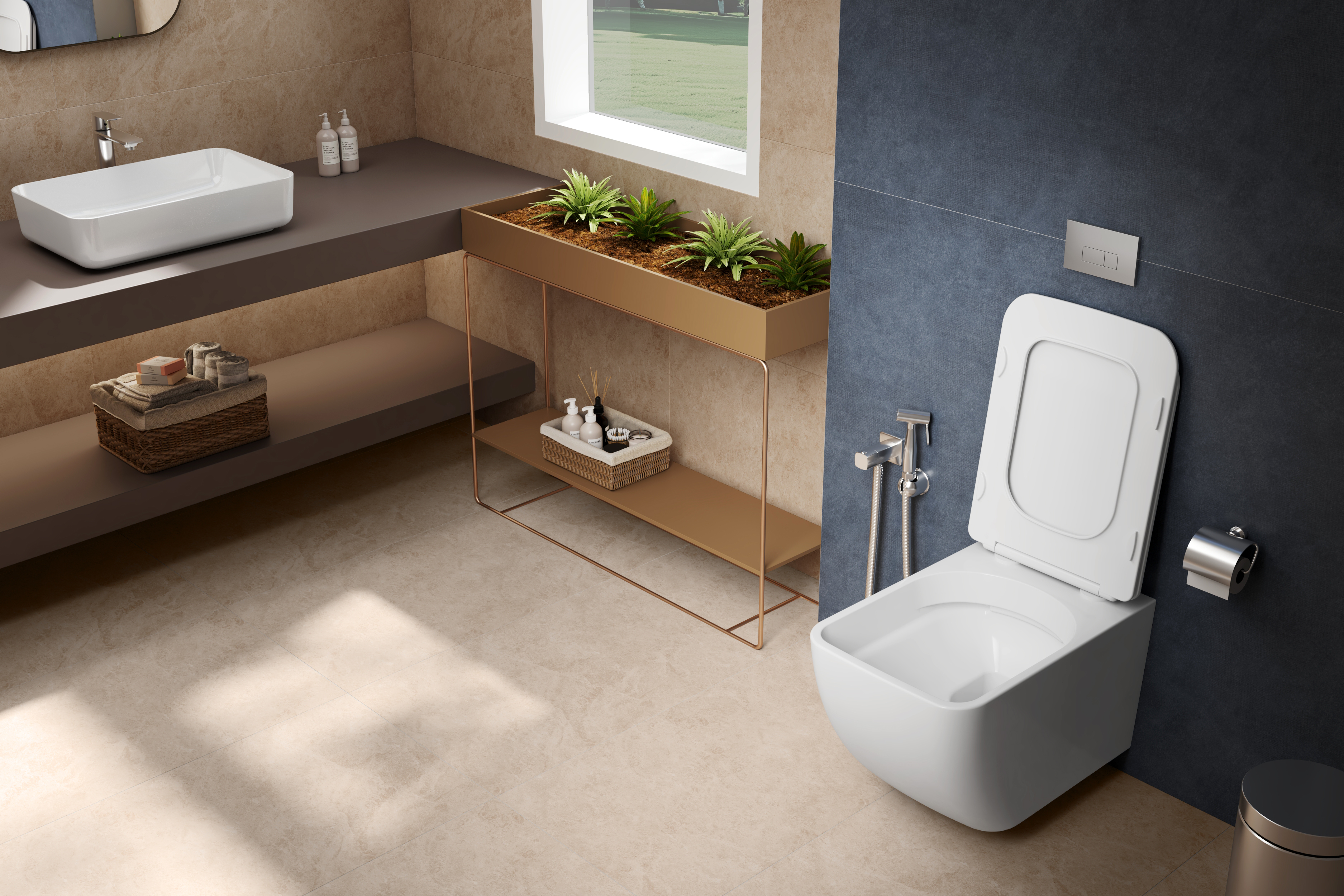
A redone bathroom lets you choose a wall-hung WC with a concealed cistern. The cistern sits behind the wall and takes up no space. Wall-hung WCs are also easier to clean.
Opening up the wall is a job for your plumber. Bring them in at the planning stage.
The flush plate is the part of the cistern you'll see and touch. Pick one with a clearly marked small flush.
Replacing an old toilet
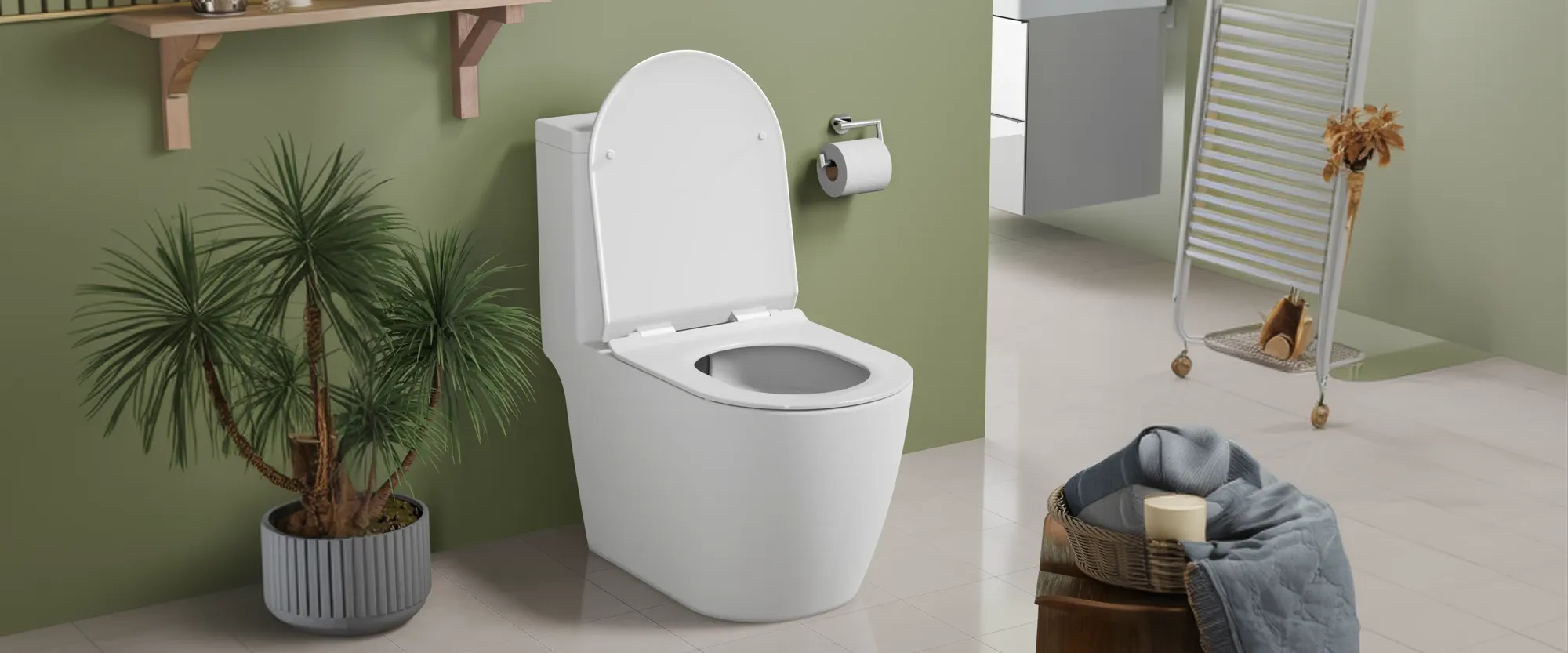
If you're only changing the toilet, choose a floor-standing model with a visible two-button cistern. It saves you from breaking into the wall.
The new toilet has to fit the drain your old one used. Check these points before you buy:
- See where your old toilet's outlet goes. An S-trap toilet drains down into the floor. A P-trap toilet drains out through the wall behind it.
- Note where the drain sits and how high a wall outlet is. Show these details to your plumber or dealer.
- Ask your plumber whether your drain pipe carries waste away well with a smaller flush.
The saving is easy to see when your old toilet has a single flush of more than 10 litres. Every half flush on a 6/3 toilet uses just 3 litres.
Low water pressure at home
A toilet with a cistern fills up and stores water before each flush. A tankless model flushes on direct pressure from your pipes.
If the flow in your bathroom is weak, get a plumber to check it. They can compare it with the tankless model's fitting instructions.
If it falls short, go for a toilet with a cistern. A cistern flushes with water it has already stored.
Homes with children, elders or guests
When several people share a toilet, the flush plate has to be easy for everyone to read. A clearly marked small flush helps each person press the right one. A symbol or a smaller button does the job.
A big button for the small flush can confuse people. Skip those designs in a shared bathroom.
Show children which button to press. Keep the plate's markings clean so they stay easy to see.
An old toilet that keeps running
Water trickling into the bowl long after a flush is a sign of a leak. Run the food colouring test from the buttons and fittings check to confirm it.
A worn rubber seal inside the cistern can cause the leak. A plumber can replace it.
If the toilet also has one big single flush, replace the whole toilet. A two-button model deals with both problems.
Living in a rented home
If you can't change the toilet, you can still cut its water use. Use the small button for urine, and run the food colouring test now and then. Tell your landlord about any leak you find.
When the toilet does get replaced, ask for a dual flush model. Share the flush numbers you'd like.
When to call a plumber
Call a plumber for any work inside a wall, such as fitting or repairing a concealed cistern. Call one as well if the colour test still shows a leak after a new seal, or if a new toilet's outlet doesn't match your drain.
In each of these homes, the litres on the cistern decide how much water you use. The design around those litres decides how the toilet fits, cleans and sounds.
How the toilet's design changes your choice
Once you've narrowed your list of water efficient toilets by their litres, design helps you pick between them. It changes how easy the toilet is to clean, how quiet it is and what features you get.
Wall-hung or floor-standing
Water use comes from the litres, so the mounting style comes down to cleaning and space. Wall-hung WCs are easier to clean and less prone to staining. With the cistern hidden away, you can clean around them without anything in the way.
If cleaning time matters most to you, lean towards a wall-hung WC. If you'd rather avoid wall work, the visible cistern options above suit you better.
Flush designs inside the bowl
How water moves around the bowl changes how well each litre cleans. Our Quiet Swirl Technology sends water around the bowl in a 360-degree flow with little noise. That helps when the bathroom shares a wall with a bedroom.
The shape of the bowl matters for cleaning as well. Our Thin Essence designs have fewer edges and hard-to-clean spots. That leaves fewer places for dirt to sit.
Ask the dealer which flush design and bowl shape a model uses before you compare prices.
Smart toilets
The smart toilets we make add sensor-based operation and features such as StepSense technology. These features are about comfort and hygiene.
The flush volume still decides the water use. Check the litres on the spec sheet before you choose a smart model, and ask what each sensor does.
Also Read: How to select the best Western Commode for your Bathroom
Conclusion
To find a toilet that saves water, start with the two flush numbers on the box. Once you've found a dual flush with low litres, make sure the bowl clears in one go. The cistern should also suit your wall and water supply, and the flush plate should be easy for everyone at home to read.
If you're keeping your old toilet for now, run the food colouring test and get any leak fixed. When it's time to replace it, a 6/3 toilet uses just 3 litres for every half flush.
Shortlist water efficient toilets by their litres first, then compare the look and features. Use our store locator to find a dealer near you. Then see the flush plates and spec sheets in person before you decide.
FAQs
Q. Do dual flush toilets actually save water?
Yes, as long as people use the half flush for urine and the cistern doesn't leak. Efficient toilets can flush as well as older ones that use more water.
The saving drops if people press the wrong button or a slow leak runs all day. A clearly marked flush plate helps.
Q. Which button should I press on a dual flush toilet?
Press the small button, or the one marked for a half flush, after urine. Press the big button for a full flush after solids.
Some designs swap the sizes or use symbols, so check the markings on your flush plate. If they aren't clear, check the product's instructions or ask whoever fitted the toilet.
Q. Does pressing both flush buttons give a stronger flush?
No. Pressing both buttons doesn't create a super flush. It simply gives you the full flush.
The big button already releases the full flush the cistern is set for, so pressing the small one as well adds nothing. If a full flush keeps failing to clear the bowl, ask a plumber to check the toilet and its drain.
Q. How many litres does a toilet flush use in India?
It depends on the cistern. An old single flush can take over 10 litres, while a common two-button cistern takes 6 for a full flush and 3 for a half.
Other sizes exist, such as a 10-litre cistern that gives 10 or 5 litres. The numbers printed on the box or cistern tell you what your toilet uses.
Q. Do water-saving toilets clog more often?
They can, if the bowl and trap aren't designed for a low flush. Then you end up pressing twice, which uses up the water you meant to save.
Before you buy, ask about the trap size and the flush design. Choose a toilet built to clear waste in one press at its printed litres.
Q. Can I convert my old toilet to a dual flush?
Yes, dual flush devices can be fitted to existing cisterns. Research on these conversions found they save water on average.
Ask a plumber whether one suits your cistern. Afterwards, check that the half flush still clears the bowl in one go. If it doesn't, or the cistern leaks, a new dual flush toilet is the cleaner fix.
Q. Is a wall-hung toilet better than a floor-mounted one?
For saving water, the litres on the cistern matter more than how the toilet is mounted. A wall-hung WC is easier to clean. Its concealed cistern takes no room and flushes quietly.
A floor-mounted toilet needs no work inside the wall. That makes it an easier swap in an existing bathroom.
Q. Does a tankless toilet need high water pressure?
It flushes on direct pressure from your pipes, so your pressure matters. There's no cistern to store water first.
Before you choose one, ask a plumber to check your pressure against the product's fitting instructions. If it falls short, a toilet with a cistern is the way to go. It flushes with water it has already stored
Q. Are water efficient toilets worth it?
Yes, especially if you're replacing an old single-flush toilet. Older toilets can use more than 10 litres a flush. A common two-button toilet uses 3 litres for a half flush.
What you pay depends on the cistern type and any wall work for a concealed cistern. The plumber's time and extras such as smart features add to it too.
Q. How can I tell if my toilet is wasting water?
Start with the litres. Look for the flush volume on the cistern or in the product papers. A single flush or a big number means more water on every press.
Then run the food colouring test. Put a few drops in the cistern and wait 10 minutes without flushing. If colour shows in the bowl, or water trickles in after a flush, the cistern is leaking.