The eco friendly toilet to choose is a dual-flush WC that uses little water per flush. It works with a sewer or septic connection, and homes with neither can use a composting toilet or bio-toilet. Check four things. Look at the flush volume in litres and the star rating, then make sure the flush clears the bowl in one go and suits your pressure and pipes. Pressing both buttons together won't give you a stronger flush. If your toilet has a single-flush cistern, replacing it with a two-button WC, fitted by a plumber, is the real fix.
Eco friendly toilets for residential use are made to utilise less water each time you flush, and a few types use little or no water at all. You use the toilet every day, so a smaller flush saves water all year round.
Below, we explain how these toilets save water and the four things to check before you buy one. Then we look at which type suits your home, and how the toilet's design changes cleaning and water use.
Key Takeaways
- Choose dual flush, with the small button for urine and the large one for solids.
- The Indian cistern standard lists 6/3, 4.8/2.8 and 4/2 litre sizes, and smaller figures use less water.
- A water-efficiency star rating from 1 to 3 stars gives you a fair way to compare toilets.
- Pick a flush and trap that clear the bowl in one press, or the water saving is lost.
- Get a plumber to check pressure and drain position, especially before choosing a tankless WC.
- A flush WC can drain to the sewer or a septic system, so dual flush suits both.
- Composting toilets and bio-toilets suit homes with neither, but need more care and a check of local rules.
- Wall-hung WCs and bowls with fewer edges are easier to keep clean.
How do eco friendly toilets work?
These toilets save water in one of three ways. Some use a smaller flush, and some give you a choice of two flushes. Others use bacteria to break waste down with little or no water.
The first two work in a normal bathroom that drains to a sewer or a septic tank. The third is meant for homes with neither.
What makes a toilet eco friendly
Environmentally friendly toilets use less clean water to carry waste away. Some treat the waste on the spot instead. In a flat or house with a sewer or septic connection, that means a WC with a smaller flush you can control.
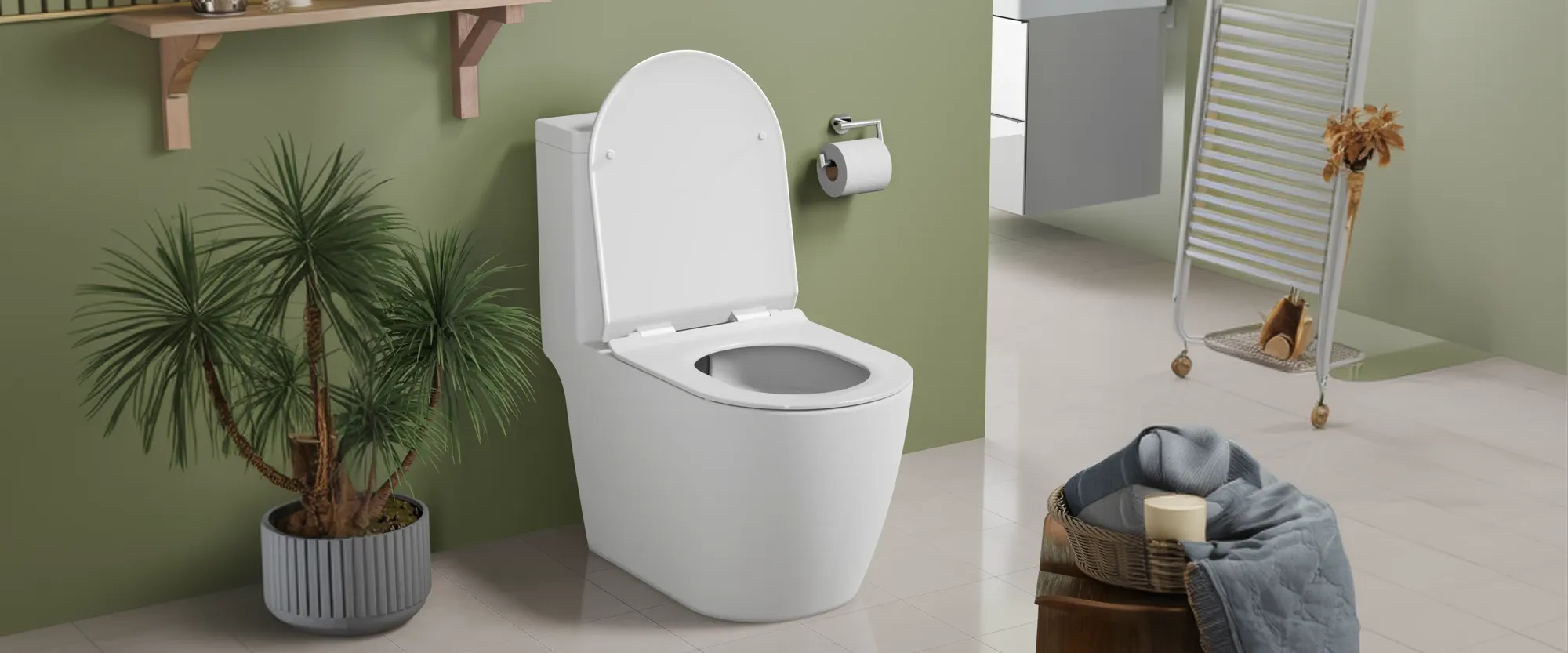
An eco friendly toilet looks much like any other WC. The difference is in the cistern, which decides how much water each flush lets out.
The bowl and the trap matter too. They decide how well that water clears the waste.
How a dual-flush toilet saves water
Dual-flush toilets have two buttons on the cistern. The small button gives a short flush for urine, and the big button gives the full flush for solids.
Liquid waste needs less water to clear than solid waste. So after you've only passed urine, the small button is all you need.
A 6/3 litre dual-flush cistern lets out 6 litres or 3 litres, depending on which button you press. You can tell the two buttons apart by their size or the symbol on them.
A single-flush toilet has just one button. It lets out the same amount of water every time, even when a small flush would do.
Toilets that deal with waste on site
Composting toilets use bacteria that need air to break waste down, much like a compost pit in a garden. They use little or no water to flush.
They also need more care from you than a normal toilet. Check your local rules on how the compost has to be handled.
Bio-toilets also use bacteria to break the waste down. The difference is that these bacteria work without air, inside a sealed tank.
This is the kind of toilet fitted in Indian railway coaches. Both kinds suit places with no sewer or septic connection.
Why the flush volume matters
Every flush uses clean water from your tank or the municipal supply. A toilet that uses less each time saves water every day, even if nobody at home changes their habits.
Government water guidelines in India estimate that toilets using 6 litres per flush can save about 30 litres a day per person. In a family of four, that adds up to about 120 litres a day.
So the figure to look for is the litres per flush. On a toilet with two buttons, you'll see one figure for each button.
How to choose an eco friendly toilet
Check the litres per flush first, then look for a water-efficiency star rating. Next, make sure the toilet clears the bowl in one flush and suits your pressure and pipes. A toilet that fails the first check won't save much water, whatever else it offers.
Check the flush volume and choose dual flush
Best for: every home with a flush WC, whatever it drains into.
The flush volume is the amount of water the toilet lets out each time. Toilets with two buttons have two figures, one for the full flush and one for the half flush.
If you're replacing an old toilet, count its buttons first. One button means a single flush, so switching to dual flush is the change to make.
Older cisterns could let out 10 litres for a full flush. The current Indian cistern standard no longer lists the 10/5 litre size, and it lists smaller 4.8/2.8 and 4/2 litre cisterns.
- Ask the dealer for the product sheet, or look on the box.
- Note both figures, the full flush and the half flush.
- Compare them with 6 litres and 3 litres. Figures such as 4.8/2.8 or 4/2 litres use less water each time.
- Check that the two buttons are easy to tell apart, so everyone at home presses the right one.
What to expect: dual flush saves water each time someone uses the small button. The more your family uses it for urine, the more water you save.
Look for a water-efficiency star rating
India has a standard for water-efficient sanitaryware. It rates toilets from 1 to 3 stars, based on how much water they use.
A star label gives you a fair way to compare two toilets. A sticker that only says "eco" or "water saving" gives you nothing to compare.
The rating is voluntary, so not every water-saving toilet carries one. Without a star label, the flush figures become your main guide.
- Look for a star rating label on the box or product sheet.
- Check that the rating belongs to the exact model you're buying.
- If there's no label, ask the dealer for the tested flush figures.
What to expect: a rated toilet makes the comparison quick. An unrated one can still save water. You'll just need its flush figures to judge it.
Make sure it clears the bowl in one flush
A toilet that needs a second flush uses its water twice, and the saving is gone. So the flush has to clear the bowl properly with less water.
Two parts of the toilet decide this. The trap is the curved pipe inside the toilet that waste passes through, and a wider trap gives waste more room. Our Wash+ technology, for example, has a wider 65–75 mm trap that significantly reduces blockages.
The flush design decides how the water enters the bowl and moves around it.
- Ask the dealer about the trap size and how the flush moves water around the bowl.
- If a working model is on display, watch a half flush and a full flush.
- Check that the half flush clears the bowl, since that's the one you'll press most.
What to expect: with a well-designed flush and trap, one press of the right button should clear the bowl.
Match the toilet to your water pressure and pipes
A water-saving toilet only helps if it flushes properly in your bathroom. That depends on the pressure at the toilet and on how the toilet drains.
A WC with a cistern flushes from water stored in its tank. A tankless WC has no tank. It flushes using direct water pressure from the line, so it needs enough pressure at the toilet to work well.
- Ask your plumber to check the water pressure at the toilet point.
- Compare it with the pressure the product sheet asks for, especially for a tankless model.
- Ask the plumber whether your current toilet drains into the floor or the wall, and which outlet type fits your pipes.
- If you want a wall-hung WC, ask the plumber whether the wall can take a concealed cistern.
What to expect: a toilet chosen to suit your pipes and pressure flushes properly the first time. That way it keeps saving water.
Eco friendly toilet systems compared: what each needs at home
Dual-flush and tankless WCs need a sewer or septic connection. The other two types deal with waste on site.
Tips for choosing an eco friendly toilet
- Ask for the flush figures for both buttons before you look at colours and shapes.
- Choose clearly marked buttons, so children and guests use the small one for urine.
- Keep the box or product sheet that shows the star rating or flush figures. Your plumber can check them later.
- Get the plumber to check the pressure and drain position before you pay.
- Ask the dealer to show you a working flush, where the showroom has one.
Mistakes to avoid when buying an eco friendly toilet
- Avoid buying a tankless WC before a plumber has checked the pressure, because it flushes straight from the line.
- Don't go by an "eco" or "water saving" sticker alone. Without flush figures or a star rating, you can't compare it with anything.
- Never install composting toilets or bio-toilets without checking local rules. The waste has to be handled the way they require.
- Don't settle on a type until you know your home. Check if it's new or lived in, how strong the pressure is and where the waste goes. Together, these decide which type fits.
Which eco friendly toilet suits your home
For a flat or house whose WC drains to the sewer or a septic system, a cistern WC with dual flush is the practical choice. A tankless toilet suits homes with enough pressure. On-site options, such as composting or bio-toilets, are for homes with neither.
A new home or full bathroom renovation
A new build gives you the widest choice. The plumber can plan the pipes and the wall around the toilet. If you'd like a wall-hung WC with a concealed cistern, now is the time to plan it, since the cistern sits inside the wall.
With the cistern hidden in the wall, you can clean the floor around the toilet without anything in the way. It's also the right time to think about going tankless, once your plumber has checked the pressure.
Replacing the toilet in a flat you live in
In a flat you already live in, the pipes are fixed, so the new toilet has to fit them. Ask the plumber whether the old WC drains into the floor or the wall, and which outlet type fits your pipes.
If your current toilet has one flush button, a WC with two buttons cuts the water used on small flushes. Swapping an old 10/5 litre cistern for a smaller one, such as 6/3 or 4.8/2.8 litres, cuts every flush.
Homes with low water pressure
If your plumber finds the pressure at the toilet is low, choose a WC with a cistern. The cistern flushes from stored water, while a tankless toilet depends on the pressure in the line.
Low pressure doesn't stop you from saving water. A cistern with two buttons still gives you the smaller flush for urine.
Homes with no sewer line
A farmhouse or a plot outside the city may have no sewer connection. A flush WC can drain into a septic tank instead, so the same dual-flush choice still works.
If there's no septic tank either, a composting toilet or a bio-toilet can deal with the waste on site. Composting needs more care from you than a normal WC. In most cases it also needs a separate setup for water from sinks and showers.
A bio-toilet needs the right bacteria added when it's first set up. So buy it from a supplier who installs it. For both types, check the local rules on how the waste must be handled before you start.
When to call a plumber or a specialist
Call a plumber before you buy if you're unsure about the pressure, the drain position or the wall for a concealed cistern. For an on-site toilet, speak to a specialist supplier and check the local rules first.
If your old single-flush toilet is cracked, replace the whole WC with a new dual-flush model. Pick its shape and flush with care, because they decide how easy it is to clean and how well it clears.
How eco friendly toilet design changes the choice
A wall-hung shape and a bowl with fewer edges make a toilet easier to clean, and a smaller flush only saves water if the bowl comes clean with it.
Wall-hung and floor-mounted toilets
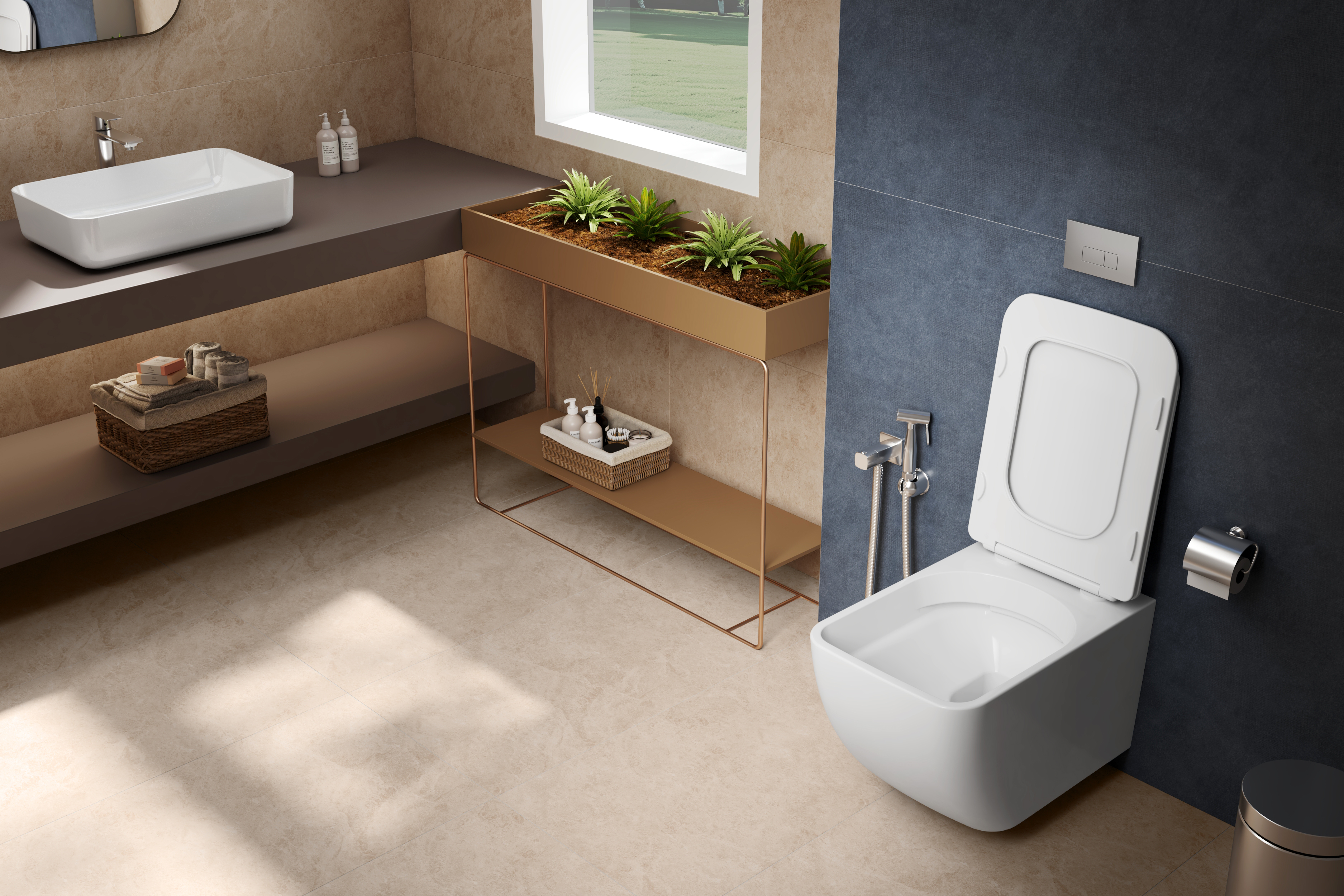
A floor-mounted WC stands on the floor, so you clean around its base. A wall-hung WC is fixed to the wall and leaves the floor under it clear. That makes it easier to clean and less prone to staining.
Because it needs a concealed cistern and a wall planned for it, a wall-hung WC suits a new home or a full renovation. In a finished bathroom, it's a bigger job to add.
Fewer edges and a smoother bowl
Dirt collects in the edges and corners of a toilet. Our Thin Essence design has a streamlined shape that reduces edges and hard-to-clean areas. That leaves fewer spots to scrub.
A bowl that comes clean in one flush also saves you the extra flush, along with the extra water it uses.
Flush designs that clean with less water
The way water moves around the bowl decides how much the toilet needs to get clean. When two toilets use the same water per flush, the flush design is what sets them apart.
Our Oxi Stream technology adds oxygen to the water flow. This gives better cleaning with reduced water consumption.
Also Read: What Your Toilet Colour Says About You
Conclusion
Picking an eco friendly toilet for your home comes down to two things: where the waste goes, and how much water each flush uses.
If your home drains to the sewer or a septic system, a dual-flush WC with low flush figures saves water every day. If it has neither, an on-site composting or bio-toilet can deal with the waste, with more planning and care.
Before you buy, let a plumber check the pressure and the outlet, so the toilet flushes properly from the first day. At home, show everyone which button to press. If a cistern keeps running, get it fixed straight away, because it lets water flow away all day.
To compare our WCs and their flush figures, find a dealer near you with our store locator.
FAQs
Q. What is the most eco friendly toilet?
Composting toilets use little or no water to flush. They need space, more care and a check of local rules, though, so they suit homes with no sewer or septic system.
For a flat or house with a sewer or septic connection, the practical eco friendly toilet is a WC with two flush buttons. Choose one with low flush figures and a flush that clears the bowl in one go.
Q. How much water does a toilet use per flush?
A 6/3 litre dual-flush cistern lets out 6 litres for a full flush or 3 litres for a half flush. The Indian cistern standard also lists smaller 4.8/2.8 and 4/2 litre sizes, and older cisterns could let out 10 litres for a full flush.
The exact figure for any model is on its box or product sheet, so ask the dealer before you buy.
Q. Do dual flush toilets save water?
Yes. The half flush uses less water than the full flush, so the toilet saves water every time someone uses the small button for urine.
How much you save depends on everyone at home using the right button. If people press the big button every time, you lose the half-flush saving.
Q. Are eco friendly toilets more expensive?
They can be. The price depends on the model, and a dual-flush WC needs the same fitting as any WC. A tankless WC, a concealed cistern or an on-site toilet adds work and cost.
Tankless models also need enough pressure, and on-site toilets need a tank and a supplier's setup. A smaller flush cuts the water you use every day, which can lower your water bill where water is metered.
Q. What happens if you press both flush buttons?
You get the normal full flush, and nothing stronger. Pressing both buttons doesn't create a super flush.
So press only the button you need: the small one for urine and the large one for solids. That's how a dual-flush toilet saves water.
Q. Do low-flow toilets clog more easily?
They can, if the flush and trap aren't designed for a smaller amount of water. A smaller flush has less water to push waste through, so the trap and the flush design matter.
Before you buy, ask the dealer about the trap size. If there's a working display model, watch a half flush to see whether it clears the bowl.
Q. Can I use a dual flush toilet with a septic tank?
Yes. Where there's no sewer line, a flush WC can drain into the septic tank, and a two-button model is a flush WC like any other.
Ask your plumber to check the connection to the tank before you fit the new toilet. Using the small button for urine also means less water goes into the tank.
Q. Can I use a composting toilet in a flat?
It can be hard in a flat. A composting toilet needs space and more care than a normal WC. In most cases it also needs a separate setup for water from sinks and showers.
The waste has to be handled as local rules allow, and your building may not permit it. For a flat connected to the sewer or a septic system, a WC with two flush buttons is the practical way to save water.
Q. What is a bio-toilet?
A bio-toilet sends waste into a sealed tank, where bacteria break it down without air. The right bacteria are added when it's first set up.
Bio-toilets are fitted in Indian railway coaches, and they can also suit homes and sites with no sewer or septic connection. Buy one from a supplier who installs it, and check the local rules first.
Q. Are portable toilets eco friendly?
They can be, but it depends on how the waste is treated and where it ends up. Eco friendly portable toilets suit short-term needs at home, such as workers on a building site or guests at a function.
Before you hire them, ask the supplier how the waste is treated and where it's taken. For everyday use, plan for a fixed WC with dual flush.