Introduction to Ceramic Tiles

History of Ceramic Tiles: From Earth to Engineered Surfaces

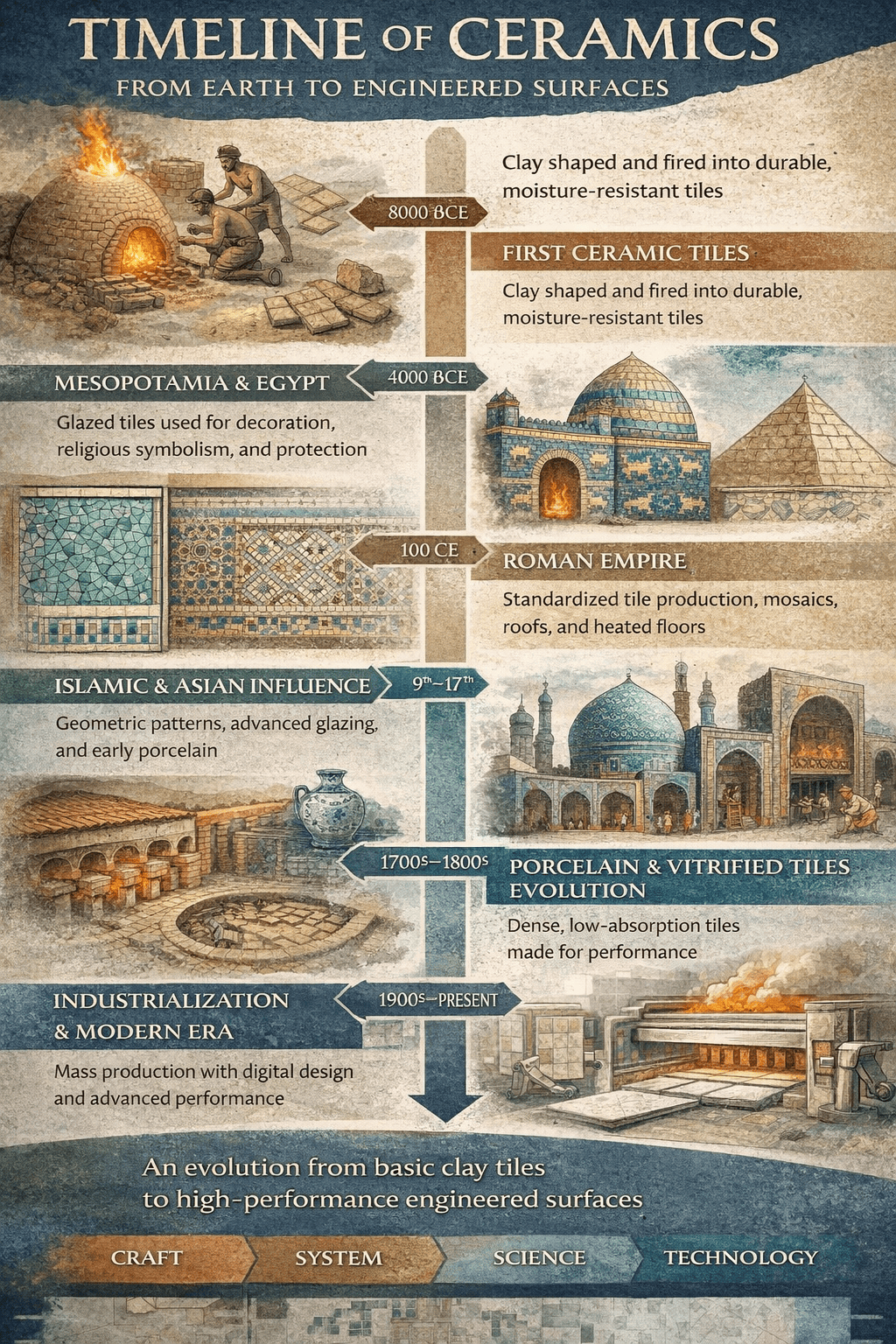
Timeline of Ceramics

Ceramic tiles are often understood as surface materials. Historically, however, they represent something far more fundamental - the evolution of how architecture engages with earth, fire, and permanence.

From their earliest use as protective skins over fragile structures to their current role as precision-engineered surfaces, ceramic tiles have continuously adapted to shifting architectural demands.

This evolution is not linear. It reflects a progression in thinking:

  • From material discovery
  • To craft expression
  • To systemization
  • To material science and performance engineering

Understanding this trajectory is essential- not as history, but as context for how tiles function today.
The Origins: Material Transformation Through Fire

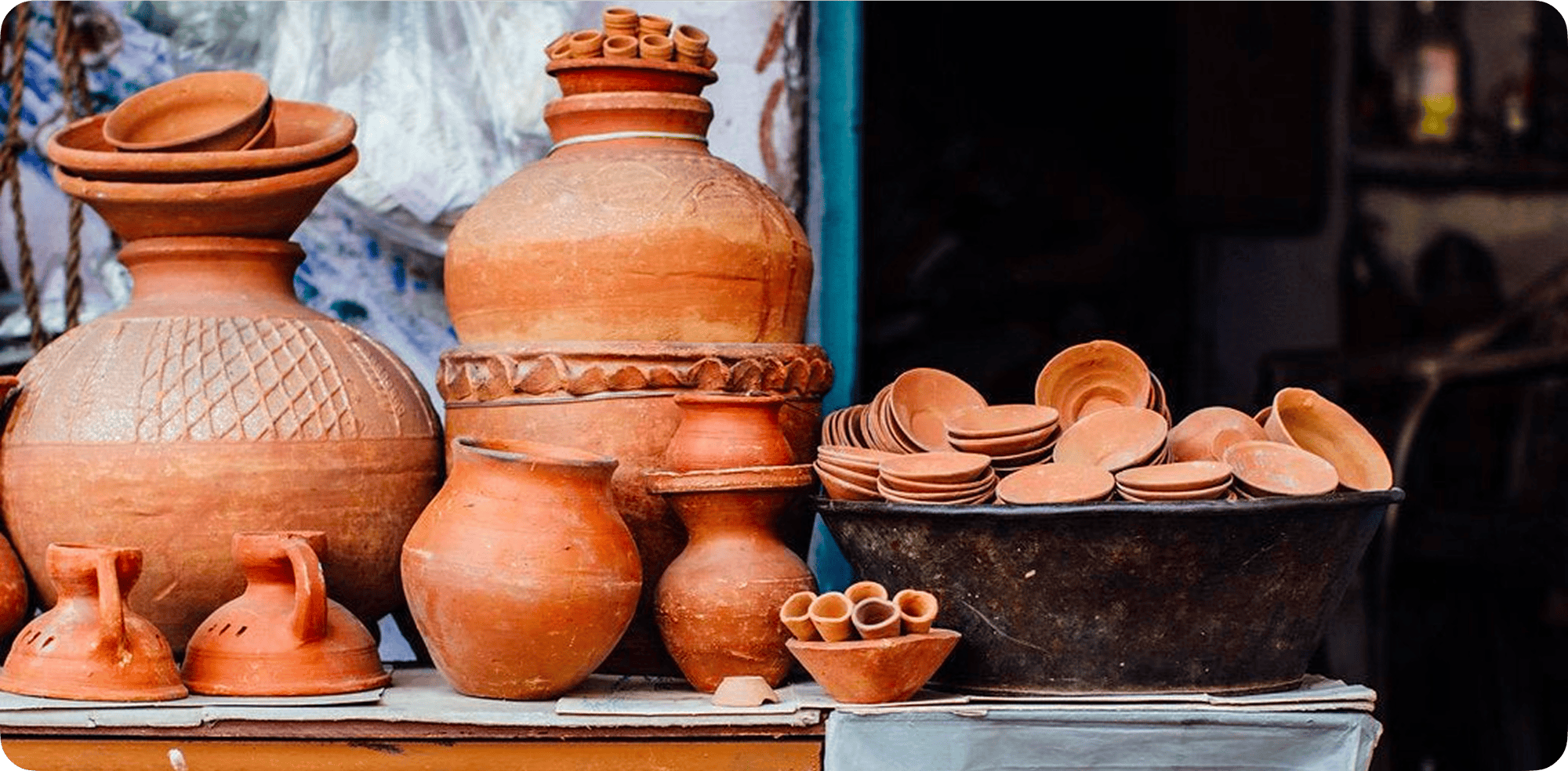
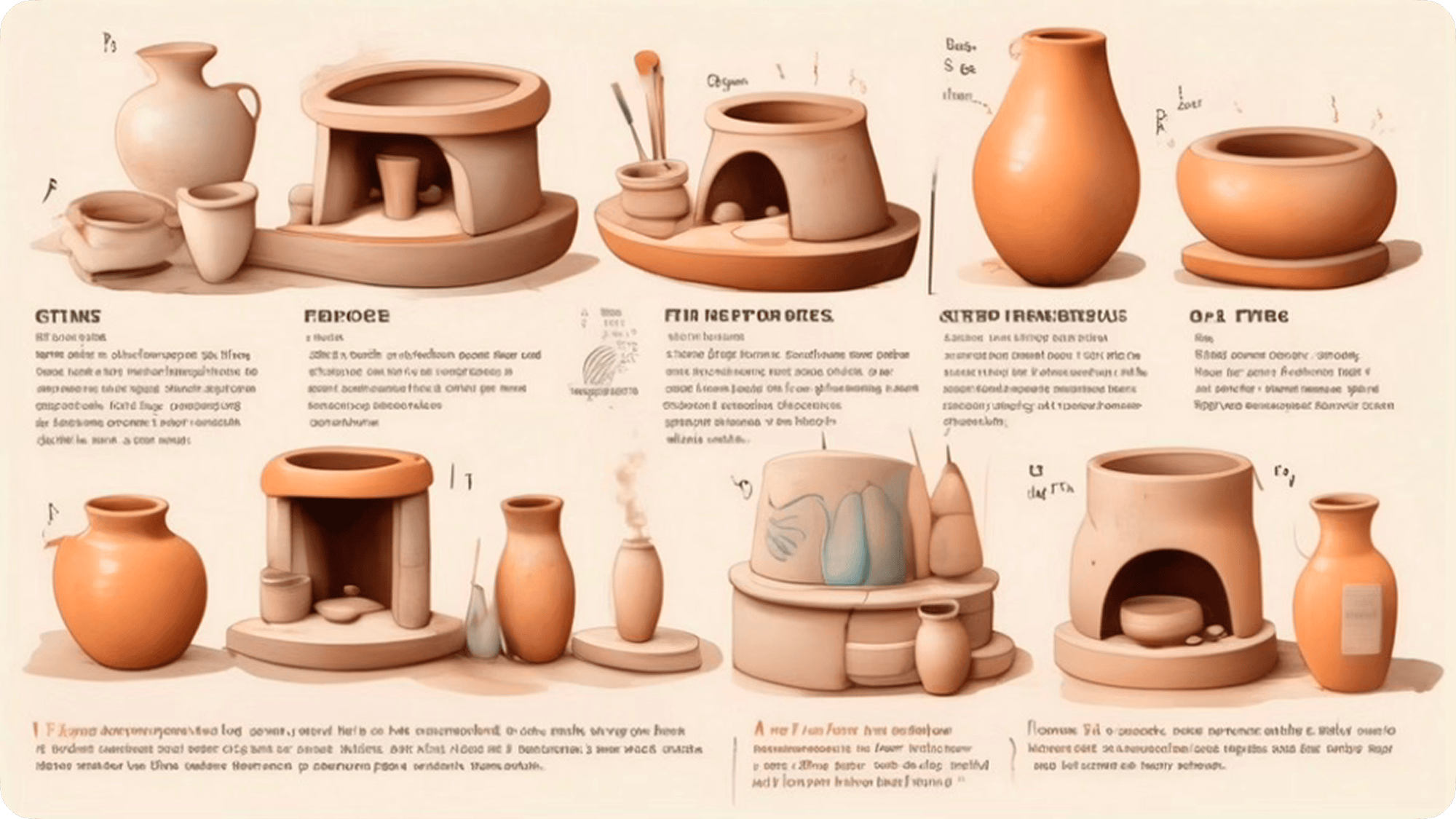
Clay pots exposed to heat

The origin of ceramic tiles lies in a simple but profound transformation: clay exposed to heat becomes structurally stable.

This process of firing induces irreversible changes:

  • Reduction in porosity
  • Increase in hardness
  • Resistance to moisture

What emerges is no longer soil - it is an engineered material.

In early construction, this transformation was applied pragmatically. Fired clay elements were used to shield mud structures from environmental degradation from rain, heat, and erosion.

At this stage, ceramic tiles were not decorative. They were protective interfaces between environment and structure.

Yet within this transformation lay a deeper potential: a material that could be shaped before firing, and preserved after it.

Clay pots exposed to heat

Ancient Civilizations: Ceramic Expressions

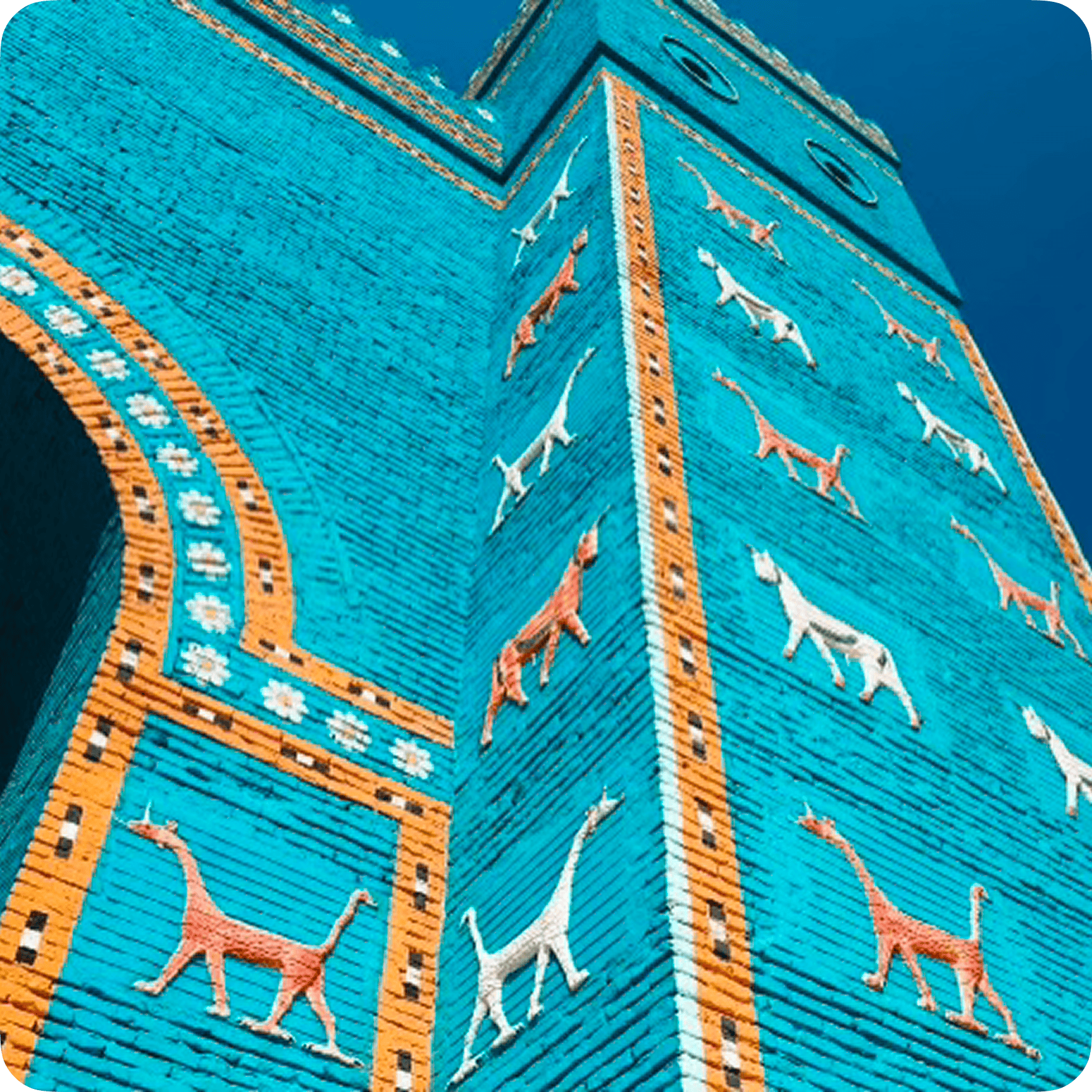
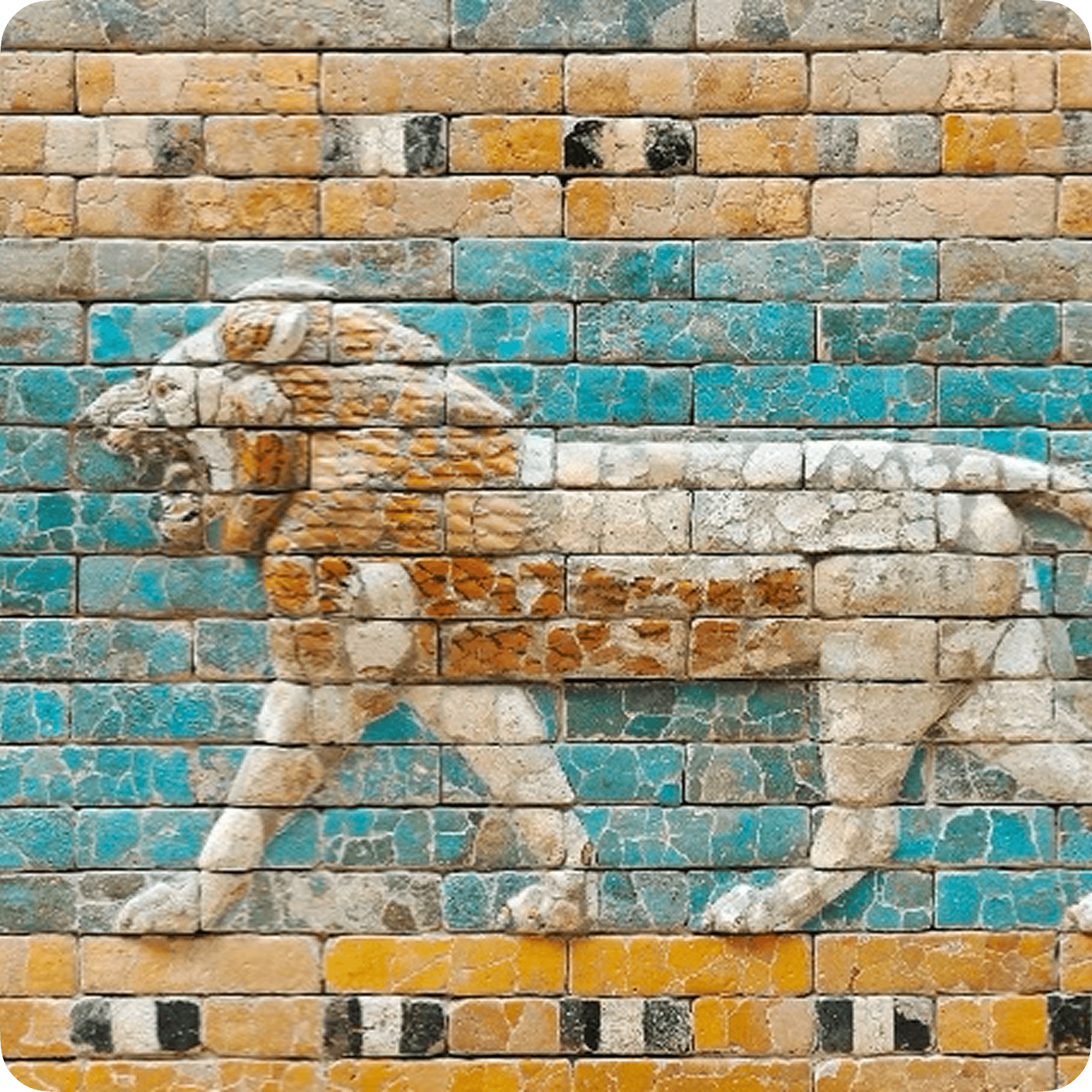
Ishtar GateLion Relief

As civilizations matured, the role of ceramics expanded from protection to expression.

In Mesopotamia, glazed bricks introduced color and durability simultaneously. Surfaces began to communicate identity through motifs, reliefs, and symbolic imagery.

Egyptian faience, with its characteristic blue-green glaze, demonstrated an early understanding of surface chemistry and aesthetics. These tiles were not merely decorative, they were symbolic, associated with eternity and divinity.

The Ishtar Gate of Babylon represents a pivotal moment. Tiles were no longer applied elements; they became part of a composed architectural narrative, integrating color, pattern, and structure.

This marked a fundamental shift from material utility to cultural medium

The Roman Era: From Craft to System

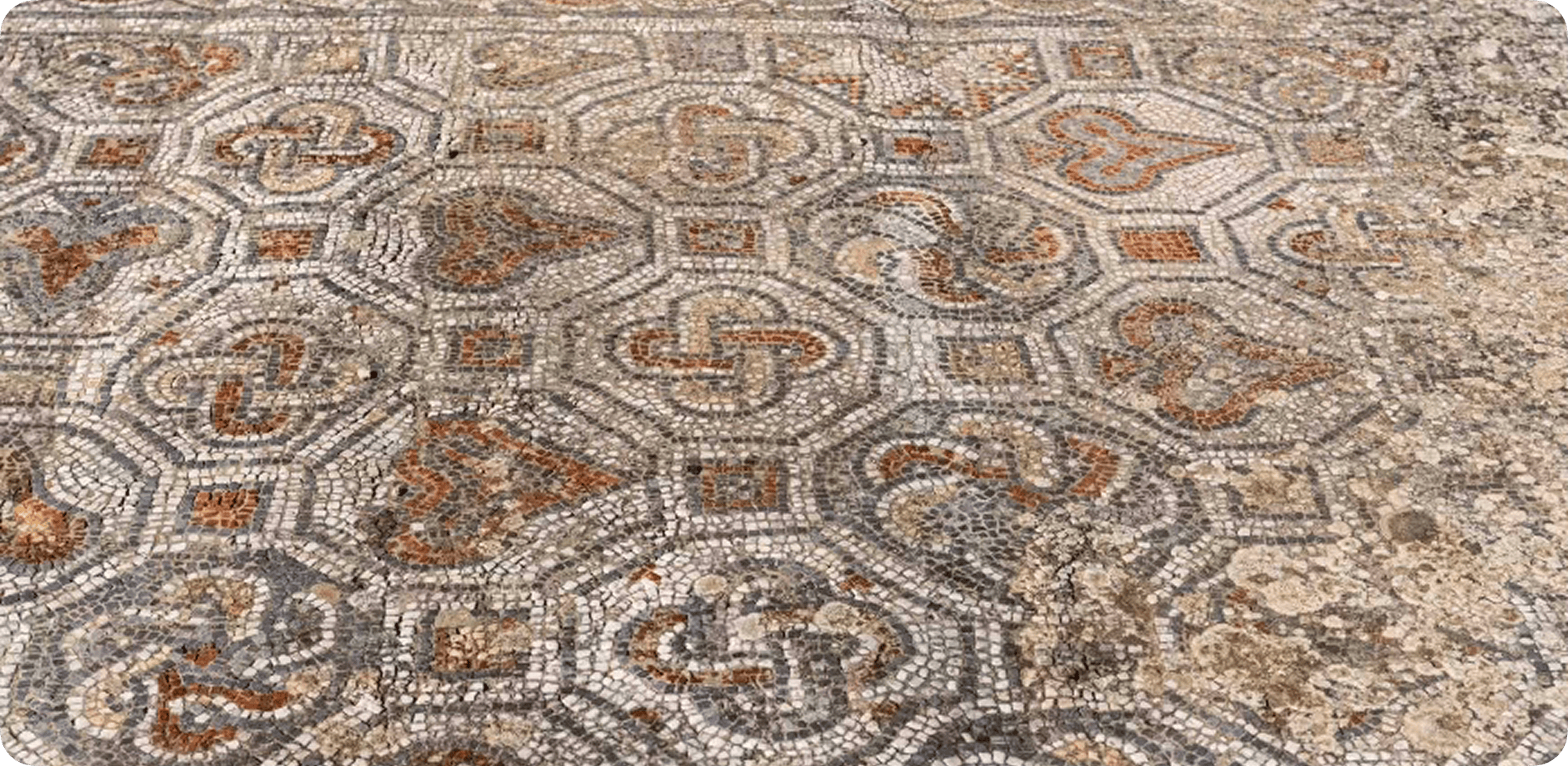
Roman mosaic tile flooring

The Romans transformed ceramic tiles from artisanal objects into system components.

Their contribution lies not in invention, but in standardization and scalability.

Tiles were produced in consistent formats and deployed across:

  • Roofing systems
  • Flooring assemblies
  • Public infrastructure

In bathhouses, ceramic surfaces enabled hygiene, water resistance, and durability, establishing tiles as functional surfaces within complex environments.

The hypocaust system further extended their role. Tiles were used to distribute heat beneath floors, demonstrating early understanding of thermal performance.

Simultaneously, mosaics evolved into precise compositions, where small ceramic units formed intricate visual systems.

This era established a critical principle: Tiles are not isolated elements, they became part of a larger construction system.

Middle East & Asian Influence: Precision, Geometry, and Material Advancement

Ishtar GateLion Relief

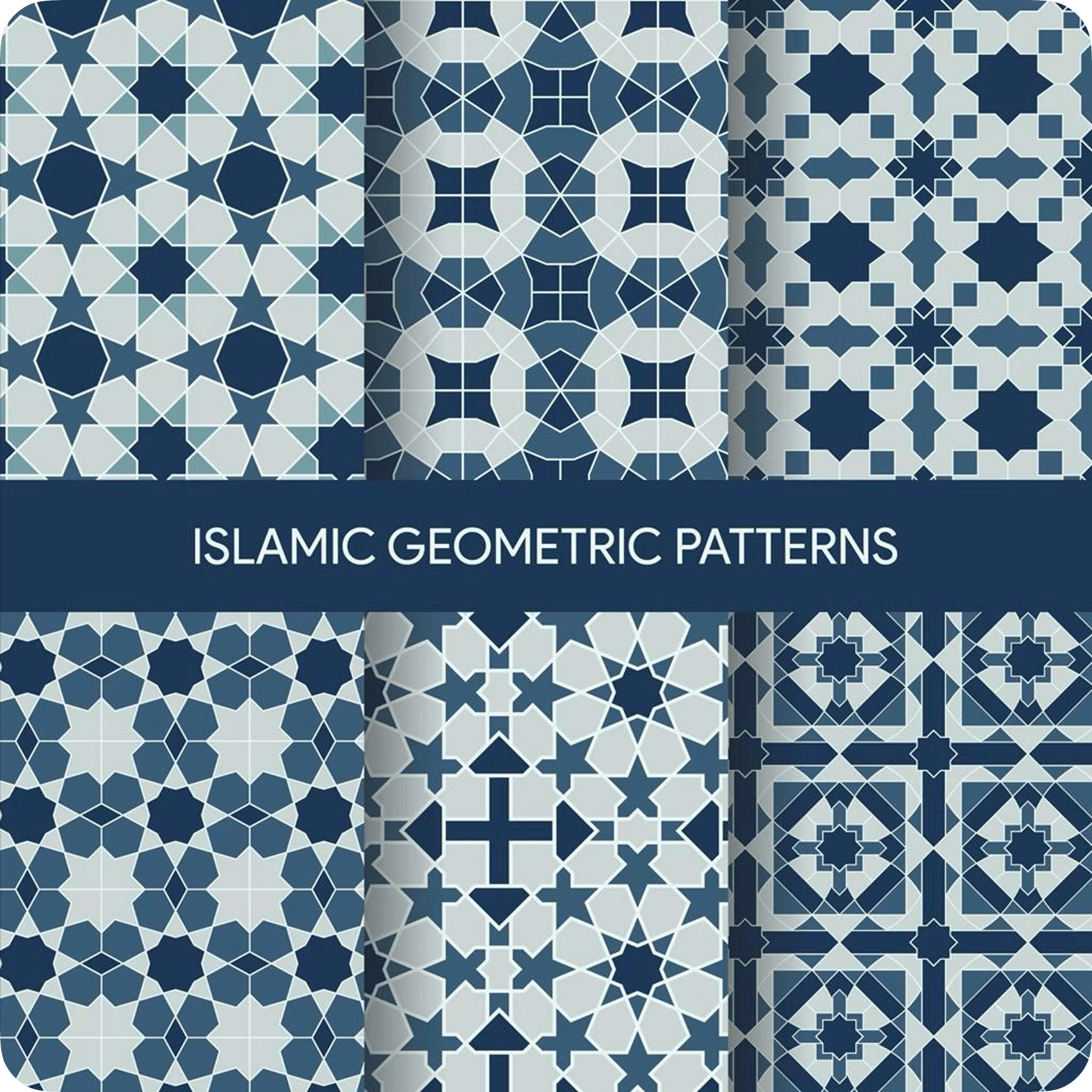
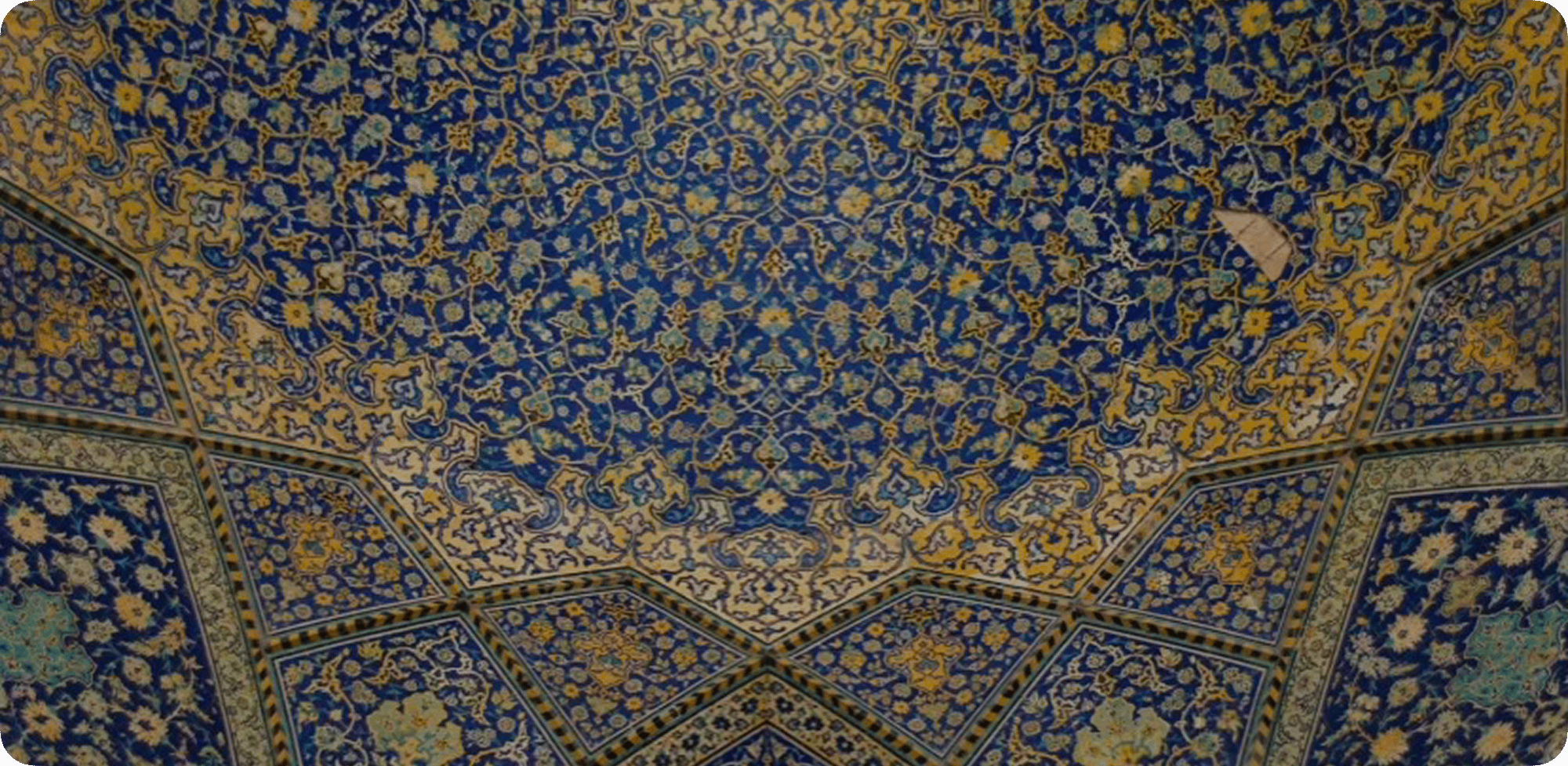
Between the 9th and 17th centuries, ceramic tiles reached a level of refinement where geometry, material science, and philosophy converged.

Middle Eastern architecture elevated tiles into instruments of spatial experience. Surfaces were no longer passive, they became dynamic fields of:

  • Repetition
  • Symmetry
  • Mathematical precision

Tiles defined space through rhythm and proportion, rather than mass.

In parallel, Chinese advancements in high-temperature firing led to the development of porcelain, a denser, finer ceramic body with significantly lower porosity.

This marked a decisive material shift: From traditional ceramics to high-density, high-performance ceramics. The implications of this shift would only fully emerge centuries later.

Porcelain & Vitrified Evolution: Engineering the Material

The transition to porcelain and vitrified tiles represents the most significant transformation in ceramic technology. Through controlled raw material composition and higher firing temperatures, tiles evolved into materials with:

  • Extremely low water absorption
  • High mechanical strength
  • Dense, uniform internal structure

Vitrification reduces internal voids, creating a body that behaves less like traditional ceramic and more like a structural surface material.

This transformation enabled:

  • High-traffic flooring
  • External applications
  • Large-format surfaces

Tiles were no longer limited by environment; they became capable of performing within it.

Porcelain & Vitrified Evolution

Industrialization: Consistency as a Breakthrough

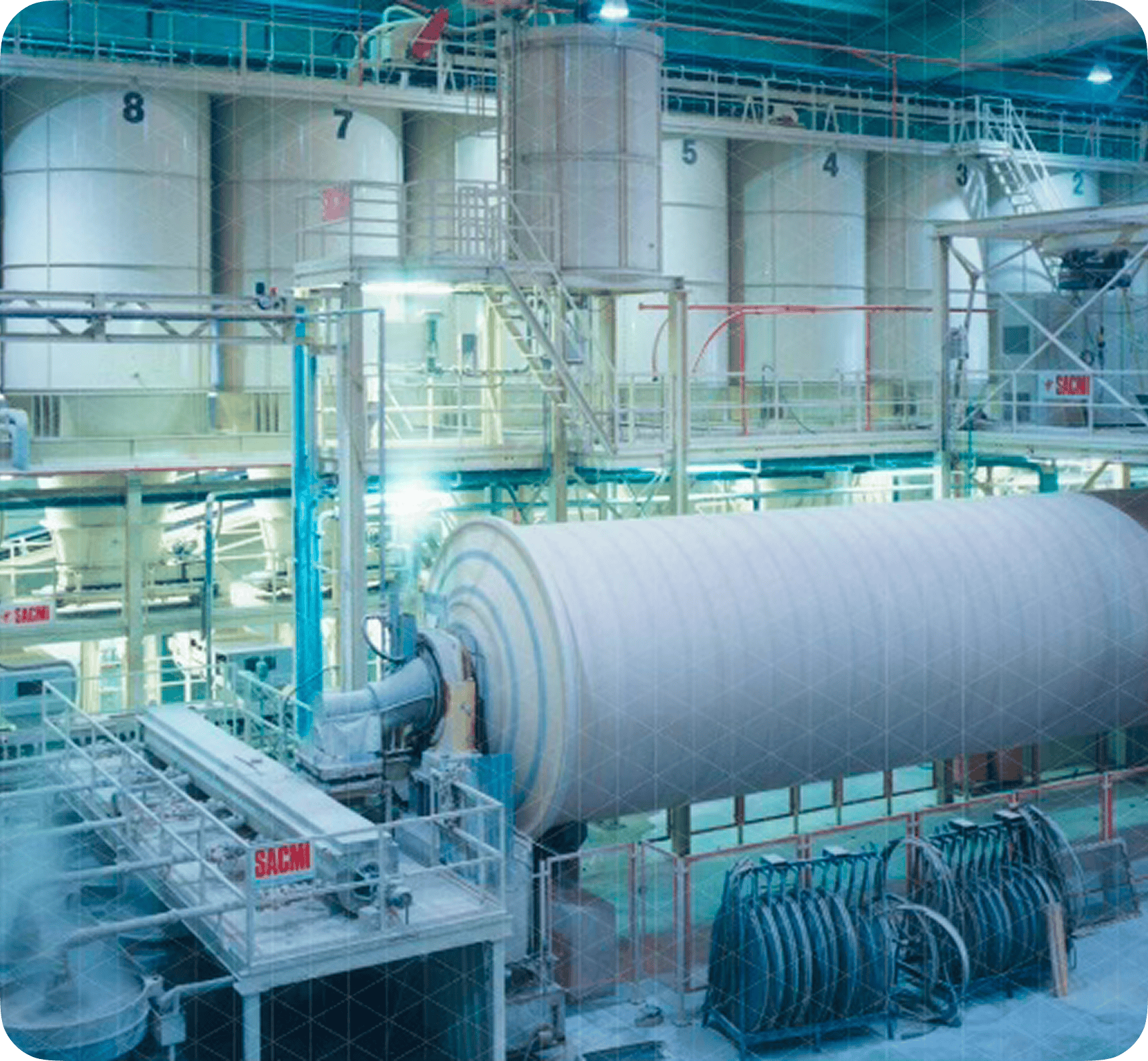
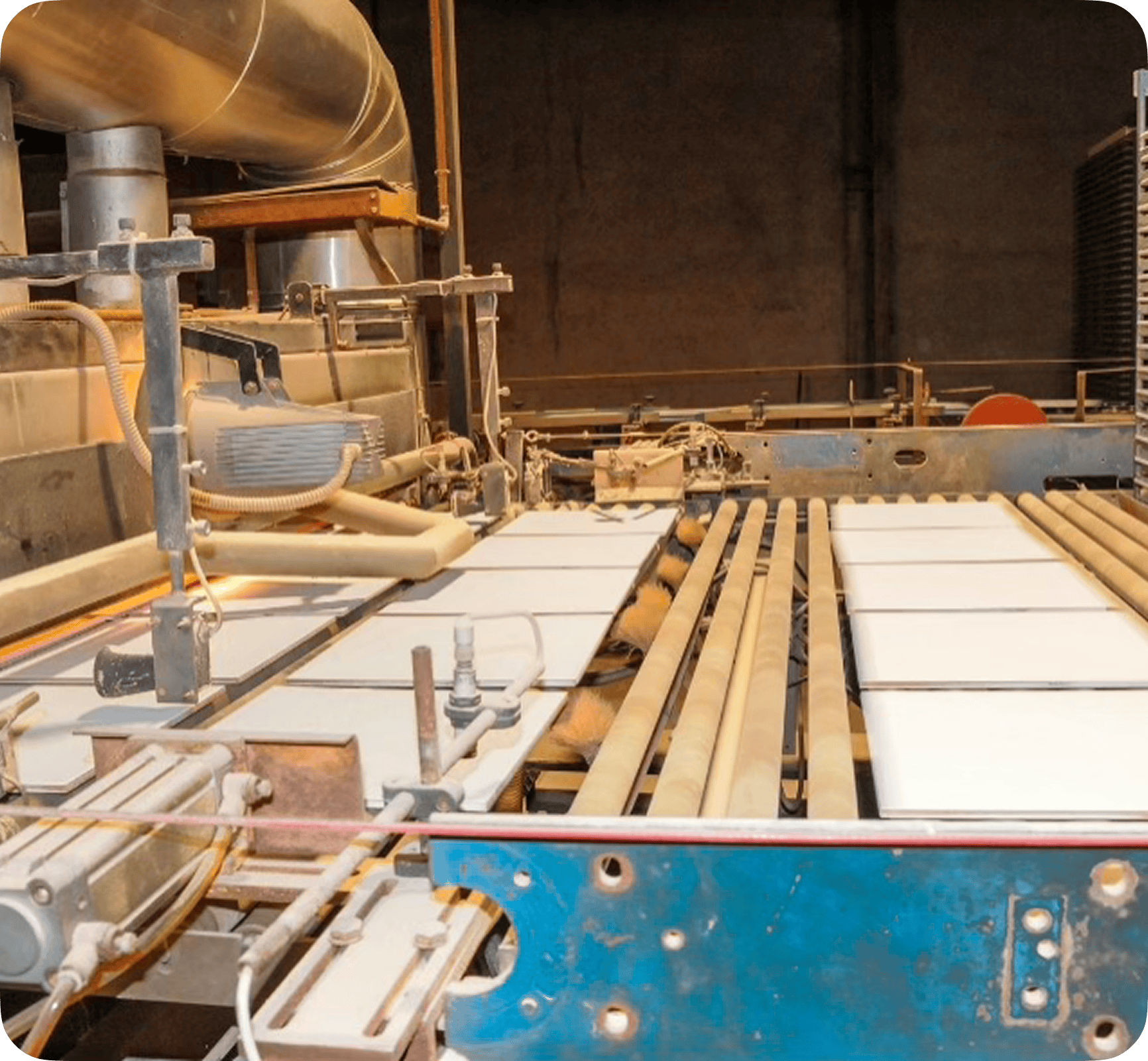
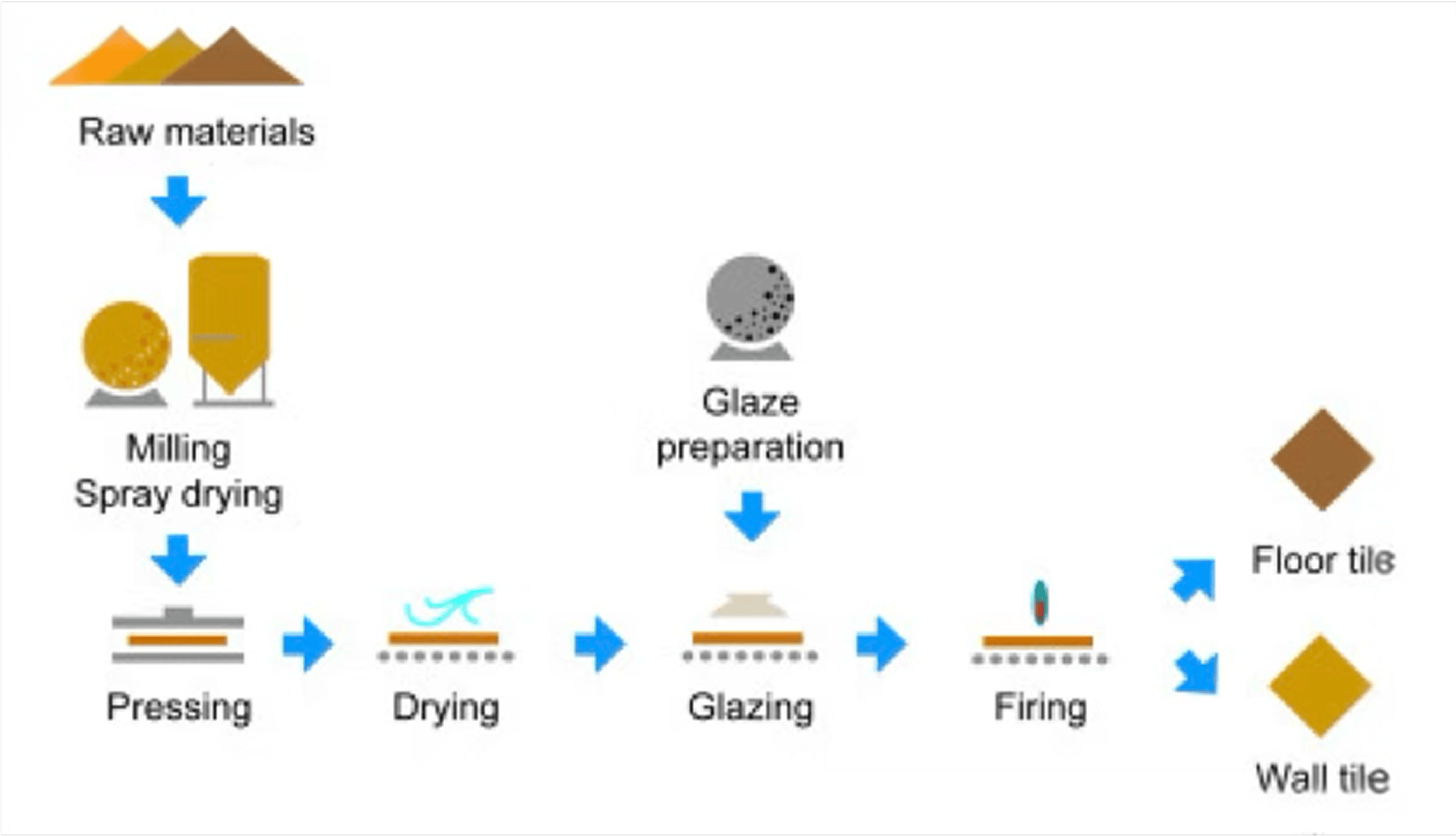
The industrial era did not change what tiles were, it changed how reliably they could be produced.

Technologies such as:

  • Dust pressing
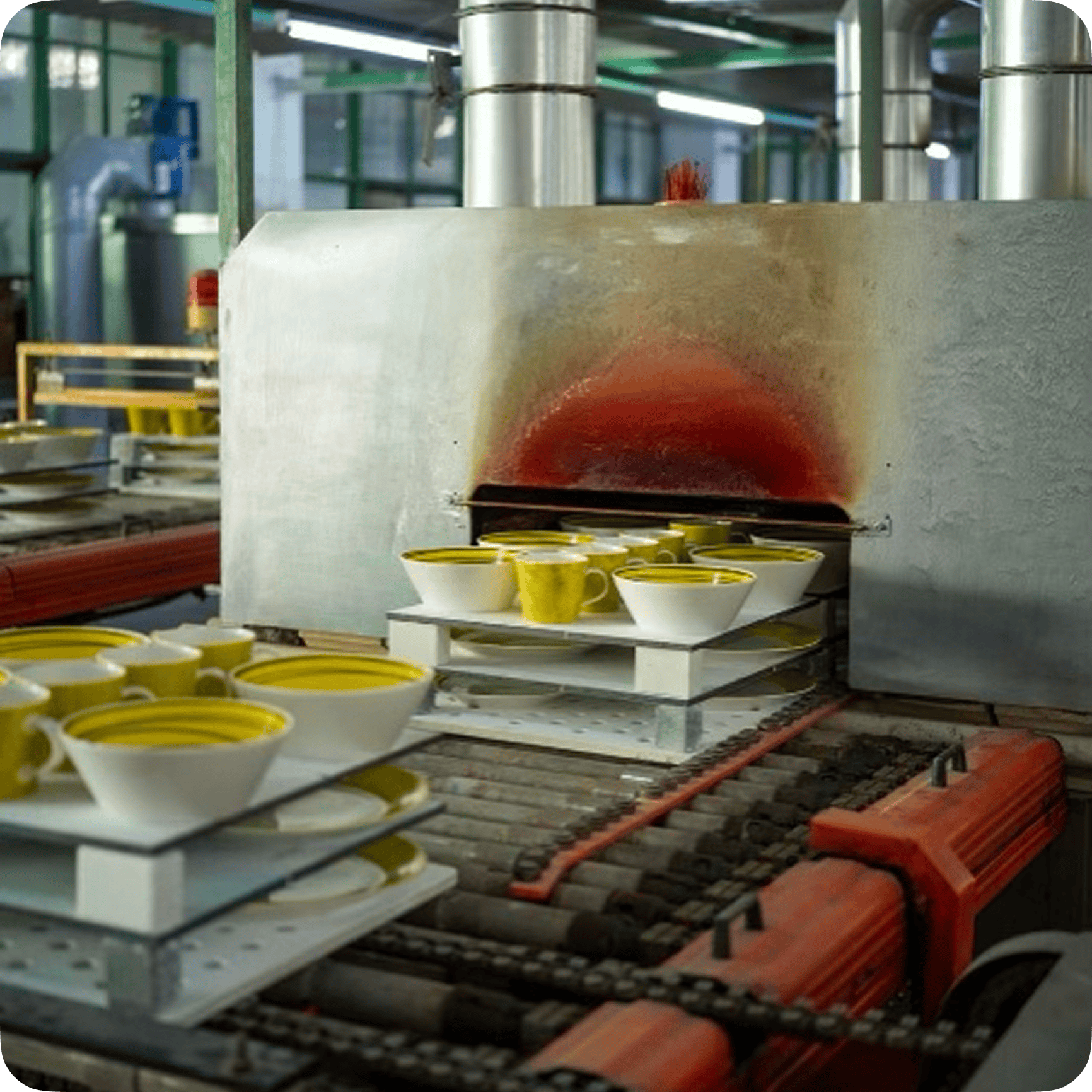
  • Controlled kiln firing
  • Standardized moulding

This led to precision and repeatability.

For the first time, tiles could be:

  • Dimensionally consistent
  • Structurally predictable
  • Produced at scale

This shifted tiles from bespoke elements to widely deployable building materials, expanding their use across residential and public architecture.

Consistency, not invention, was the breakthrough.

Industrial ceramic production machineryIndustrial ceramic production machinery

Modern Ceramic Technology: The Engineered Surfaces

Modern ceramic tile surface

Today, ceramic tiles operate at the intersection of material science, digital technology, and architectural intent.

Digital inkjet printing enables precise replication of natural materials, aesthetics and colours, without their limitations. Surface finishes are further engineered for:

  • Slip resistance
  • Stain resistance
  • Maintenance performance

Large-format slabs have redefined scale, allowing surfaces to behave as continuous planes rather than modular assemblies.

Modern tiles are no longer passive finishes. They are:

  • Performance-driven
  • Application-specific
  • System-integrated

Benefits of Tiles: Why Ceramic Surfaces Define Modern Living

Tiles are often selected for their appearance. In practice, their value lies in something far more fundamental, their ability to deliver predictable performance across time, use, and environment.

Unlike many surface materials that respond to conditions, ceramic surfaces are engineered to resist them. This distinction is what allows tiles to operate not merely as finishes, but as functional components of the built environment.

Their relevance in modern architecture is therefore not incidental. It is the result of a material system that balances:

  • Durability
  • Hygiene
  • Environmental resistance
  • Design flexibility

Understanding these benefits requires moving beyond features, and into material behaviour.

Durability: A Surface That Withstands Time

Tiles are fundamentally different from organic or layered materials. Once fired, their structure becomes dimensionally stable and chemically inert.

This results in surfaces that:

  • Do not warp with humidity
  • Do not fade under exposure
  • Resist abrasion and mechanical wear

Porcelain and vitrified tiles, in particular, achieve high density through vitrification, reducing internal voids and increasing strength.

This allows them to perform reliably in:

  • High foot traffic areas
  • Wet areas
  • Load-bearing floors
  • Commercial environments

Durability, in this context, is not just resistance, it is consistency over time.

Water & Stain Resistance: Controlled Surface Interaction

The behaviour of a surface in contact with water defines its suitability for most interior environments.

Ceramic tiles rely on glazing to create a protective layer, while porcelain and vitrified tiles achieve low absorption through dense internal structure.

The result:

  • Water remains on the surface
  • Stains do not penetrate
  • Cleaning becomes surface-level rather than material-level

This distinction is critical. Materials that absorb moisture degrade internally. Tiles, by contrast, maintain integrity because interaction is controlled at the surface.

This makes them essential in:

  • Bathrooms
  • Kitchens
  • Utility and wet areas

Hygiene & Maintenance: Non-Porous Behaviour

Hygiene and Maintenance of Tiles

Hygiene is a function of porosity. Tiles, particularly vitrified and glazed surfaces, are non-porous or near non-porous, which prevents:

  • Absorption of liquids
  • Retention of dirt and bacteria
  • Internal contamination

Cleaning, therefore, is not restorative, it is maintenance of an already stable surface.

Modern surface technologies further enhance this behaviour through:

  • Anti-stain finishes
  • Anti-microbial coatings

This makes tiles particularly suitable for:

  • Residential interiors
  • Healthcare environments
  • High-use commercial spaces

The advantage is not just cleanliness, it is predictable hygiene performance.

Design Versatility: Aesthetic Without Material Limitation

Tiles occupy a unique position, they separate visual expression from material limitation. Through digital printing and advanced glazing, tiles can replicate:

  • Marble
  • Wood
  • Stone
  • Concrete
  • Fabric
  • Concrete & more…

…without inheriting their vulnerabilities.

This allows designers to achieve:

  • Natural aesthetics without maintenance concerns
  • Consistent finishes across large areas
  • Integration across floors, walls, and façades

Additionally, format diversity, from small mosaics to large slabs, this enables control over:

  • Scale
  • Joint visibility
  • Spatial perception

Tiles, therefore, are not just decorative, they are design tools with engineered reliability.

Strength & Performance: Matching Material to Application

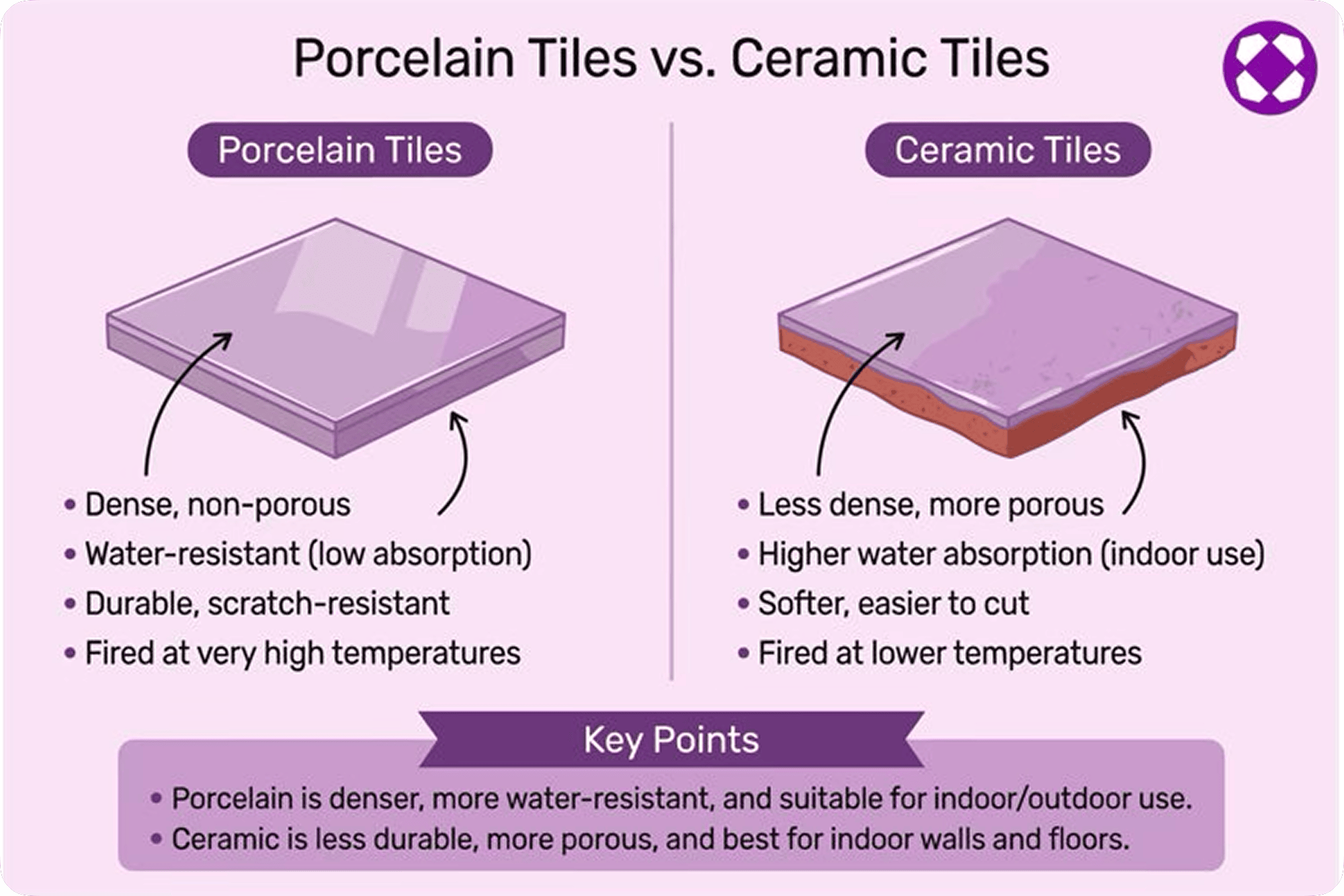
Not all tiles perform equally and this is where material classification becomes critical.

  • Ceramic tiles → Suitable for walls, dry floors and light-duty applications
  • Porcelain / vitrified tiles → High strength, low absorption, suitable for floors and heavy use

This allows tiles to be specified strategically, aligning performance with application.

As tile size increases, performance requirements also increase:

  • Larger formats demand higher strength
  • Reduced joints increase stress concentration

Modern tiles address this through:

  • Improved density
  • Enhanced bonding compatibility
  • Controlled manufacturing precision

Tiles are no longer chosen only for aesthetics, they are selected as performance-specific materials.

Fire, Heat & Chemical Resistance: Stability Under Stress

Heat Resistant TilesIndustrial Tile Application

Ceramic materials are inherently non-combustible.

They do not:

  • Emit toxic fumes
  • Contribute to fire spread

This makes them inherently safer than organic or composite materials.

Additionally, tiles resist:

  • Heat exposure (kitchen environments)
  • Household and industrial chemicals

Unlike wood, vinyl, laminates, or certain composites, tiles maintain both:

  • Structural integrity
  • Surface stability

Even under stress conditions.

This makes them reliable in:

  • Kitchens
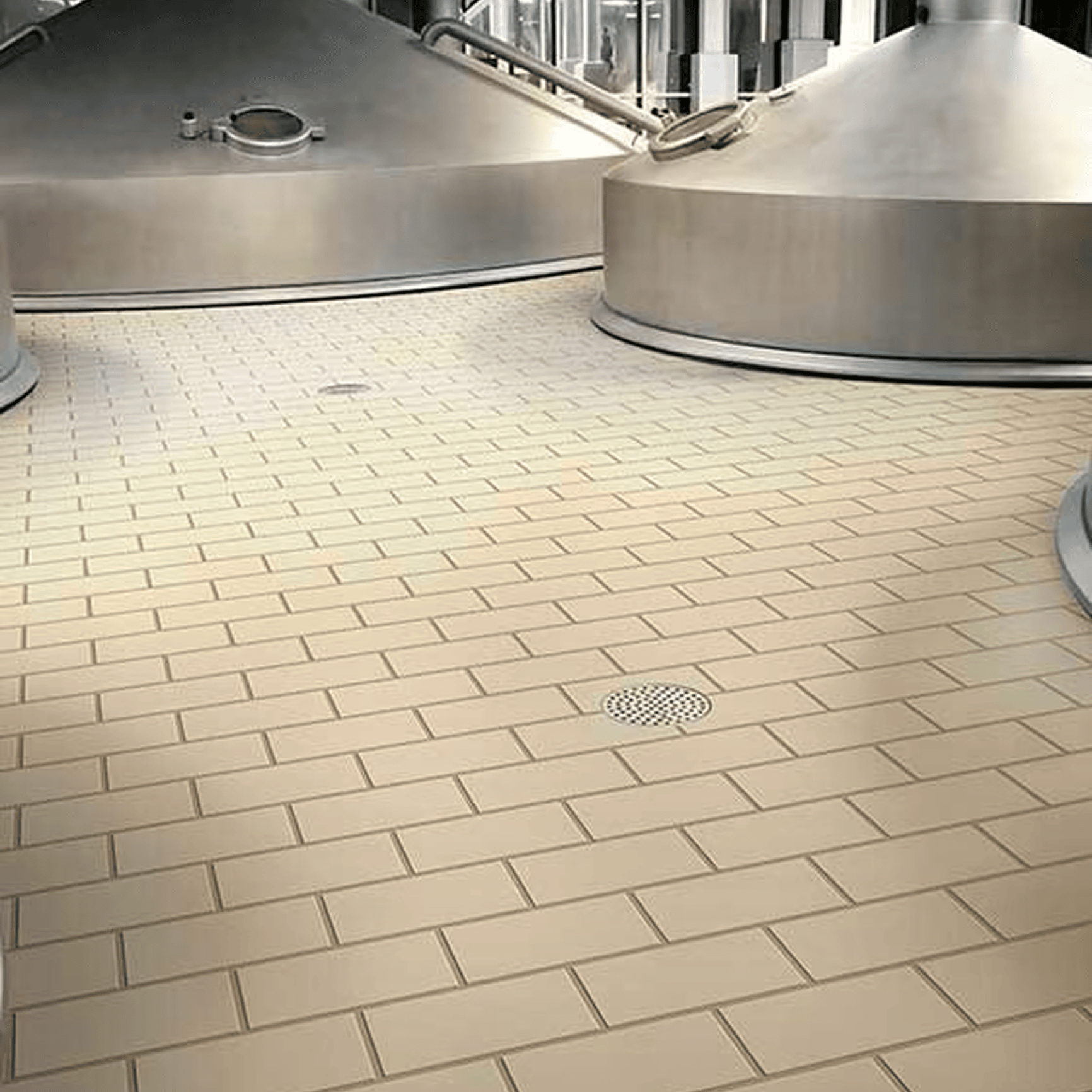
  • Industrial floors
  • High-temperature zones

Sustainability & Lifecycle Value: Performance Over Time

Tiles are derived from natural materials: clay, sand, and minerals, and transformed through controlled processes.

Their sustainability lies not only in composition, but in longevity.

A longer service life means:

  • Reduced replacement cycles
  • Lower material consumption over time
  • Lower lifecycle cost

Additionally, their low maintenance requirements reduce:

  • Water usage
  • Chemical cleaning dependency

In modern construction, sustainability is not only about materials, it is about how long those materials perform effectively.

Tiles deliver value through extended lifecycle performance.

Applications of Ceramic & Porcelain Tiles: Where Engineering Meets Aesthetics

A Guide to High-Performance Surface Selection

Overview

Tiles today operate far beyond the role of finishes. They function as engineered surface systems, where performance is defined by how precisely the material responds to its environment.

Every application, wall, floor, interior, cladding or exterior, imposes a distinct set of demands:

  • Mechanical load
  • Moisture exposure
  • Thermal variation
  • Surface interaction

The effectiveness of a tile is therefore not inherent, it is contextual. Understanding this relationship between material behaviour and spatial function is what defines intelligent tile selection.

Tiles as Engineered Systems: Matching Material to Function

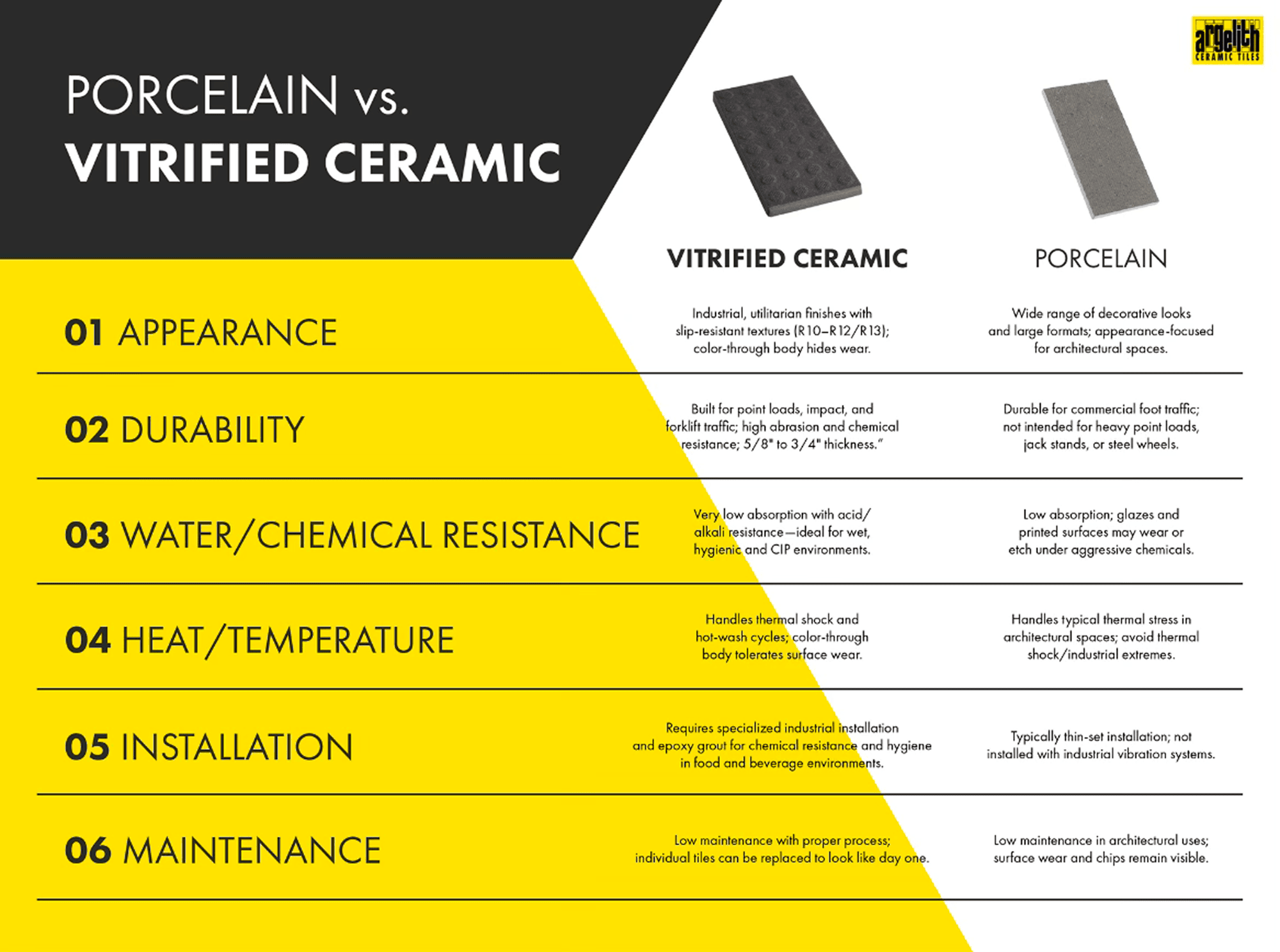
Tiles must be understood not as a single category, but as a spectrum of materials:

  • Ceramic tiles → Moderate strength, higher porosity, ideal for vertical and controlled environments
  • Vitrified tiles → Dense, low porosity, suitable for floors and moderate stress conditions
  • Porcelain tiles → Highly dense, low absorption, engineered for high performance and demanding environments

Each category represents a different level of structural and environmental capability. The role of specification is to align this capability with application, not to standardize usage.

Vertical Surfaces: Lightweight Systems with Maximum Expression

Walls present a condition where visual impact outweighs structural demand. This makes ceramic tiles particularly efficient:

  • Lower weight reduces stress on adhesives and substrate
  • Glazed surfaces provide impermeability
  • Ease of handling improves installation reliability

The key advantage lies in surface engineering through glazing:

  • Gloss enhances reflectivity and spatial brightness
  • Matt and textured finishes control glare and tactility

Unlike paint or wallpaper, ceramic tiles create a durable, moisture-resistant envelope, especially critical in wet and semi-wet areas. Walls, therefore, become not just visual planes, but protected surfaces with long-term stability.

Bathrooms: Controlled Environments of Moisture & Safety

Bathrooms operate as high-moisture environments where surface interaction becomes critical.

Wall applications prioritize:

  • Non-porous glazed tiles
  • Resistance to soap, mineral deposits, and staining

Floor applications shift focus entirely toward:

  • Porosity
  • Slip resistance (DCOF / COF)
  • Water management
  • Structural integrity

Vitrified and porcelain tiles dominate here due to:

  • Water absorption <0.5%
  • Dense body preventing seepage
  • Compatibility with anti-skid textures

The key principle: Bathroom design is not uniform, it is performance-segregated. Walls and floors must be treated as distinct functional surfaces.

Kitchens: Surfaces Under Thermal & Chemical Stress

Kitchens introduce a combination of stresses rarely present together:

  • Heat exposure
  • Oil and chemical interaction
  • Mechanical impact
  • Abrasion impact

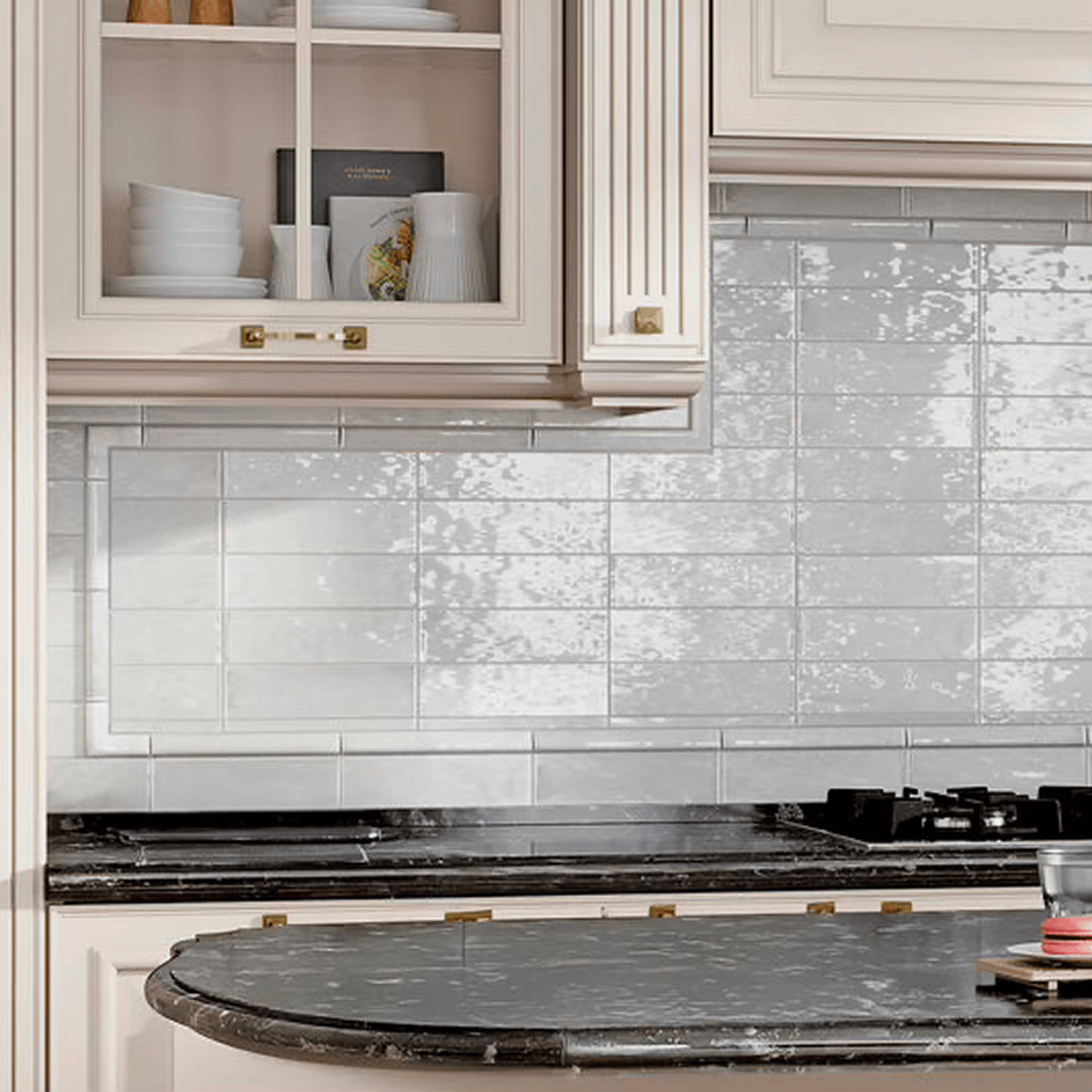
On walls, ceramic tiles act as protective barriers:

  • Resistant to heat behind cooking zones
  • Impervious to oil and food stains

On floors, performance requirements intensify:

  • Resistance to abrasion and impact
  • Stability under repeated loading

Full-body vitrified Technical Porcelain tiles are particularly effective, as their uniform composition ensures:

  • Consistent appearance even after wear
  • Structural integrity under stress
  • Abrasion resistance
  • Heat & Chemical resistance
  • Low porosity

In kitchens, material selection moves from decorative to defensive and performance-driven.

Living Spaces: Continuity, Scale & Environmental Comfort

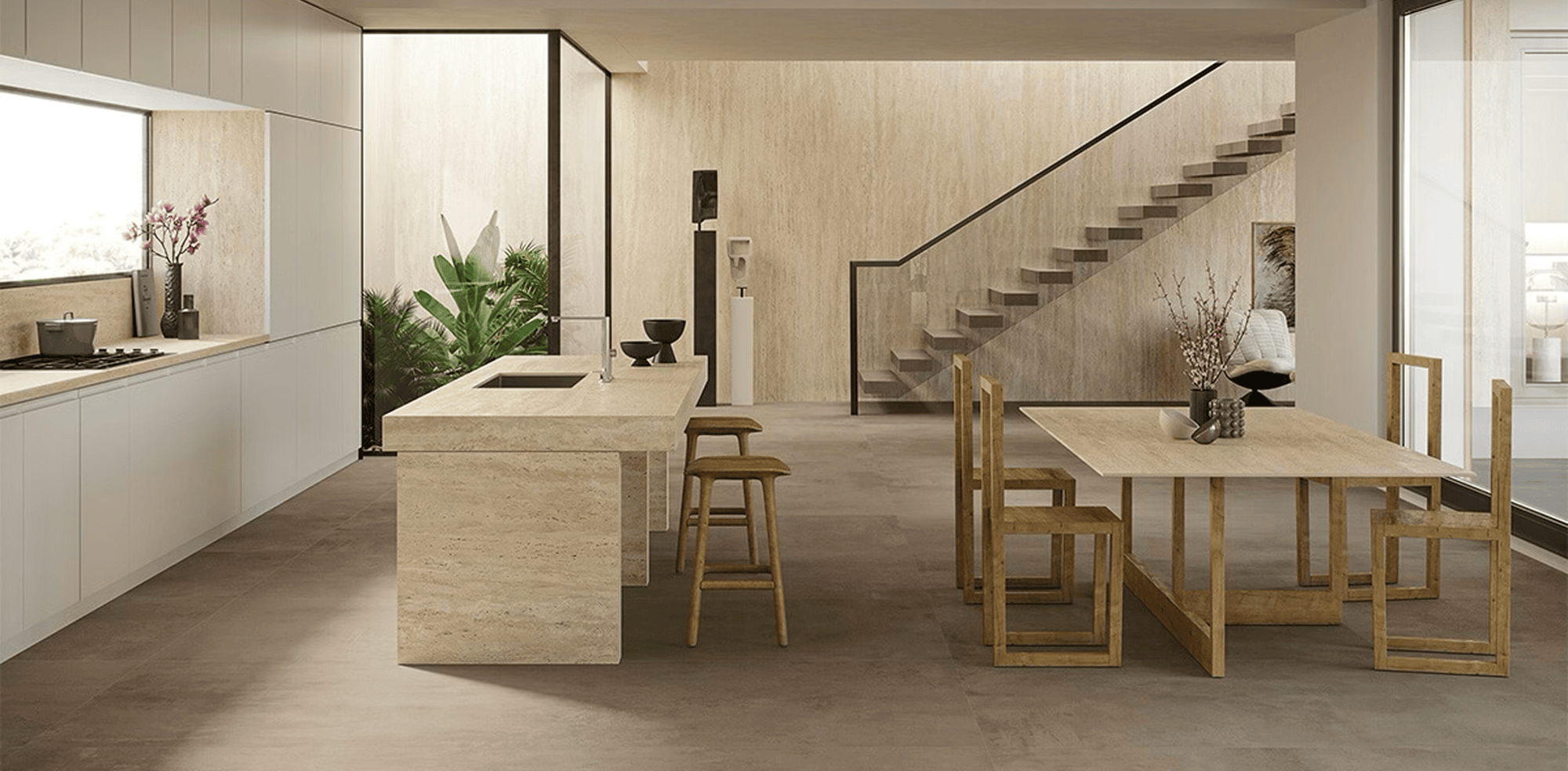
In living spaces, the objective shifts from protection to spatial experience. Large-format porcelain and vitrified tiles enable:

  • Reduced grout lines
  • Visual continuity
  • Expansion of perceived space

This is particularly effective in open-plan layouts, where flooring must unify multiple zones.

Beyond aesthetics, dense and sintered tile bodies contribute to:

  • Stain and abrasion resistance
  • High strength almost 4 times that of marble
  • No fading

Outdoor & Heavy-Duty Areas: Engineering for Exposure

Outdoor TilesHeavy Duty Tiles

Outdoor environments impose the highest level of stress, therefore HDVT (High Desity Vitrified Tiles) are preferred for:

  • Mechanical loading bearing capacity
  • UV exposure
  • Temperature fluctuation
  • Water ingress
  • Lower water absorption
  • Ability to withstand thermal shock
  • Frost and Heat resistant

Surface finish becomes critical:

  • Matt and structured finishes improve grip
  • Reduce slip risk in wet conditions

In such environments, tiles are not decorative, they are protective and structural surfaces.

Commercial Spaces & Facades: Performance at Scale

Commercial environments shift the focus toward long-term performance metrics. High footfall areas demand:

  • Abrasion resistance
  • Load-bearing capacity
  • Visual consistency over time

Vitrified and Glazed Vitrified tiles provide:

  • High density
  • Resistance to wear and surface degradation
  • High load bearing

The Principle of Intelligent Selection

Tiles do not compete, they complement each other across applications.

  • Ceramic tiles → Efficient for vertical, controlled environments
  • Vitrified tiles → Reliable for floors and stress
  • Porcelain tiles → Engineered for high-performance and exposure

The strength of the category lies not in a single product, but in the ability to deploy the right material at the right place.